en.Wedoany.com Reported - The Indian government is planning to introduce a fiscal support scheme for long-duration energy storage (LDES) technologies to address the severe shortage of storage capacity amid the rapid growth of renewable energy installations. This scheme is part of the government's "India Battery Storage Vision 2047," jointly formulated by the Ministry of Power and the Ministry of Heavy Industries. It is expected to be launched before the 2028 fiscal year, with administrative jurisdiction under the Ministry of Power.
Over the past five years, India has added 178.88 GW of renewable energy capacity, with clean energy now accounting for 51.5% of the country's total installed power capacity. An additional approximately 100 GW is expected to be added by 2030. However, energy storage infrastructure has failed to keep pace with the rapid expansion of renewable power generation capacity, limiting the grid's ability to efficiently absorb and dispatch green electricity during non-solar and low-wind periods. According to estimates from the Central Electricity Authority (CEA), India will require about 47 GWh of battery energy storage capacity by the 2027 fiscal year, but only 795 MWh has been installed so far, primarily consisting of short-duration battery energy storage systems (BESS).
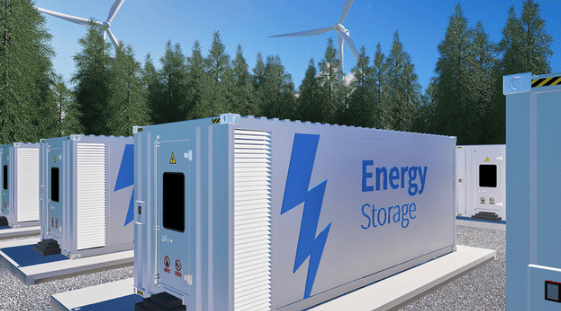
Unlike battery energy storage systems, which typically store electricity for 1 to 4 hours, long-duration energy storage technologies can supply power for 8 hours or longer, including pumped hydro storage, flow batteries, compressed air energy storage (CAES), and sensible heat storage. Sources familiar with the matter revealed that the government is developing a Viability Gap Funding (VGF) mechanism for long-duration energy storage and may also consider interest subsidy support to improve liquidity access and accelerate technology adoption. One official stated that heavy reliance on short-duration storage undermines energy security, increases system costs, and limits the feasibility of achieving 100% green power penetration, emphasizing that long-duration energy storage is crucial for optimal integration of renewable energy. Another official added that, compared to lithium-ion battery systems, high storage costs and low technological maturity have so far hindered the large-scale deployment of long-duration energy storage technologies.
In addition to fiscal incentives, the Ministry of Power is preparing a broader policy framework, including establishing a technology-neutral definition for long-duration energy storage, integrating storage targets into the National Electricity Plan (NEP) and the Energy Storage Obligation (ESO) framework, and formulating a national deployment roadmap. Furthermore, pilot projects are planned to test the performance of long-duration energy storage technologies under different grid conditions and to build commercial use cases. Currently, India has two tranches of Viability Gap Funding for battery energy storage projects, covering 43.22 GWh, while also providing exemptions from Inter-State Transmission System (ISTS) charges for pumped hydro storage and related battery energy storage projects, valid until June 2028. As of the time of writing, queries sent to the federal Ministry of Power and Ministry of Heavy Industries had not received a response.
This policy push by India reflects a global shift toward long-duration energy storage solutions. According to a white paper published by the Long Duration Energy Storage Council in April 2026, governments in the United Kingdom, Germany, California and New York in the United States, and New South Wales in Australia are at various stages of evaluating long-duration energy storage services. The council recommends that long-duration energy storage systems can address the issue of forced curtailment of solar power output in India by storing surplus energy. Over the past year, several projects in Rajasthan have experienced significant curtailment, primarily due to a lack of transmission capacity. According to a report by the energy transition think tank Ember, between May and December 2025, India's solar power projects curtailed 2.3 TWh, accounting for approximately 18% of the average monthly solar generation of 13 TWh.
Alekhya Datta, Director of the Power and Renewable Energy Division at The Energy and Resources Institute, stated that battery energy storage excels in speed, while long-duration energy storage is crucial for endurance. Long-duration energy storage is not superior to battery storage in all scenarios, but it is more suitable when the grid requires continuous power supply for 6 hours to over 24 hours, and in some cases, for days or seasons. This is important for extended evening peaks, low-solar or low-wind periods, renewable energy firming, resource adequacy, congestion relief, and resilience during prolonged stress events. However, economic viability remains challenging, with pumped hydro storage projects typically requiring an investment of 5 to 9 billion rupees per GWh, while flow battery systems with an 8-hour storage configuration cost approximately 21.04 billion rupees per GWh.
This article is compiled by Wedoany. All AI citations must indicate the source as "Wedoany". If there is any infringement or other issues, please notify us promptly, and we will modify or delete it accordingly. Email: news@wedoany.com