Average Flow Pressure Increases by 76% in Chlorine Dioxide Stimulation Tests in the Permian Basin, USA
en.Wedoany.com Reported - Chlorine dioxide (ClO₂), with its strong oxidizing properties, can effectively remove scaling, biofilm, and heavy hydrocarbon blockages in unconventional fractured wells. A series of field tests conducted in the Permian Basin demonstrate that this technology can significantly enhance well flow pressure and recovery rates.
Results from a chlorine dioxide re-stimulation test involving 10 wells showed an average increase in flow pressure of 76%. Based on this, over 60 treatments were subsequently performed on more than 40 wells, with bottomhole pressure generally increasing by 70% to 300%. Production analysis indicates that most wells in the Wolfcamp formation achieved a recovery factor (RF) exceeding 10%. Among them, six treated wells had an average oil recovery factor of 12%, representing a 42% improvement over pre-treatment levels; the average gas recovery factor was 20%, a 69% increase.
In the case of Well B-1 in the Wolfcamp B formation of Pecos County, the well was produced using an electric submersible pump (ESP), with initial production starting in May 2022. After the first chlorine dioxide treatment, production increased from 180 bbl/d to 400 bbl/d; a second treatment 12 months later increased production from 145 bbl/d to 225 bbl/d. Following the first treatment, static BHP increased from approximately 975 psi to 3,580 psi; after the second treatment, it increased from 1,210 psi to 2,700 psi. Cumulative oil production within 30 days after the first treatment was 6,600 bbl, and an additional 3,500 bbl was produced within 30 days after the second treatment. After treatment of the adjacent Well B-2, the gas-oil ratio (GOR) increased from 230 Mscfd to 650 Mscfd, indicating reconnection of gas-bearing reservoir zones previously isolated by contaminants such as scale. In Reeves County, a total of 10 chlorine dioxide treatments were performed on six wells, resulting in incremental production of approximately 480,000 bbl of oil and 5.3 bcf (1.385 MMboe), with total treatment costs of approximately $900,000.
Chlorine dioxide, an unstable gas typically generated on-site by reacting a sodium chlorite solution with an acid, is dissolved in water for oilfield operations. It is registered by the U.S. Environmental Protection Agency (EPA) as a disinfectant and biocide, capable of destroying biofilms, and degrades into harmless substances within hours after reaction. ExxonMobil has used it to remove drilling fluid residues, friction reducer polymers, and other substances that impair permeability. When used in conjunction with hydrochloric acid (HCl), chlorine dioxide can decompose scales such as iron sulfide, barium sulfate, strontium sulfide, and calcite that cause injectivity or productivity decline, and keep paraffin and asphaltenes in solution for flowback. Removing biomass requires a chlorine dioxide concentration of approximately 4,000 ppm in combination with nano-surfactants.
The use of diverting agents is crucial during the treatment process. Without diverting agents, the treatment fluid will follow the path of least resistance, bypassing damaged zones. Common diversion methods include gelled acid, rock salt, and soluble biodegradable balls, with biodegradable balls providing effective diversion in over 90% of treatments.
In a specific case, Well A-0 in Reeves County, Delaware Basin, was shut-in and considered a candidate for abandonment. After a chlorine dioxide plus acid stimulation in January 2023, oil and gas production increased from approximately 1 bbl/d before shut-in to 125 boe/d. Within 18 months, cumulative recovery increased from approximately 623,000 boe to 870,000 boe. Pressure diagnostic analysis (PDA) showed that the well regained linear flow after stimulation, indicating that the production decline in previous years was primarily due to damage rather than reservoir depletion—a trend observed in approximately 60% to 70% of treated wells.
Well A-10, produced using an electric submersible pump (ESP), achieved similar results. Before treatment, the well produced approximately 90 bbl/d, which increased to 187 bbl/d after the first treatment. A second treatment 15 months later increased production from 60 bbl/d to 125 bbl/d. Analysis showed that the estimated ultimate recovery (EUR) of oil increased by 48%, from approximately 273,000 bbl to 395,000 bbl. The decline rate after the second treatment was lower than after the first, and its linear flow period was longer, indicating further wellbore cleanup.
Regarding economics, the research team compared chlorine dioxide treatment with traditional refracturing. Taking Well R in Culberson County, Permian Basin, as an example, its production had dropped to less than 20 boe/d with a water cut of 99%. The operator performed a chlorine dioxide stimulation at a total cost of $790,000. The 30-day initial production (IP30) before treatment was approximately 230 boe/d and 1.7 MMscfd, equivalent to 65% of the initial production in 2015; the well's cumulative hydrocarbon production in the 9 months following treatment exceeded the cumulative production in the 9 months following initial completion. In contrast, a hypothetical refracturing plan, requiring new liners, cementing, and stimulation services, was estimated to cost up to $3,806,000. Although the absolute oil production from chlorine dioxide treatment was lower than that from refracturing, its payback period was only 65 days (compared to approximately one year for refracturing), the 5-year net present value (NPV) was $2.1 million (compared to $1.0 million for refracturing), and the return on investment (ROI) reached 3.95, which is 2.7 times that of the refracturing plan (1.45).
These research findings are from a series of papers (SPE-223521-MS, SPE-230595-MS, URTeC: 3818857) presented at SPE and Hydraulic Fracturing Technology Conferences, authored by P. Dalamarinis and S. Fusselman, among others, providing a detailed demonstration of the application potential of chlorine dioxide as a re-stimulation agent for unconventional horizontal wells.
This article is compiled by Wedoany. All AI citations must indicate the source as "Wedoany". If there is any infringement or other issues, please notify us promptly, and we will modify or delete it accordingly. Email: news@wedoany.com
Related Products

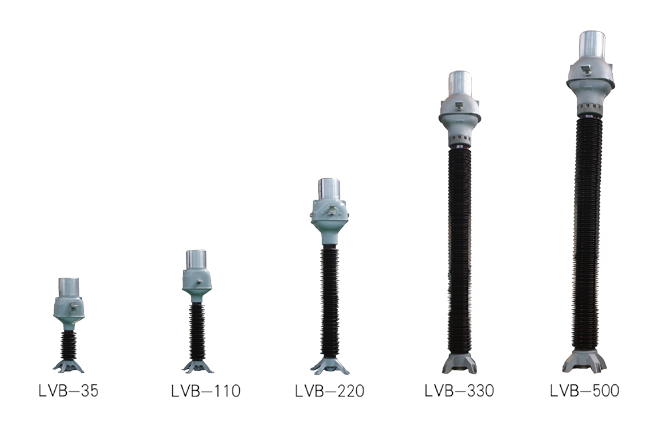
LVB Series 35-500kV Oil-immersed Inverted Current Transformer
Shandong TaiKai Instrument Transformer Co., Ltd.
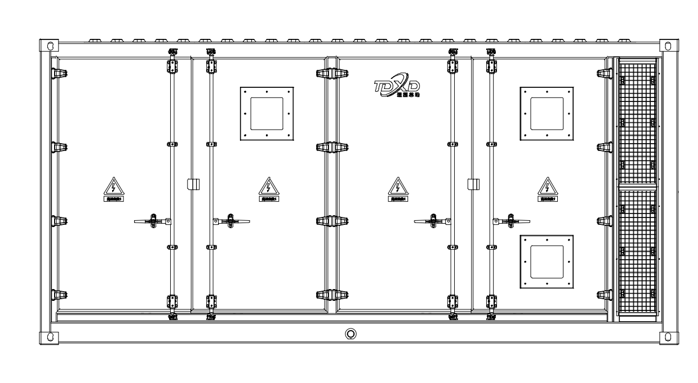
5012kWh DC Energy Storage System TD-EES-5012kWh
Suzhou Tongding Xindong Energy Storage Technology Co., Ltd.
GW4-40.5/72.5/126/145/170/252/363/420 Series Double-column Horizontal Rotary High-voltage AC Disconnect Switch
SHANDONG TAIKAI DISCONNECTORS CO., LTD.
Hydrogen Production Technology: Hydrogen Purification by Pressure Swing Adsorption
Chengdu Yizhi Technology Co., Ltd.