en.Wedoany.com Reported - On June 8, Panasonic Holdings disclosed at the "Panasonic Group Investor Day 2026" that its subsidiary Panasonic Industry plans to invest a cumulative total of 150 billion yen in AI-related commercial materials from fiscal 2026 to 2028, focusing on expanding its component business—including electronic materials, substrate materials, conductive polymer capacitors, and supercapacitors—in the AI infrastructure and edge AI sectors. This investment is approximately three times that of the previous mid-term phase.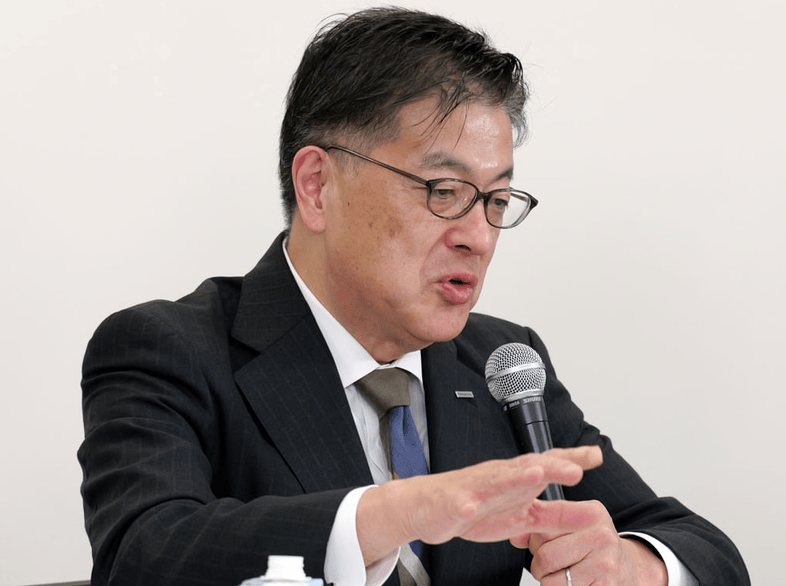
The core of this investment by Panasonic Industry is to redirect its high-reliability electronic materials and component capabilities, long cultivated in the automotive sector, toward AI servers, AI semiconductor peripherals, data center power supply systems, and edge intelligent terminals. Generative AI is driving rapid growth in data center equipment investment, with high-speed signal transmission, large current supply, high-temperature operation, space constraints, and high-voltage environments within servers raising the bar for basic components. Panasonic Industry aims to expand supply capacity around key businesses such as high-function multilayer substrate materials and conductive polymer capacitors, while extending automotive-use inductors and relays to AI infrastructure applications. For the AI industry chain, computing power competition depends not only on GPUs and advanced process chips but also on server motherboard materials, power supply components, heat dissipation, and power stability, which determine overall system performance and long-term operational reliability.
Panasonic Industry plans to increase sales from AI-related businesses to approximately 430 billion yen by fiscal 2028, and exceed 500 billion yen by fiscal 2030.
In terms of specific products, the high-function multilayer substrate material MEGTRON will be used to suppress high-frequency transmission loss, reduce high-speed signal degradation, and help control power consumption and temperature rise. Conductive polymer capacitors will ensure stable power supply under high-temperature and high-current conditions, reducing the installation area pressure on server motherboards. Panasonic Industry also plans to introduce supercapacitors into AI server power supply scenarios, absorbing power load fluctuations through instantaneous large current output to improve power efficiency. As the power density of AI server cabinets continues to rise, these components—located near chips and in power supply chains—will become closer to "key infrastructure components for computing power," and their supply stability, lifespan, heat resistance, and consistency will directly impact data center deployment schedules.
In terms of production capacity, Panasonic Industry will advance capacity expansion across multiple global locations. High-function multilayer substrate materials will be expanded through a division of labor across production systems in Koriyama, Japan; Taiwan; Guangzhou, China; Suzhou, China; and Ayutthaya, Thailand, with a target of more than doubling supply capacity by fiscal 2030. Conductive polymer capacitors will see phased production line enhancements at sites in Saga and Kumamoto, Japan, as well as Malaysia and Indonesia, entering a larger-scale production increase phase from fiscal 2027. In addition to equipment investment, Panasonic Industry will increase R&D resource allocation, shorten development cycles through smart laboratories, and promote new component development via industry-academia collaboration and cross-industry open innovation, aiming to achieve mass production of innovative components by fiscal 2028.
At the Panasonic Holdings level, the AI infrastructure layout is also being strengthened simultaneously. The group plans to invest a cumulative total of approximately 500 billion yen in AI infrastructure-related businesses from fiscal 2026 to 2028, with Panasonic Energy accounting for about 350 billion yen and Panasonic Industry about 150 billion yen. The former focuses on data center energy storage systems and battery backup units, while the latter undertakes the supply of high-function components and materials for AI server peripherals. By combining these two business lines, Panasonic aims to build a more comprehensive support capability in the power supply, energy storage, materials, and key component segments of AI data centers.
Subsequent progress will focus on the expansion pace of each production base, the progress of AI server customer adoption, the mass production performance of supercapacitors, and the development milestones of new components. As AI infrastructure expands from chip procurement to complete systems, power supplies, materials, and reliability systems, Panasonic Industry's 150 billion yen investment will become one of the key moves by Japanese electronic component companies to enter the global AI industry chain.
This article is compiled by Wedoany. All AI citations must indicate the source as "Wedoany". If there is any infringement or other issues, please notify us promptly, and we will modify or delete it accordingly. Email: news@wedoany.com