China Mobile 02 Satellite Successfully Launched to Verify Direct-to-Phone Satellite Technology
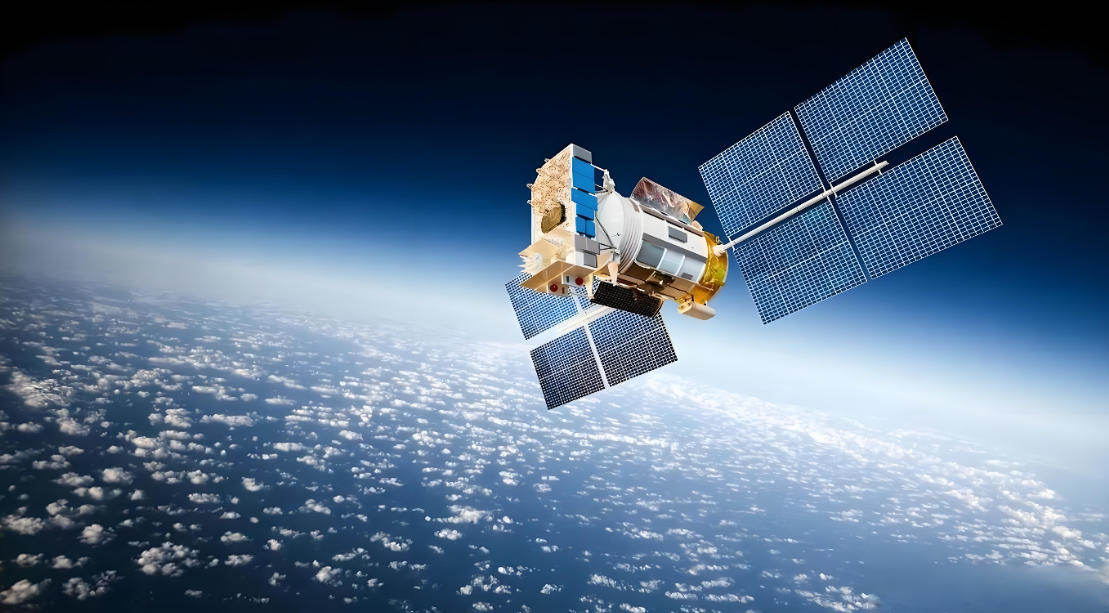
en.Wedoany.com Reported - On June 9, China successfully launched the "China Mobile 02" satellite into its predetermined orbit from the Jiuquan Satellite Launch Center using a Zhuque-2 improved Y6 carrier rocket. The satellite, developed under the leadership of China Mobile Communications Group, is a satellite internet technology test satellite primarily used for conducting technical verification experiments such as direct-to-phone satellite communication and space-terrestrial network integration.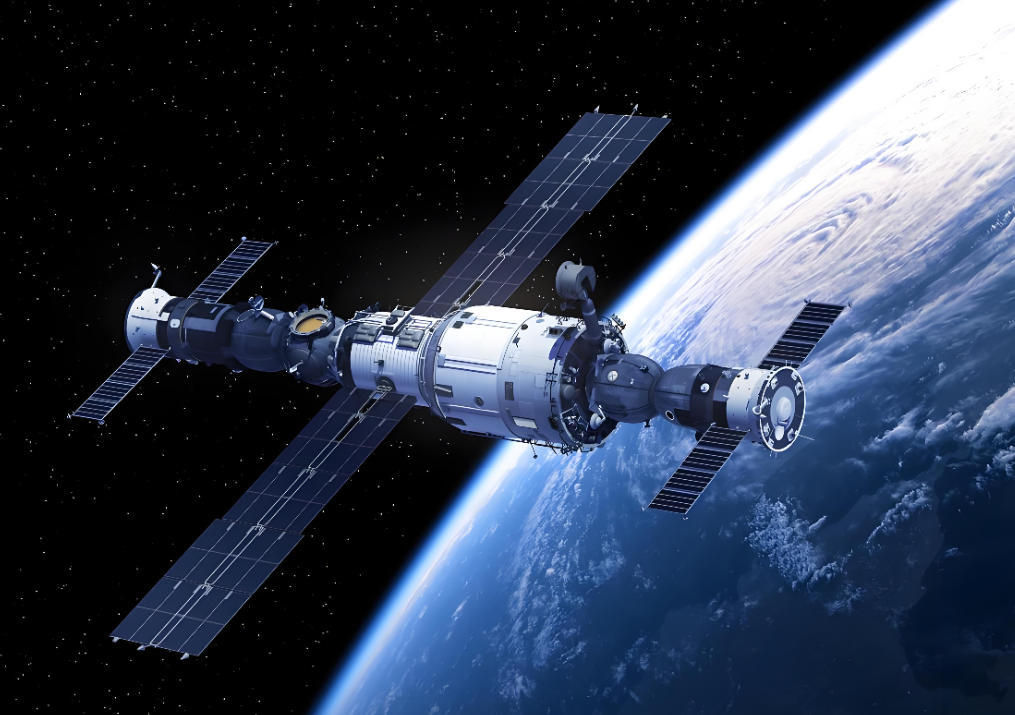
After entering orbit, the China Mobile 02 satellite will conduct experiments focused on the direct communication capability between ordinary mobile terminals and satellite networks. The key to direct-to-phone satellite communication lies in enabling users to obtain emergency communication or broadband communication capabilities via satellite links in scenarios such as areas with insufficient ground base station coverage, ground communication damage caused by natural disasters, islands and sea areas, mountainous deserts, and field operations. Compared with traditional satellite phones or dedicated terminals, direct-to-phone satellite communication emphasizes the coordination among ordinary mobile terminals, mobile communication networks, and low-orbit satellite systems. It requires solving issues related to frequency usage, link budget, satellite-ground handover, terminal power consumption, network protocol adaptation, and service continuity. The experiments undertaken by the China Mobile 02 satellite will provide engineering data for the subsequent construction of an integrated space-terrestrial network and also help communication operators evaluate the integration path between satellite networks and existing cellular networks.
This mission also successfully sent the Qianfan DTC01 satellite into its predetermined orbit using a "one rocket, two satellites" approach. Public information shows that the Ministry of Industry and Information Technology previously guided the completion of domestic frequency coordination for the relevant satellites and issued space radio station licenses and radio frequency usage permits.
Direct-to-phone satellite communication is becoming an important direction for the integration of satellite internet and mobile communications. Terrestrial cellular networks have advantages such as large capacity, low cost, and high terminal penetration, but they have coverage boundaries in remote areas, maritime routes, aviation scenarios, and disaster emergency scenarios. Low-orbit satellite internet can expand coverage through constellation networking, but to truly enter the mass communication market, it needs to form linkages with operator networks, terminal ecosystems, spectrum regulation, and business systems. The experimental value of the China Mobile 02 satellite lies in introducing operator network capabilities into the satellite internet verification chain, testing the access, link maintenance, service bearing, and space-terrestrial network coordination effects between mobile phones and satellites in a real orbital environment. As satellite communication capabilities extend to ordinary mobile phones, the service boundary of mobile communication networks will further expand from ground base station coverage areas to an integrated space-air-ground coverage range.
The successful launch of the Zhuque-2 improved Y6 carrier rocket also provides a new mission sample for China's commercial space launch capabilities. This rocket is a two-stage, low-temperature, extended-length liquid carrier rocket with a payload capacity of 6 tons to low Earth orbit and 4 tons to a 500-kilometer sun-synchronous orbit. For the construction of satellite internet, stable, reusable, and cost-optimized commercial launch services are important support for the high-frequency deployment of low-orbit constellation networking and technology test satellites. Whether direct-to-phone satellite communication can achieve large-scale application in the future still needs to be verified in terms of constellation coverage, terminal adaptation, pricing models, emergency service systems, and cross-network switching experience.
The successful orbit insertion of the China Mobile 02 satellite marks that the operator-led satellite internet technology verification has entered a more specific engineering test phase. With the advancement of space-terrestrial network integration experiments, satellite communication will no longer be just an internal capability of the aerospace system but will gradually become an important supplement to mobile communication infrastructure, serving emergency communications, industry-specific networks, remote area coverage, and the evolution of future 6G networks.
This article is compiled by Wedoany. All AI citations must indicate the source as "Wedoany". If there is any infringement or other issues, please notify us promptly, and we will modify or delete it accordingly. Email: news@wedoany.com
Related Products

20 Inch 1600*900 Full HD 60Hz TFT LED Monitor with VGA and DP Interfaces for Desktop Computers-Business Use
Guangzhou Zanying Optoelectronics Technology Co., Ltd.
Industrial and Commercial Point-Type Gas Detector
Jinan Benan Technology Development Co., Ltd.
Comprehensive Mining Automation Control System
Beijing Tianma Intelligent Control Technology Co., Ltd.
Flat Portable Satellite Terminal 0.35m Aperture Manual Portable Terminal
China Starwin Science & Technology Co., Ltd.

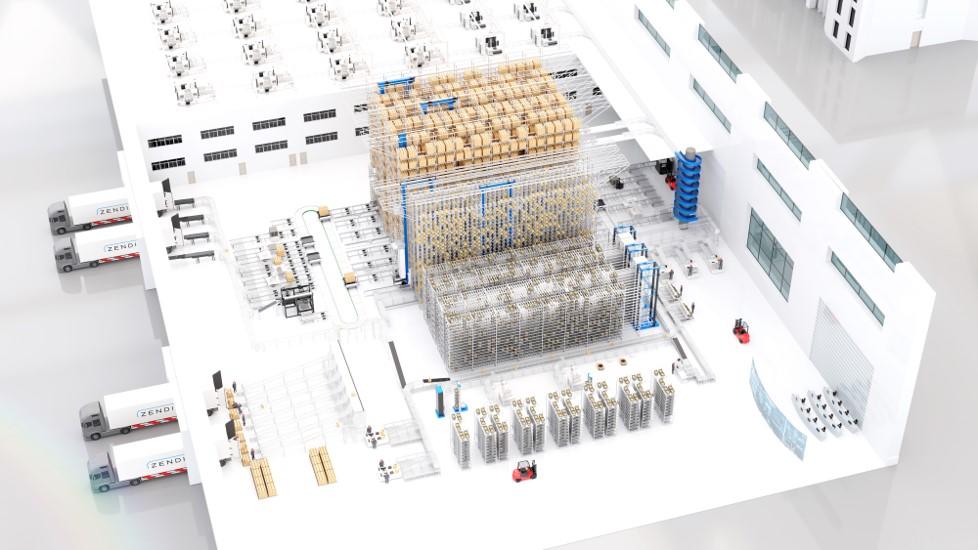
One-Stop Steward Service for the Entire Logistics System Integration Chain
Zhongding Intelligent (Wuxi) Technology Co., Ltd.
Multi-function Marine Monitoring Low-altitude Detection Radar Sea-air Boundary Ocean Dynamic Environment Measurement
Chengdu Dixin Technology Co., Ltd.

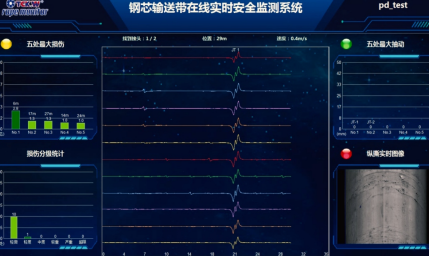
Conveyor Belt Intelligent Monitoring System
LUO YANG WIRE ROPE INSPECTION TECHNOLOGY CO., LTD.
Mine Explosion-proof and Intrinsically Safe Industrial Ethernet Ring Network (10 Gigabit/Gigabit)
Chongqing Mas Sci&Tech Co., Ltd.