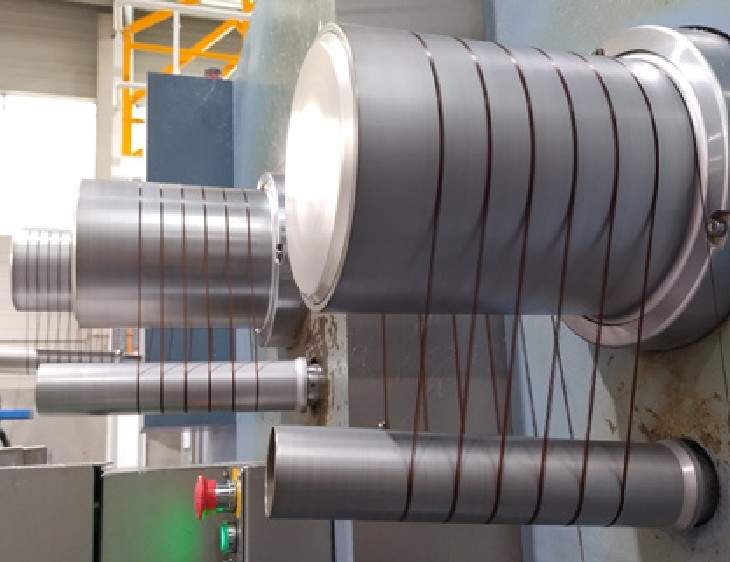
China's New Domestic Composite Materials Reduce Ship Weight
en.Wedoany.com Reported - For new ships to sail into the deep blue, they must overcome a material challenge: reducing weight while withstanding multiple harsh conditions such as high temperatures, radiation, corrosion, flame retardancy, and stealth. For a long time, key technologies for high-end ship composite materials have been controlled by others, and some high-performance materials and structural-functional integrated components still face foreign technology blockades. A scientific research campaign aimed at achieving self-reliance in key materials for new ships and solving the "bottleneck" problem has quietly begun at Dalian University of Technology.
Recently, a team led by Professor Jian Xigao, an academician of the Chinese Academy of Engineering and a professor at Dalian University of Technology, developed a new generation of structural-functional integrated composite components for ships, which successfully passed third-party testing and evaluation by the Chinese Society for Corrosion and Protection. Compared to current marine steel, the weight reduction exceeds 60%; comprehensive performance indicators such as high-temperature resistance, radiation resistance, corrosion resistance, and flame retardancy meet standards; radar absorption and infrared low emissivity reach application requirements. The technology readiness level is assessed at Level 5, meeting conditions for engineering application.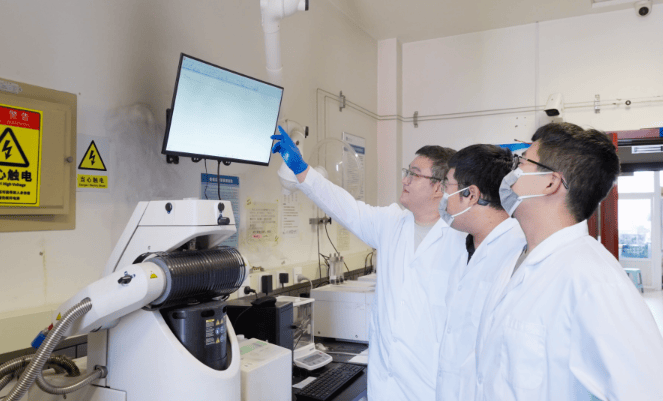
The implementation of this achievement will effectively break the long-term foreign technology monopoly, fill the technical gaps in China's high-end ship composite materials field, provide a solid solution for the self-reliance and performance upgrade of China's new ship equipment, and help domestic ships pursue their deep blue dreams.
The "Material Dilemma" of Deep Blue Equipment
High salt spray, high humidity, strong ultraviolet radiation, complex mechanical loads... Core ship components must serve in such extreme environments for years. They need to be lightweight to reduce ship weight, increase speed, and enhance payload; resistant to corrosion, high temperatures, flame, and radiation; and meet the stringent requirements of radar and infrared stealth in modern naval warfare.
"In the past, traditional Chinese ship materials struggled to balance lightweight design with multifunctionality and high reliability," admitted Zou Jiaxuan, a doctoral student at the School of Chemical Engineering, Dalian University of Technology, and team leader. More critically, core technologies such as high-performance resin matrices, structural-functional integrated components, and precision processing of large components have long been controlled by a few countries, leaving China with significant gaps in high-end material supply and once subject to foreign technology blockades.
This key indicator directly impacted the iterative upgrade of new ships. When selecting materials, designers often faced the dilemma of "weight reduction without corrosion protection, or corrosion protection without stealth," or had to rely on imported grades, posing supply risks and safety hazards.
Facing these practical challenges, under the guidance of Academician Jian Xigao, Zou Jiaxuan, along with several partners from the research group, established a scientific research team covering materials, chemical engineering, and mechanical engineering. Focusing on the development needs of lightweight, integrated, and high-safety new ships, they are committed to solving the problem of key materials being controlled by others through independent innovation.
The "Tailored" Path of Research
Unlike general new material development, this team has adhered to a "demand-driven, combat-oriented" approach from the start.
Since the end of 2022, they have continuously conducted material system design, component preparation, and performance verification based on the service requirements of ship components in high salt spray, high humidity, strong ultraviolet radiation, complex loads, and special functional protection scenarios.
"We are not working behind closed doors," said Zou Jiaxuan. "Only by thoroughly understanding the actual service environment can we develop truly effective materials."
At the beginning of the research, the team faced a recognized "tough nut" in the field of ship composite material development—lightweight, high performance, and stealth capabilities, which are like irreconcilable contradictions, extremely difficult to perfectly integrate into a single material.
The early exploration was filled with trial-and-error pains, and the team once fell into a quagmire of "excelling in one aspect but imbalanced overall": formulations pursuing extreme lightweight often could not withstand high salt spray erosion, easily aging and cracking; materials balancing corrosion resistance, flame retardancy, and radiation resistance were too dense to meet weight reduction targets; even when mechanical strength barely met standards, key functions like radar absorption and infrared stealth often failed.
Facing this core bottleneck, the team abandoned traditional single-modification approaches and chose a more difficult path to break through: reconstructing the molecular structure system of polymer materials from scratch. Like a precise scalpel, they adjusted the resin matrix ratios one by one, optimized the arrangement of reinforcing materials, and continuously improved the forming process of components.
After repeated refinement of thousands of material formulations, overturning over a dozen immature plans, and eliminating dozens of poorly compatible combinations... the team cleared the fog and developed a new generation of structural-functional integrated composite components for ships that fully meet stringent performance standards, providing an indestructible "invisible armor" for national heavy equipment.
"The implementation of this achievement will effectively break the long-term foreign technology monopoly and fill the technical gaps in China's high-end ship composite materials field," said Academician Jian Xigao.
"Next, we will fully promote the real-world application and engineering verification of new materials on ships," Zou Jiaxuan introduced. The team will continue to deepen technological iteration and accelerate the deep integration of industry, academia, research, and application. From "being controlled by others" to "self-reliance," the research team at Dalian University of Technology has laid a solid material foundation for domestic ships to pursue their deep blue dreams through independent innovation.
This article is compiled by Wedoany. All AI citations must indicate the source as "Wedoany". If there is any infringement or other issues, please notify us promptly, and we will modify or delete it accordingly. Email: news@wedoany.com
Related Products

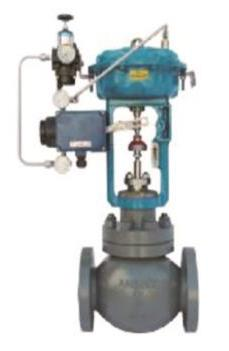
Quick-Change Single-Seat Control Valve / Quick-Change High-Pressure Single-Seat Control Valve
Beijing Consen Automation Technology Co., Ltd.
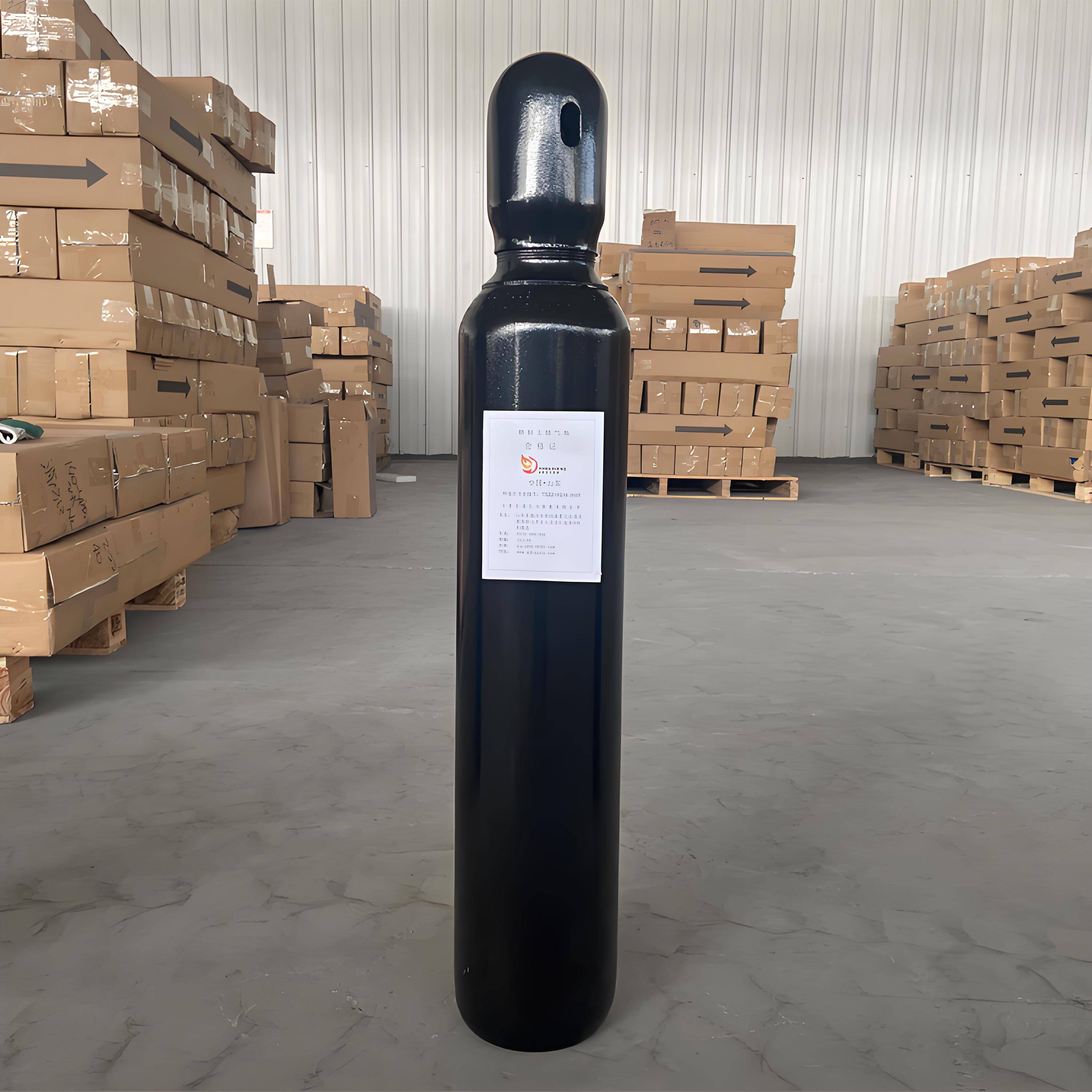
Nitrogen Export, Nitrogen Manufacturer, High-purity Nitrogen Supplier
Foshan Yuexin Industrial Gas Co., Ltd.
Steel Plates for Chemical Pressure Equipment
Gansu JISCO Group Hongxing Iron and Steel Co., Ltd.

CAP1400 main feedwater flow nozzle flowmeter.
Jiangsu Hongda Instrument Technology Co., LTD.
New Environmentally Friendly Green Potassium Salt Collector
Chonfar Engineering and Technology Co., Ltd.