Brazil's Coffee Industry Shifts Toward Brand Building and Sustainability
en.Wedoany.com Reported - The competitiveness of the coffee industry is extending beyond traditional productivity and quality indicators to new dimensions such as brand building, sustainability, and traceability. This trend became a central topic at the third edition of the "Market, Carbon, and Regenerative Coffee Journey" (3ª Jornada: O Mercado, o Carbono e o Café Regenerativo). The event will be held in Monte Carmelo, Minas Gerais (MG), Brazil, bringing together industry leaders, experts, and representatives from the coffee supply chain to discuss opportunities in the carbon market, sustainability, and value enhancement of regenerative coffee.

With consumers and the purchasing market increasingly focused on sustainability, traceability, environmental regeneration, and social responsibility, offering high-quality coffee alone is no longer sufficient. Producers need to continuously communicate their origin, production processes, and the values underpinning their operations. One of the panel discussions will focus on the relationship between branding and value creation at the farm level, exploring how farms, cooperatives, and companies can leverage reputation, positioning, and mission as differentiation tools.
Ricardo Nicodemos, President of the Brazilian Association of Agribusiness Marketing (ABMRA), stated that this topic is directly linked to the future competitiveness of agribusiness. He believes that participating in the journey connecting markets, sustainability, and regenerative coffee further reinforces the strategic role of communication in enhancing the value of Brazilian agriculture. ABMRA is convinced that in an increasingly competitive environment, building strong brands is crucial for bridging the gap between producers, markets, and consumers.

Specialty and sustainable coffees hold a significant position in the premium market, where the influence of origin, transparency, and socio-environmental commitments often rivals or even surpasses the physical attributes of the product. Francisco Sérgio de Assis, President of the Monte Carmelo Coffee Growers Cooperative (monteCCer), noted that this shift has become a reality in modern coffee farming. Hosting ABMRA's participation in the third edition of the "Journey" reinforces that the future of coffee farming depends not only on responsibly producing differentiated coffee but also on the ability to communicate value, mission, and origin. Regenerative coffee needs to be connected to strong brands that can bring producers, markets, and consumers closer together.
Nicodemos believes that many agribusinesses still focus their efforts on fragmented promotional activities, neglecting continuous value building. Brand building is not merely a result of exposure or frequency, but rather a combination of strategy, creativity, consistency, and the ability to establish genuine connections with consumers. In the agricultural sector, companies that invest in sustained positioning can create differentiation, strengthen their reputation, and enhance the perceived value of their products.
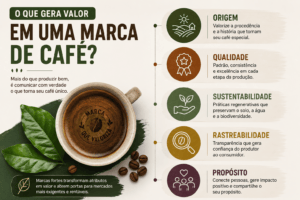
As sustainability, carbon, traceability, and environmental regeneration become integrated into agribusiness logic, the importance of communication as an economic tool grows. The challenge lies not only in producing better but also in ensuring the market recognizes and rewards this differentiation. In the coffee production chain, brand building helps transform production attributes such as sustainability, traceability, certifications, farm history, and product quality into market-recognized competitive advantages. Strong brands enable producers, cooperatives, and companies to reduce reliance on price competition and enhance the perceived value of their products. Specifically, agricultural brand building encompasses five pillars: origin, quality, reputation, sustainability, and mission. Origin tells the story of the farm, region, or cooperative; quality provides consistent standards to the market; reputation builds credibility over the long term; sustainability demonstrates environmental and social commitments; and mission clearly communicates the core values guiding the business. Premium markets and discerning consumers tend to buy not just a product, but also a story, origin, and values. Strong brands can capture more value and increase customer loyalty. In modern agriculture, producing excellently remains crucial, but communicating what is produced excellently has become equally important for creating value and profitability.
This article is compiled by Wedoany. All AI citations must indicate the source as "Wedoany". If there is any infringement or other issues, please notify us promptly, and we will modify or delete it accordingly. Email: news@wedoany.com
Related Products



714CD Series C-Band Weather Radar
Chengdu Zhongdian Jinjiang Information Industry Co., Ltd.
Industrial and Commercial Point-Type Gas Detector
Jinan Benan Technology Development Co., Ltd.
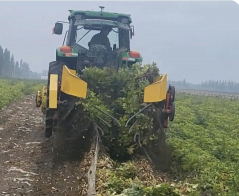
4HS-8 High-efficiency Peanut Inverted-laying Harvester
Hebei Yongfa Hongtian Agricultural Machinery Manufacturing Co., Ltd.