2026 World Cup Expected to Boost Mexican Meat Exports by 5%-12%
en.Wedoany.com Reported - During the 2026 World Cup, Mexico's meat exports to the United States and Canada are expected to grow by 5% to 12%. Raúl Riquelme, Director General of the National Association of Federal Inspection Type Establishments (ANETIF), stated that the World Cup will drive growth in Mexico's meat industry in both domestic consumption and exports, particularly to the North American market.
Riquelme noted that during the tournament, consumption of Mexican meat products will mainly come from fast-food restaurants, bars, restaurants, and households. Demand is expected to increase for sausages, chorizo, longaniza, beef brisket, ribeye steak, T-bone steak, ribs, beef, pork, chicken products, and snacks such as beef jerky. Riquelme said the industry, together with export partners and the National Association of Self-Service and Department Stores (ANTAD), will offer products bearing the TIF certification mark, which represents food safety, quality, and hygiene. According to ANTAD data, the World Cup is expected to boost supermarket and convenience store sales by up to 30%, direct sales by community retailers by 20% to 25%, and beverage and snack sales by up to 35%.
These sales forecasts come amid growing challenges in the North American meat supply chain. According to the Mexican Meat Council (COMECARNE), since 2024, Mexico's live cattle exports to the United States have been restricted due to the New World screwworm issue, causing an estimated $1.8 billion in losses. Ernesto Salazar, Economic Research and Trade Manager at COMECARNE, stated that the impact has primarily fallen on Mexican cattle ranchers, who have been forced to extend livestock feeding periods, increasing costs for feed, veterinary services, labor, and production inputs.
Despite export restrictions, Macarena Hernández, Director General of COMECARNE, said the beef industry has shown resilience. Mexico's meat industry has used the trade disruption as an opportunity to build feedlots, extend cattle feeding time before slaughter, and expand processing facilities. In 2025, Mexico exported 300,000 tons of beef and pork products to the United States, a 10% increase from 273,000 tons the previous year, with export value reaching $3.2 billion, up from $2.9 billion the prior year.
This shift in the value chain has sparked controversy in the United States. Kyle Williams, manager and co-owner of Texas feedlot company Lubbock Feeders, said that if Mexico completes fattening and processing, the U.S. will face competitive pressure, losing jobs and labor opportunities. The situation has further complicated after the U.S. Department of Agriculture confirmed the detection of New World screwworm in Texas. As of Monday morning, four cases had been confirmed in the state. Authorities have established a 20-kilometer quarantine zone around the farm where the first case was detected. The Canadian Food Inspection Agency has temporarily banned any cattle that have been in Texas within the past 21 days. The USDA estimates that combating the parasite in Texas alone could cost up to $1.8 billion.
These developments, combined with ongoing drought in the United States, have led to rising retail beef prices. Steak prices have increased 17% over the past year to $13.02 per kilogram, while ground beef has climbed to a record $6.90 per kilogram, up 19% year-over-year. According to data from the Federal Reserve Bank of St. Louis' April report, wholesale beef brisket prices in Texas have risen approximately 28% compared to the same period last year.
This article is compiled by Wedoany. All AI citations must indicate the source as "Wedoany". If there is any infringement or other issues, please notify us promptly, and we will modify or delete it accordingly. Email: news@wedoany.com
Related Products



714CD Series C-Band Weather Radar
Chengdu Zhongdian Jinjiang Information Industry Co., Ltd.
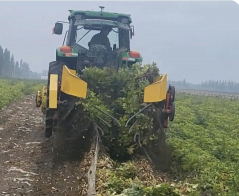
4HS-8 High-efficiency Peanut Inverted-laying Harvester
Hebei Yongfa Hongtian Agricultural Machinery Manufacturing Co., Ltd.