en.Wedoany.com Reported - Alibaba Cloud Malaysia has launched a new public cloud region in Johor, adding two data centers, bringing the company's total facilities in Malaysia to five. The announcement was made in Kuala Lumpur on June 9, with Alibaba Cloud planning to roll out a suite of intelligent agent AI services to Malaysian enterprises in the second half of this year. This infrastructure expansion is part of Alibaba's previously announced $53 billion investment in AI and cloud infrastructure, extending Alibaba Cloud's global network to 104 availability zones across 32 regions. The company has been operating in Malaysia since 2017, initially with dual data centers, and added a third facility last year.
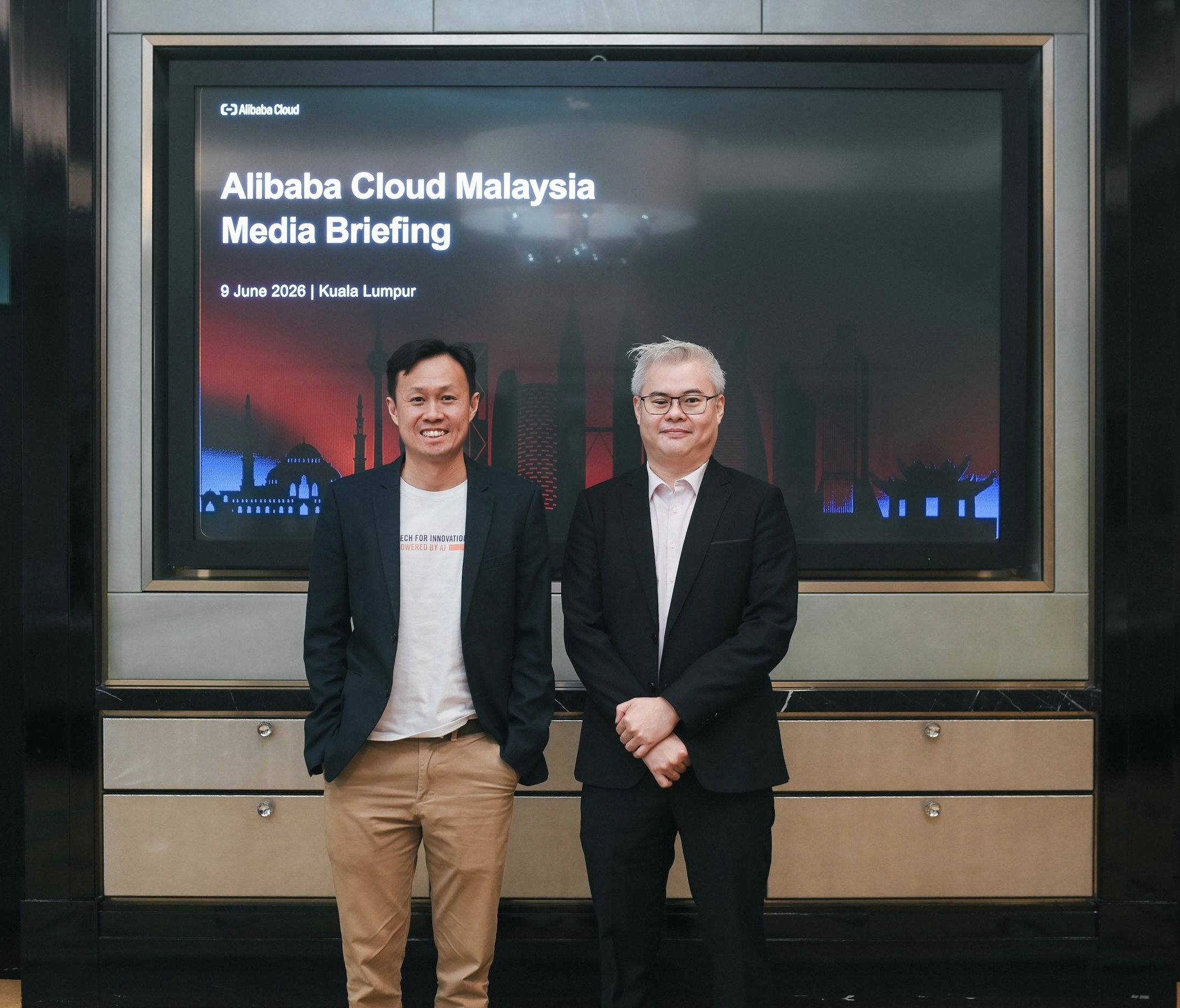
The new region covers computing products including compute, storage, containers, networking, big data, security, databases, and cloud-native services. Choong Hon Keat, General Manager of Alibaba Cloud Intelligence Malaysia, stated that the primary market for this public cloud region is Malaysian customers, but enterprises from other countries, including Singapore, can also use it. Lin En Shu, Head of Solutions Architecture at Alibaba Cloud Intelligence Malaysia, confirmed during a media briefing that the intelligent agent AI product suite to be launched in Malaysia in the second half of this year includes AgentRun, STAROps, ACS Agent Sandbox, Agent Security Centre, AI Security Guardrails 2.0, and Agentic SOC, all of which are globally available. Lin En Shu noted that these products are not the same type of tools; AgentRun and STAROps belong to the enterprise infrastructure tier, suitable for companies looking to build and run large-scale AI agent clusters, such as YTL AI Labs' product ILMU Claw built on Alibaba Cloud infrastructure. Another tier includes Qoder and QoderWork, which are consumer-facing interface-based tools that can be used without complex engineering.
Since April this year, Alibaba Cloud has released four versions of the Qwen model series—Qwen3.6-35B, Qwen3.6-27B, Qwen3.7-Max, and Qwen3.7-Plus. Lin En Shu stated that most customers have directly migrated to the latest versions, as the new models are more capable in coding, reasoning, and understanding user intent. He proposed a framework for model selection: enterprises do not need to use the most powerful and expensive model for every task; they can choose cheaper models based on task requirements, as large-scale usage requires cost considerations. Tasks such as understanding user intent or query classification can run on smaller, cheaper, or even open-source models, while heavier computing is reserved for complex, long-running tasks. Lin En Shu stated that Alibaba Cloud's greatest advantage is providing intelligence at a level comparable to ChatGPT or Google Gemini at a very low cost. Choong Hon Keat added that the company's positioning is cost-effectiveness, allowing customers to achieve maximum benefits with the lowest possible expenditure.
Data sovereignty issues were not mentioned during the day's information release. When asked about this at the end of the meeting, Lin En Shu acknowledged the omission. He confirmed that the company has dedicated infrastructure built in Malaysia to meet data residency requirements, with local inference capabilities serving financial services customers and government agencies that require data to remain within the country. This infrastructure is designed so that AI inference occurs locally, keeping customer data in Malaysia.
Choong Hon Keat revealed that since entering the Malaysian market, Alibaba Cloud has attracted over 300 local system integrators, resellers, distributors, and partners, with a network covering enterprise and SME customers. Over the past one to two years, Alibaba Cloud has conducted AI-focused training programs for these partners. Choong Hon Keat stated that Malaysia remains a strategically key market for Alibaba Cloud in Southeast Asia, and this expansion is a direct response to surging customer demand. Another local partner mentioned in the press release is TNG Digital, which is using Alibaba Cloud's unified data platform to enhance the search and recommendation capabilities of the TNG e-wallet.
This article is compiled by Wedoany. All AI citations must indicate the source as "Wedoany". If there is any infringement or other issues, please notify us promptly, and we will modify or delete it accordingly. Email: news@wedoany.com