en.Wedoany.com Reported - On June 10, the Hami to Chongqing ±800 kV Ultra-High Voltage Direct Current (UHVDC) transmission project (referred to as "Hami-Chongqing HVDC") completed its first full year of stable operation. This 2,260-kilometer-long energy artery, traversing five provinces and municipalities—Xinjiang, Gansu, Shaanxi, Sichuan, and Chongqing—efficiently, cleanly, and stably delivers the abundant wind and solar resources of the northwestern Gobi Desert to the southwestern industrial load center. Over the past year, the project has cumulatively transmitted 25.1 billion kWh of electricity, demonstrating cross-regional resource optimization, supporting national energy transition, safeguarding regional green and high-quality development, and empowering the steady implementation of the "dual carbon" goals.
As one of the 102 major projects under China's 14th Five-Year Plan, the Hami-Chongqing HVDC is the first UHVDC project in China built to transmit power from a Gobi Desert and other arid areas new energy base and also the first UHVDC receiving channel in the southwestern region, with a total investment of 28.6 billion yuan. The project's supporting power sources have a total installed capacity of 14.2 GW, with new energy sources such as wind, solar, and concentrated solar power accounting for over 70%. It innovatively establishes a "wind-solar-thermal-storage" multi-energy complementary operation system, ensuring the long-distance stable transmission of a high proportion of new energy from the source, breaking away from the traditional model where UHVDC transmission relied on conventional thermal power support. According to the plan, the project can transmit an average of 36 billion kWh annually, with over 18 billion kWh from clean energy sources, making it a landmark project in China's push for green and low-carbon energy transition.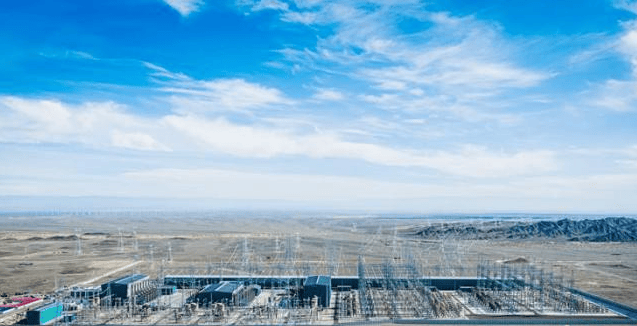
The operation of the Hami-Chongqing HVDC precisely addresses the spatial mismatch of energy resources, establishing a new energy optimization pattern of "western regions produce green electricity, eastern regions use green electricity, and the whole country operates as a unified system." In the first five months of 2026, the project transmitted over 10 billion kWh of green electricity, meeting 6% of Chongqing's total social electricity demand. During the summer peak demand period in 2025, it effectively filled Chongqing's power gap, ensuring stable industrial production and safe, reliable electricity for residential use, completely reversing the region's tight power supply situation during peak summer months.
Since the project's operation, it has enabled a two-way transformation and mutual benefit between Xinjiang's resource advantages and Chongqing's industrial advantages, promoting deep linkage between the Western Development Strategy and the construction of the Chengdu-Chongqing Economic Circle.
For Xinjiang, the new energy transmission channel has fully unlocked the value of the Gobi Desert's green resources. The project has driven over 100 billion yuan in upstream and downstream industrial investment, created more than 30,000 jobs, and effectively stimulated the development of local industrial clusters in equipment manufacturing, energy services, and infrastructure logistics.
For Chongqing, the steady supply of green electricity injects low-carbon momentum into industrial transformation and upgrading. The influx of green electricity has effectively reduced local thermal power generation. In 2025, Chongqing's total coal-fired power generation decreased by 12% year-on-year, leading to continuous improvement in the regional ecological environment. The stable and low-cost clean electricity supply solidifies the energy foundation for the development of high-value-added industries such as advanced manufacturing, new materials, and big data computing, helping enterprises reduce carbon emissions and enhance the competitiveness of green products, thereby driving the comprehensive green transformation of the industrial system in the Chengdu-Chongqing region.
It is understood that State Grid Xinjiang Electric Power will continue to base its efforts on the national energy strategy, safeguarding the safety and stability of the energy channel through lean operation and maintenance, and continuously unleashing the transmission potential of the channel through technological innovation. It will continue to deepen comprehensive coordination and cooperation between Xinjiang and Chongqing, continuously smooth the transmission channel for clean energy from the western region, and serve the national "dual carbon" strategy and empower coordinated regional development with a steady stream of green energy.
This article is compiled by Wedoany. All AI citations must indicate the source as "Wedoany". If there is any infringement or other issues, please notify us promptly, and we will modify or delete it accordingly. Email: news@wedoany.com