en.Wedoany.com Reported - On June 11, China's Diji Robot and BeingBeyond reached a strategic cooperation agreement. The two parties have completed the edge deployment of the Being-H-Flash model on the Sunrise S600, a high-performance embodied intelligence chip, achieving a measured inference frame rate close to 20 FPS. Simultaneously, they have completed the adaptation and optimization of this model on computing platforms such as the Sunrise S100.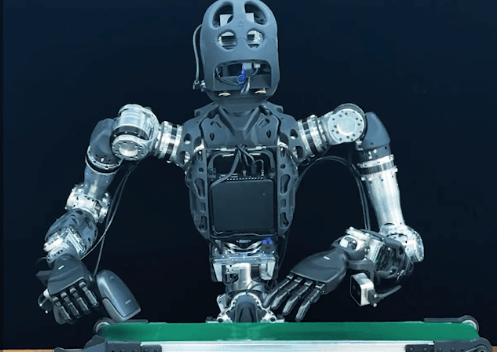
This collaboration targets the critical transition of embodied intelligence from cloud-based validation to deployment on robot hardware. If humanoid robots, mobile manipulation robots, and dexterous hand devices rely on remote computing power for perception, planning, and action generation over the long term, they become susceptible to network latency, connection stability issues, and data transmission costs. Edge deployment allows models to be closer to sensors and actuators, enabling more real-time inference tasks to be completed on the robot itself, thereby reducing dependence on external networks. For scenarios such as grasping, obstacle avoidance, manipulation, interaction, and motion control, model response speed directly impacts the fluidity of robot actions and on-site safety.
Being-H-Flash is designed for robot manipulation tasks, emphasizing hand action generation and dexterous manipulation capabilities. Its performance, approaching 20 FPS on the Sunrise S600, indicates that the model has met the basic conditions for continuous inference on edge platforms.
The Sunrise S600 is a high-performance chip launched by Diji Robot for embodied intelligence scenarios, primarily serving the robot perception, decision-making, and control pipeline. With the completion of the edge deployment of Being-H-Flash on the S600, robot manufacturers can validate manipulation models on hardware platforms that more closely resemble actual product forms, rather than being confined to servers or experimental environments. The adaptation and optimization for platforms like the Sunrise S100 provide more flexible options for robot devices with varying computing power levels, catering to diverse application needs in education and research, lightweight robotics, development kits, and mass-produced terminals.
For the embodied intelligence industry, the synergy between models and chips is becoming a crucial variable in the speed of practical implementation. Previously, robot companies often had to address algorithm models, inference frameworks, chip adaptation, sensor integration, and control interface issues separately, leading to long development cycles and high migration costs. The collaboration between Diji Robot and BeingBeyond, which pre-adapts the manipulation model with a domestic embodied intelligent chip platform, helps reduce the engineering burden on downstream manufacturers for edge inference deployment. If more models, development tools, and robot bodies are integrated into the same ecosystem in the future, the industry chain can form a more complete system for perception, inference, control, and application development centered around the chip platform.
Subsequent milestones will focus on the continuous operational stability of Being-H-Flash in real robot tasks, the adaptation scope across different robot platforms, the maturity of the developer toolchain, and whether the Sunrise S600 can achieve batch applications in more humanoid robot and manipulation robot projects. If edge inference performance continues to improve, embodied intelligent devices will more easily shed their strong dependence on cloud computing power, and robot action generation, dexterous manipulation, and local interaction capabilities will further approach the requirements for actual commercial deployment.
This article is compiled by Wedoany. All AI citations must indicate the source as "Wedoany". If there is any infringement or other issues, please notify us promptly, and we will modify or delete it accordingly. Email: news@wedoany.com