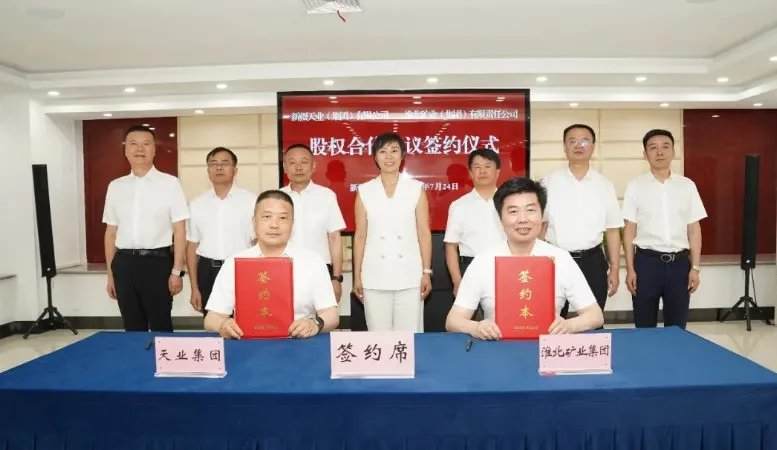
en.Wedoany.com Reported - On June 9, 2026, UK-based Cambridge biotechnology company HutanBio and Wakud International, owner of Oman's first dedicated biodiesel refinery, signed the first commercial offtake memorandum of understanding to advance the development of new feedstock sources needed for large-scale production of sustainable aviation fuel (SAF).
Feedstock supply is widely regarded by the industry as one of the biggest obstacles to scaling up sustainable aviation fuel production. This memorandum represents a critical milestone for HutanBio and comes at a pivotal time for the aviation industry. The collaboration aims to produce sustainable fuel feedstocks for hard-to-abate sectors such as aviation, where airlines face growing pressure to reduce emissions while maintaining long-haul operations.
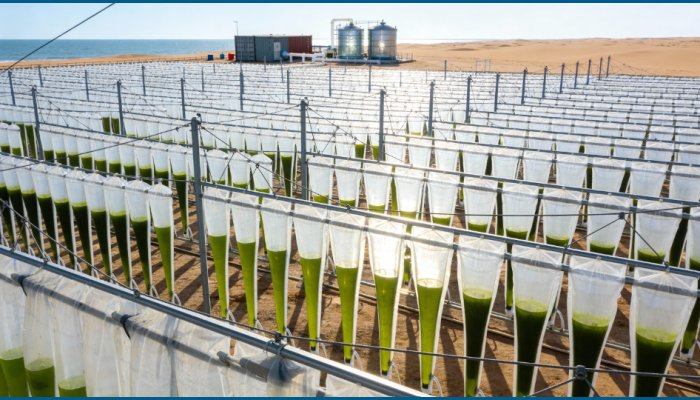
Unlike many traditional biofuel feedstocks, HutanBio's proprietary algae platform uses seawater, sunlight, and carbon dioxide to produce oil in coastal desert environments, avoiding competition with food production and freshwater resources. Founded in 2019, the company is developing a low-carbon oil platform for producing sustainable fuel feedstocks that do not rely on arable land or freshwater. The technology uses proprietary marine microalgae, with research originating from the University of Cambridge and further developed at King Abdullah University of Science and Technology (KAUST) in Saudi Arabia.
The founding team came together through the University of Cambridge, with early research focused on discovering and developing industrial organisms in nature, ultimately identifying a newly discovered scientific organism that now forms the basis of the HutanBio platform. While production will take place in Oman, HutanBio's intellectual property, leadership team, and engineering biology expertise remain rooted in Cambridge. Oman's existing refining infrastructure, coastal desert land, high solar radiation, and access to saline water create a favorable environment for scaling up algae-based biofuel production.
HutanBio CEO Manshu Agarwal stated that one of the biggest obstacles to scaling sustainable aviation fuel is securing sufficient feedstock, and the industry needs solutions that can grow rapidly without adding pressure on agriculture or freshwater resources. She noted that this agreement is a significant step toward commercial deployment, demonstrating how new feedstock pathways can support the future growth of sustainable aviation fuel. She also said that Oman offers a unique combination of solar radiation, coastal geography, human capital, and existing refining infrastructure, making it one of the strongest locations for scaling the platform. She pointed out that the goal is to help diversify and decentralize low-carbon liquid fuel production, with aviation, shipping, and heavy transport needing sustainable fuel options in the coming decades, and the UK has an opportunity to play a leading role by providing science, intellectual property, and technical expertise.
John Jones, Chief Operating Officer of Utopia World BioEnergy, said that by partnering with HutanBio, Utopia World is building a pipeline of ultra-low carbon feedstocks for 2027 and beyond, ensuring continuity, scalability, and integrity for future fuel production.
HutanBio is supported by the UK Innovation and Science Seed Fund (UKI2S), managed by Future Planet Capital, through its engineering biology portfolio, which backs early-stage companies commercializing breakthrough biotechnologies.
Oliver Sexton, Head of Engineering Biology Investments at UKI2S, managed by Future Planet Capital, added that HutanBio's unique carbon-negative platform has proven capable of producing fully sustainable, high-quality aviation-grade fuel, offering a new way to power transport that requires energy density, which battery technology cannot achieve. He also noted that fuel can be grown using sunlight, space, and seawater, making fuel supply immune to geopolitical tensions, and this is a technological breakthrough that can play a significant role in decarbonizing the economy.
HutanBio has proven its technology through pilot operations in Malaysia and is now preparing for further testing, certification, and commercial deployment. Its first Oman site is expected to be deployed in 2027, with long-term expansion potential covering regions including India, North Africa, Australia, parts of Asia, and the United States. The company is conducting oil testing and carbon intensity analysis, following a lifecycle assessment with EcoAct, part of Schneider Electric. HutanBio plans to apply for ISCC certification (International Sustainability and Carbon Certification) for its Malaysian pilot plant and future commercial demonstration site in Oman.
HutanBio is a Cambridge-based biotechnology company developing HBx Bio Oil, a low-carbon biofuel feedstock for long-distance transport. Its proprietary marine microalgae strains were discovered and optimized by founders Dr. John Archer, Dr. Noor Azlin Mokhtar, and Suhaiza Jamhor. The company's automated energy platform uses seawater, carbon dioxide, and sunlight in desert environments to produce sustainable, low-carbon oil for marine, aviation, and heavy land transport. Founded in 2019, the platform is modularly designed for rapid global expansion.
This article is compiled by Wedoany. All AI citations must indicate the source as "Wedoany". If there is any infringement or other issues, please notify us promptly, and we will modify or delete it accordingly. Email: news@wedoany.com