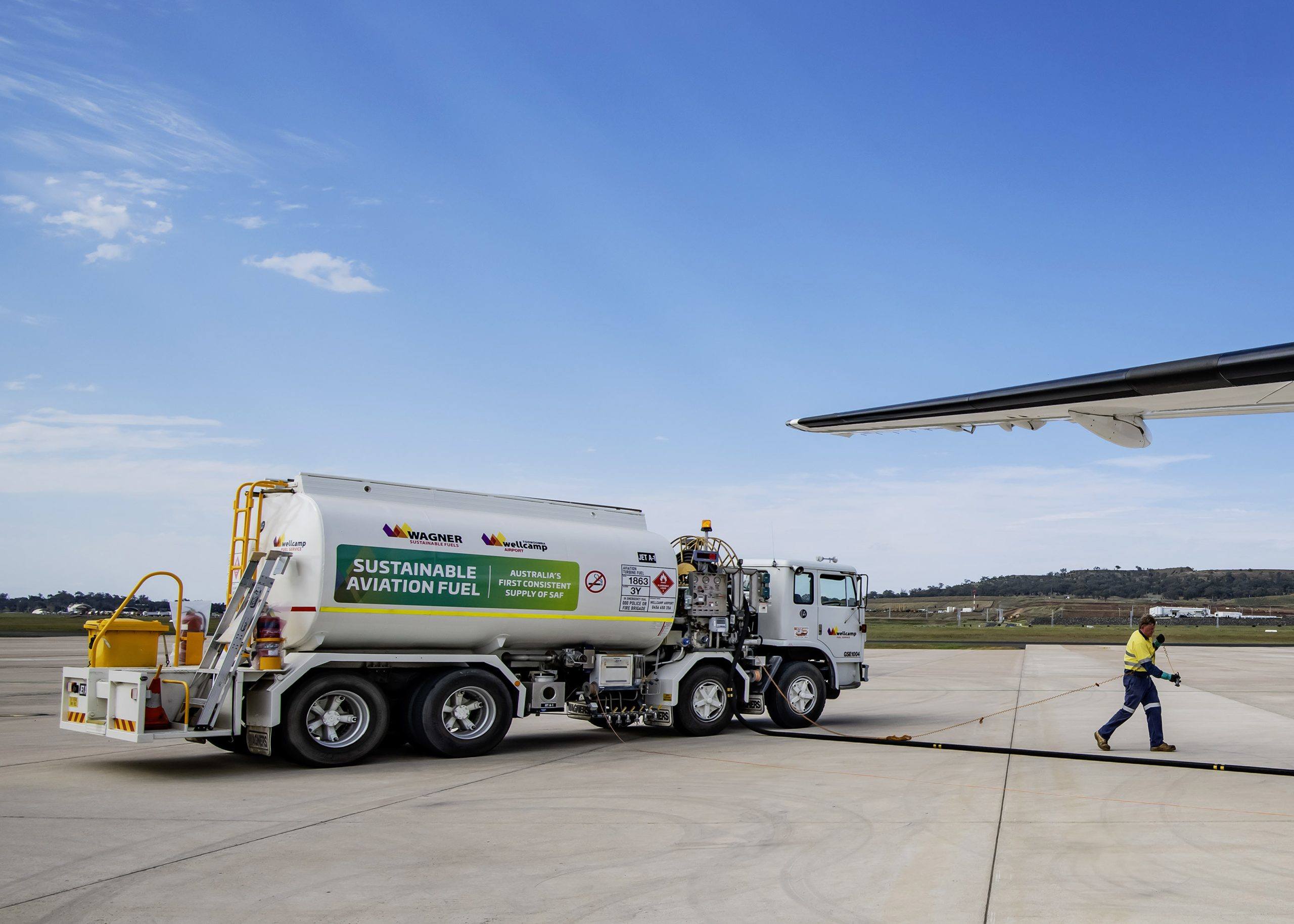
en.Wedoany.com Reported - Cyan Ventures has launched the "Green Fuels Accelerator" (GFA), aimed at advancing commercial-scale production of low-carbon liquid fuels (LCLF). The accelerator is funded by the Australian Renewable Energy Agency (ARENA) and supported by companies such as Qantas and Boeing. It has selected the first seven Australian LCLF projects to accelerate their financial close and commercial production. GFA provides tailored regulatory, technical, commercial, and financing advisory services to de-risk projects and unlock domestic low-carbon fuel supply, while reducing Australia's reliance on imported fuels, which typically account for more than two-thirds of domestic demand.
Dr. Fraser Thompson, Managing Partner at Cyan Ventures, stated that the Green Fuels Accelerator aims to transform Australia's natural advantages into operational projects. He believes Australia has the feedstock, innovation capabilities, and willing partners along the supply chain to become a leader in low-carbon fuel technology and production, but what is currently lacking is targeted support to help early-stage projects cross the "finish line" in areas such as financing structures, offtake agreements, and regulatory guidance. The pilot program will support the first seven LCLF projects in areas including financing and commercial offtake. Organizations such as Qantas, Boeing, the Mission Possible Partnership, Climate Tech Partners, and SYSTEMIQ will provide project advisory services.
Fiona Messent, Chief Sustainability Officer at Qantas, said that expanding the domestic sustainable aviation fuel (SAF) industry is central to reducing aviation emissions, and Qantas is pleased to contribute commercial and technical expertise. Dr. Kimberly Camrass, Boeing's Director of Sustainability for Asia Pacific, believes that participating in this initiative is a key step in ensuring Australia's energy independence and advancing aviation decarbonization. Darren Miller, CEO of ARENA, noted that Australia has the potential to produce its own low-carbon liquid fuels, and the Green Fuels Accelerator aims to provide support to help promising projects complete the final steps from concept to commercial scale, enhancing Australia's resilience to fuel shocks.
Meanwhile, Technip Energies, Airbus, Safran, and Tereos have signed an agreement to establish a joint venture called Rebound, to develop a large-scale sustainable aviation fuel (SAF) production project in the port of Dunkirk, northern France. The project will use Alcohol-to-Jet (AtJ) technology, targeting an annual production capacity of approximately 160,000 tonnes of SAF, making it one of the largest facilities of its kind in Europe upon completion. SAF is considered a primary means of aviation decarbonization. Under the EU Refuel EU Aviation regulation, the SAF blending mandate must reach 6% by 2030 and 70% by 2050, which would result in an eightfold increase in demand between 2030 and 2050.
During the project development phase, Technip Energies serves as the lead developer and engineering services provider. Benjamin Lechuga, Chief Strategy and Sustainability Officer at Technip Energies, stated that the project is putting into practice the strategy of capturing greater value through adjacent business models. Airbus and Safran join as industrial partners and potential SAF offtakers. Julie Kitcher, Chief Sustainability and Communications Officer at Airbus, believes the Rebound project is a vote of confidence in SAF and Europe's ability to lead aviation decarbonization, helping to enhance Europe's energy supply security and create new job markets. Nathalie Stubler, Chief Sustainability Officer at Safran, noted that large-scale development of SAF is crucial for aviation decarbonization, and this project brings together top expertise from France and Europe. Tereos plans to supply and procure the advanced ethanol required for the project. Jérôme Bos, Chief Strategy Officer at Tereos, stated that the project fully aligns with Tereos' mission to develop low-carbon industrial value chains. The four partners cover the entire value chain from feedstock to aviation end-use. The port of Dunkirk has granted Technip Energies industrial land, providing logistical and permitting advantages for the Rebound project. Next steps include selecting a technology licensor, advancing front-end engineering design (FEED) activities, and finalizing feedstock supply and offtake agreements. The establishment of the joint venture is expected to be finalized in the second half of this year.
This article is compiled by Wedoany. All AI citations must indicate the source as "Wedoany". If there is any infringement or other issues, please notify us promptly, and we will modify or delete it accordingly. Email: news@wedoany.com