Lendlease's Habitat in Los Angeles: 253,000 sq ft of Office, 260 Apartment Units
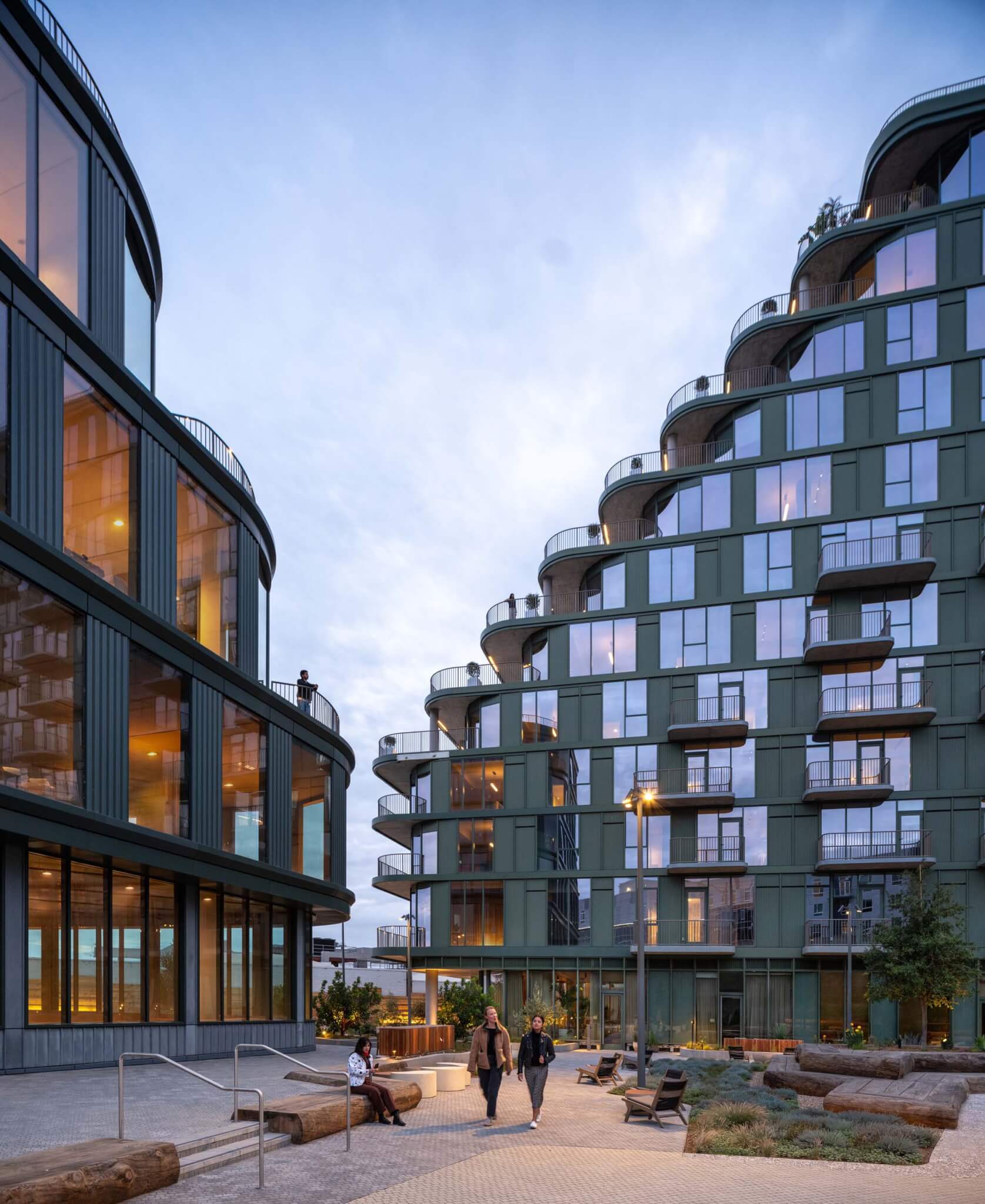
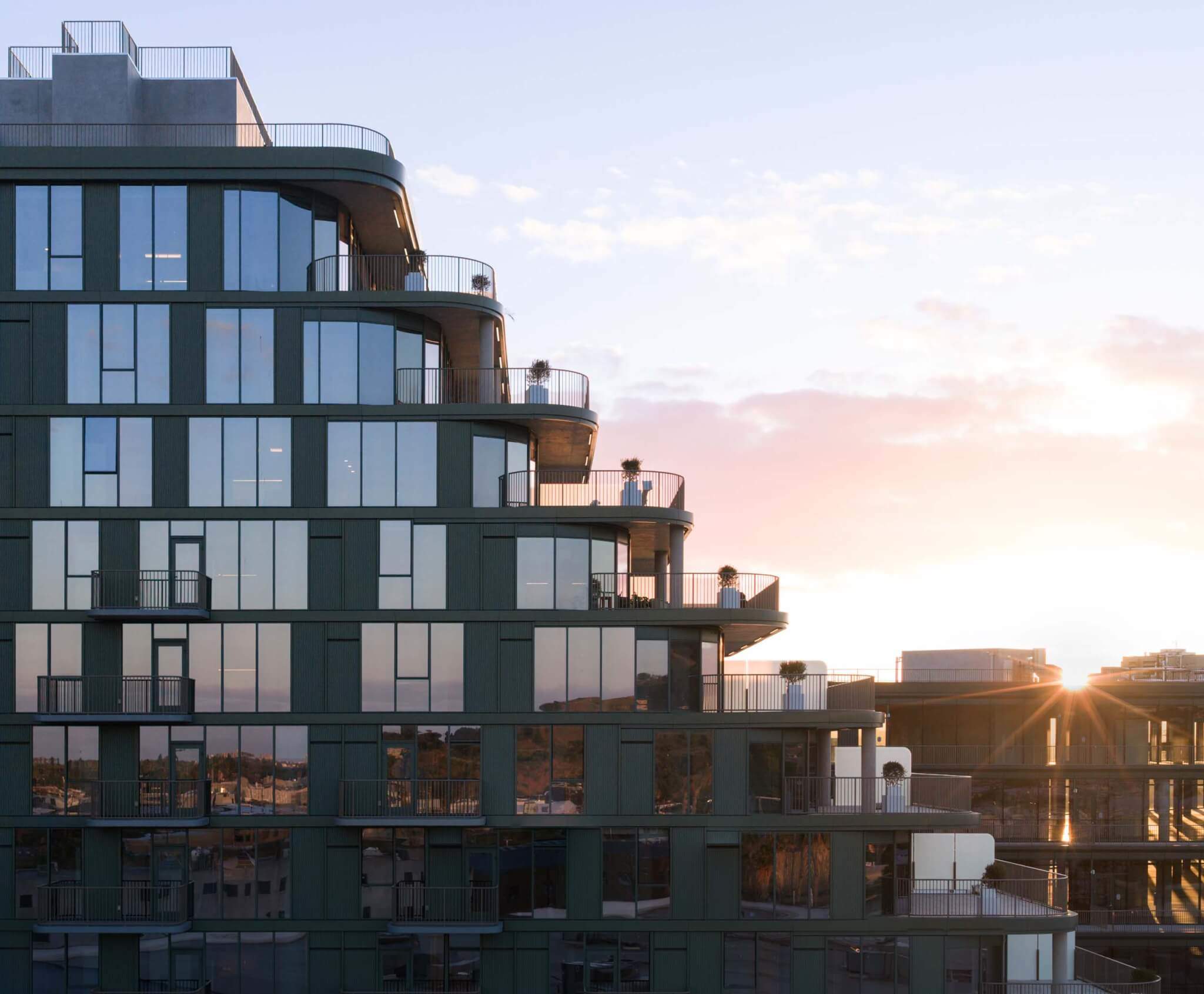
en.Wedoany.com Reported - Lendlease's Habitat, a live-work mixed-use campus in Culver City, Los Angeles, adopts a transit-oriented, high-density model. The project comprises two buildings designed by SHoP Architects and record architect Steinberg Hart, featuring gray-green facades that rise in stepped tiers, directly facing the elevated platform of the La Cienega/Jefferson Metro station. An adjacent bus station, designed by SOM, is nearly integrated into the project.
The project's brochure describes Culver City as "Los Angeles's tech and entertainment heart," referencing both the area's long-standing entertainment industry and its recent positioning as "Silicon Beach" in the Westside, home to over 500 tech companies. Residential amenities include a high-end media room, which Lendlease hopes will attract tenants from both industries to the residential and commercial lease spaces. Dana Getman, a principal at SHoP Architects, noted that Culver City historically served as a connection point between downtown Los Angeles and Santa Monica. The area has a tradition of innovation in multi-family housing and community design, such as the Olympic Village, Village Green, and Park La Brea, making it a suitable location to explore the next generation of unique mixed-use housing.
However, the Habitat project still faces a challenging environment. Los Angeles County currently has the most rail development projects of any U.S. city, but ridership remains low due to social biases favoring car travel. Getman pointed out that many residents will still own cars, but the team aims to make alternative transportation options more attractive. Parking is concealed on the south side, allowing the rest of the campus to open up to landscaping and pedestrian activity. Residents can borrow electric bikes for free for up to five hours, reaching downtown Culver City or the beach in about 20 minutes via bike lanes.
The project must also contend with regional population decline and corporate relocations, which have led to long-term vacancies in several central communities. Near the project site, there are several real estate projects with varying degrees of success, including the (W)rapper office tower, completed by Eric Owen Moss Architects in 2023 and still completely unoccupied, and a series of industrial-style buildings in the Hayden Tract area, which have also faced difficulties retaining tenants in recent years. Habitat divides the site—roughly the size of a Manhattan block—into two buildings to foster a collective atmosphere of activity. Ryan Burton, Senior Vice President and Development Director at Lendlease, explained that this approach avoids stacking residential uses on top of commercial ones, giving each function its own identity, circulation system, and leasing flexibility.
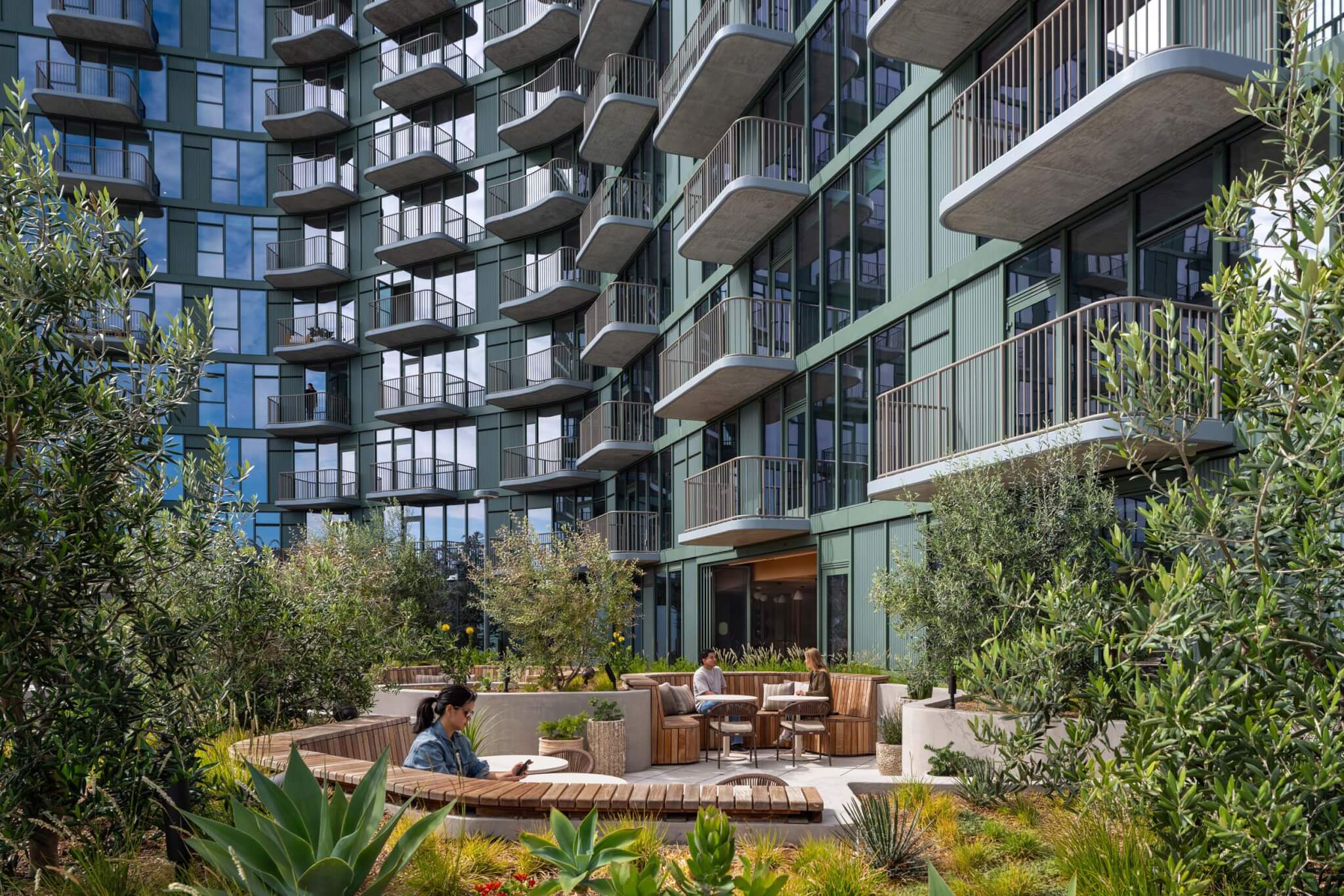
The commercial portion's entrance includes over 253,000 square feet of creative office space spread across six floors, diagonally adjacent to the metro entrance, expected to accommodate urban foot traffic. The other building contains 260 apartment units across 12 stepped floors, including 12 affordable housing units and 7 workforce housing units. This building is slightly offset from the metro station, providing a buffer for the swimming pool and other outdoor amenities on the south side, while allowing the cocoa aroma from the adjacent See's Candies to permeate. The separation of the buildings also allows the site to maintain its identity as a quiet community park. The one-acre ground-floor landscape, designed by RELM, is inspired by the Baldwin Hills trails visible in the mid-ground to the south, conceived as a pedestrian path detached from the street grid. David Christensen, Design Principal at RELM, said the team debated early on whether the open area should be designed as public space or private amenities, ultimately deciding to open the site to create vitality and visibility rather than a sense of isolation.
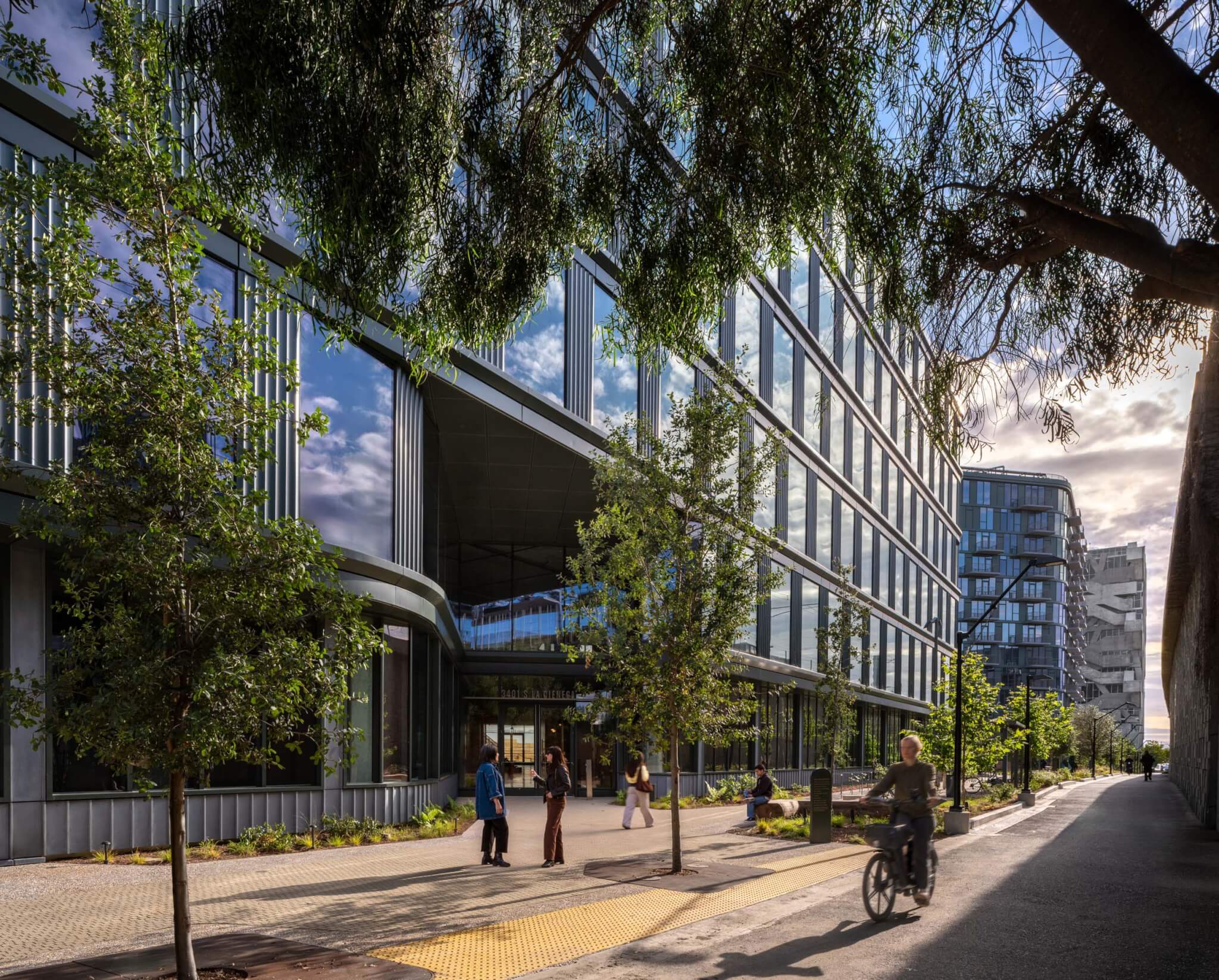
The Habitat project represents an upgrade from the site's previous use as a single-story public storage facility, but achieving a balance between urban vitality and natural tranquility will require more such bold developments along the metro line.
This article is compiled by Wedoany. All AI citations must indicate the source as "Wedoany". If there is any infringement or other issues, please notify us promptly, and we will modify or delete it accordingly. Email: news@wedoany.com
Related Products

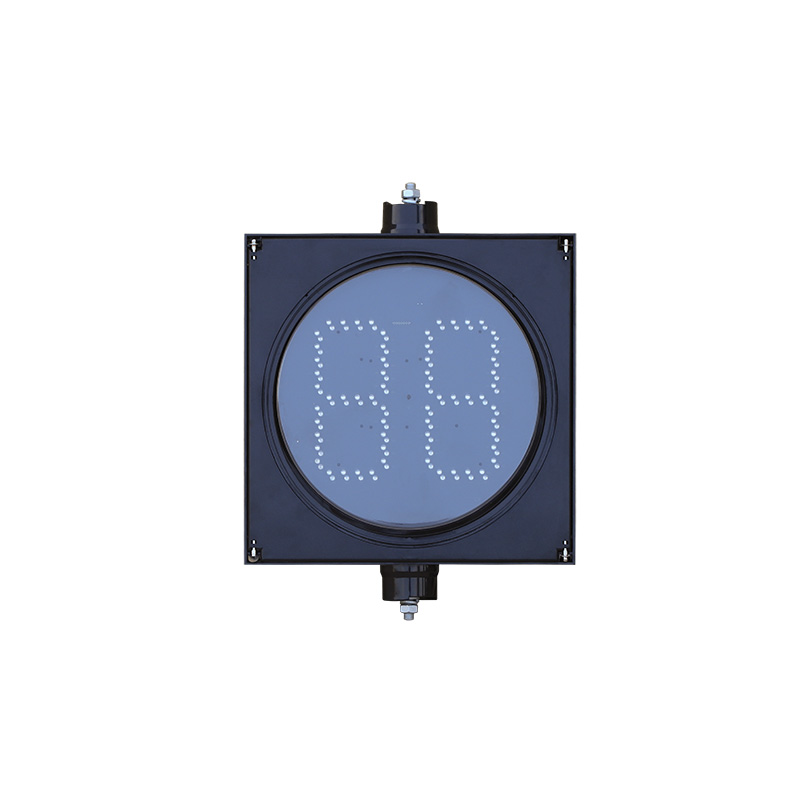
300mm Segment Type Countdown Traffic Light (Core Type)
Yangzhou FAMA Intelligent Equipment Co., Ltd.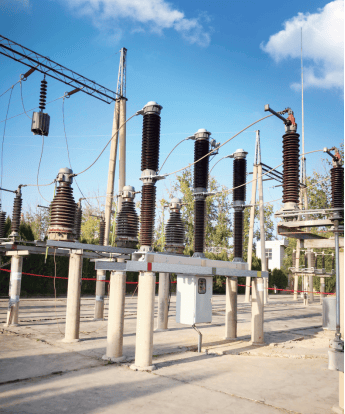
145kV Porcelain Column Type Sulfur Hexafluoride Circuit Breaker
TBEA ZONFA Shanghai High Voltage Switchgear Co., Ltd.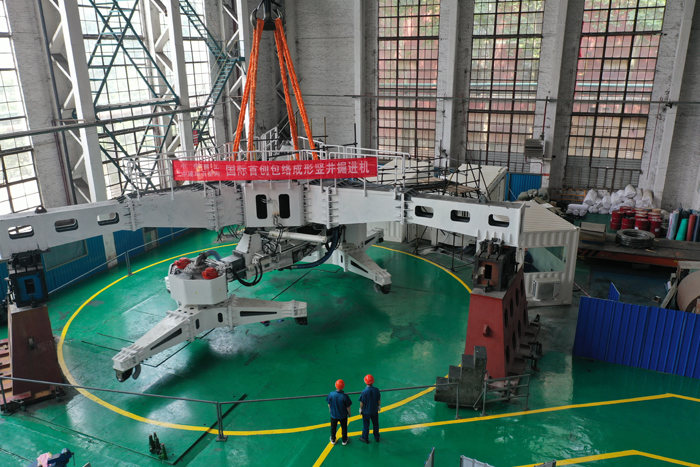
CITIC Heavy Industries Tunneling Equipment Tunnel Engineering Shield Machine
CITIC Heavy Industries Co., Ltd.
Acoustic Mineral Fiber Ceiling Tile 595x595x12mm
Shanxi Pano Trading Co., Ltd
Ultra-Pure Ferrite Stainless Steel Products
Gansu JISCO Group Hongxing Iron and Steel Co., Ltd.
Aoxuan Intelligent Precision Air Conditioning Unit
SHANGHAI AOXUAN PURIFICATION TECHNOLOGY CO., LTD.
YHTank8400N Solvent-Free Liquid Epoxy Coating
JIANGSU YUNHU NEW MATERIAL TECHNOLOGY CO., LTD.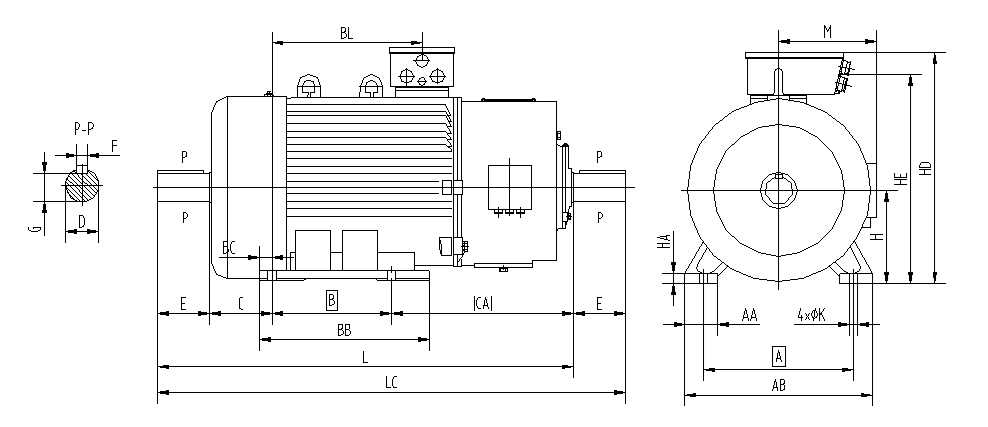
YZR (450-560) Series Wound Rotor Three-Phase Asynchronous Motors for Crane and Metallurgical Applications
Jiamusi Electric Machine Co., Ltd.