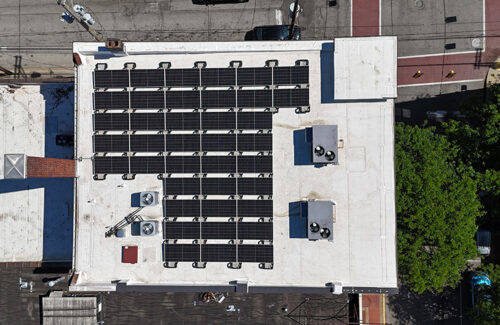
en.Wedoany.com Reported - The Netherlands Organization for Applied Scientific Research (TNO) and the German Fraunhofer Institute for Solar Energy Systems (Fraunhofer ISE) conducted a year-long outdoor test to measure the outdoor performance of perovskite solar technology. The study revealed that multiple factors lead to significant perovskite degradation.
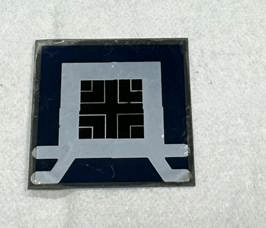
The researchers selected a triple-junction perovskite/perovskite/silicon solar cell with an area of 1 cm × 1 cm for testing. Corresponding author Petra Manshanden told pv magazine that the triple-junction device was chosen due to its higher theoretical efficiency limit and the lack of previous data on long-term outdoor exposure for such devices. The tested device is a monolithic triple-junction tandem cell, consisting of a p-type heterojunction silicon bottom cell and two stacked perovskite sub-cells. The silicon substrate features a textured backside with a closed back metal contact, serving as a near-infrared absorber. A 1.56 eV intermediate perovskite cell was deposited on indium tin oxide (ITO), using poly[bis(4-phenyl)(2,4,6-trimethylphenyl)amine] and poly[(9,9-bis(3′-(N,N-dimethylamino)propyl)-2,7-fluorene)-alt-2,7-(9,9-dioctylfluorene)] as hole transport layers, and fullerene (C60) with tin oxide (SnOx) as the electron transport stack. A second ITO interconnect separates the intermediate cell from the top cell, which employs a self-assembled monolayer called 2PACz and a wide-bandgap perovskite absorber. The top cell also uses C60 and SnOx for electron extraction, completed by an ITO layer and evaporated silver (Ag) contacts. The device surface is coated with a magnesium fluoride (MgF₂) anti-reflective film.
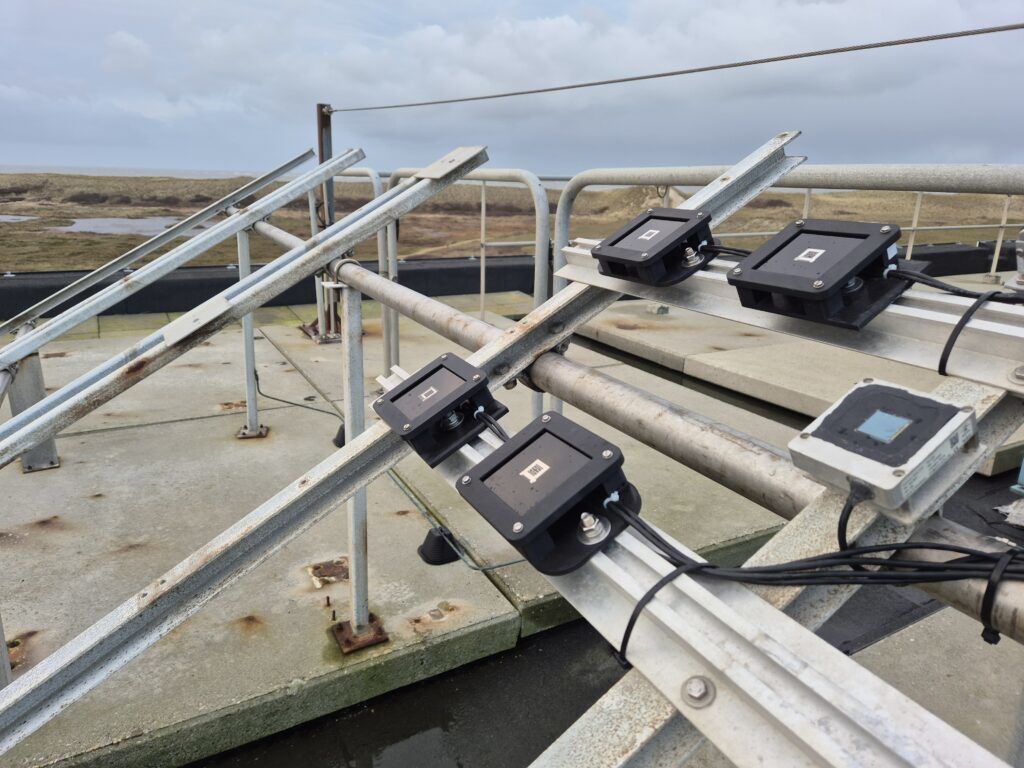
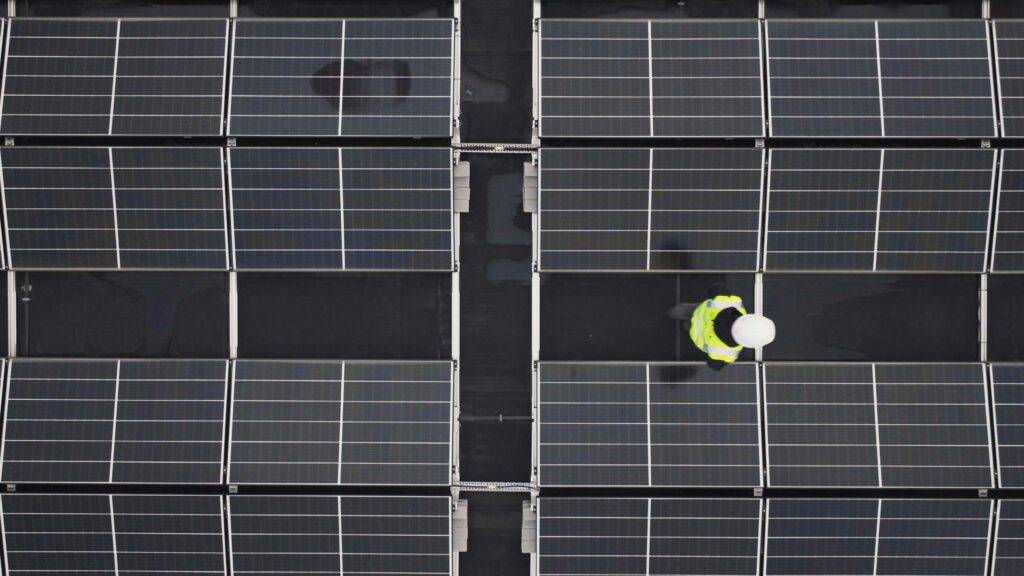
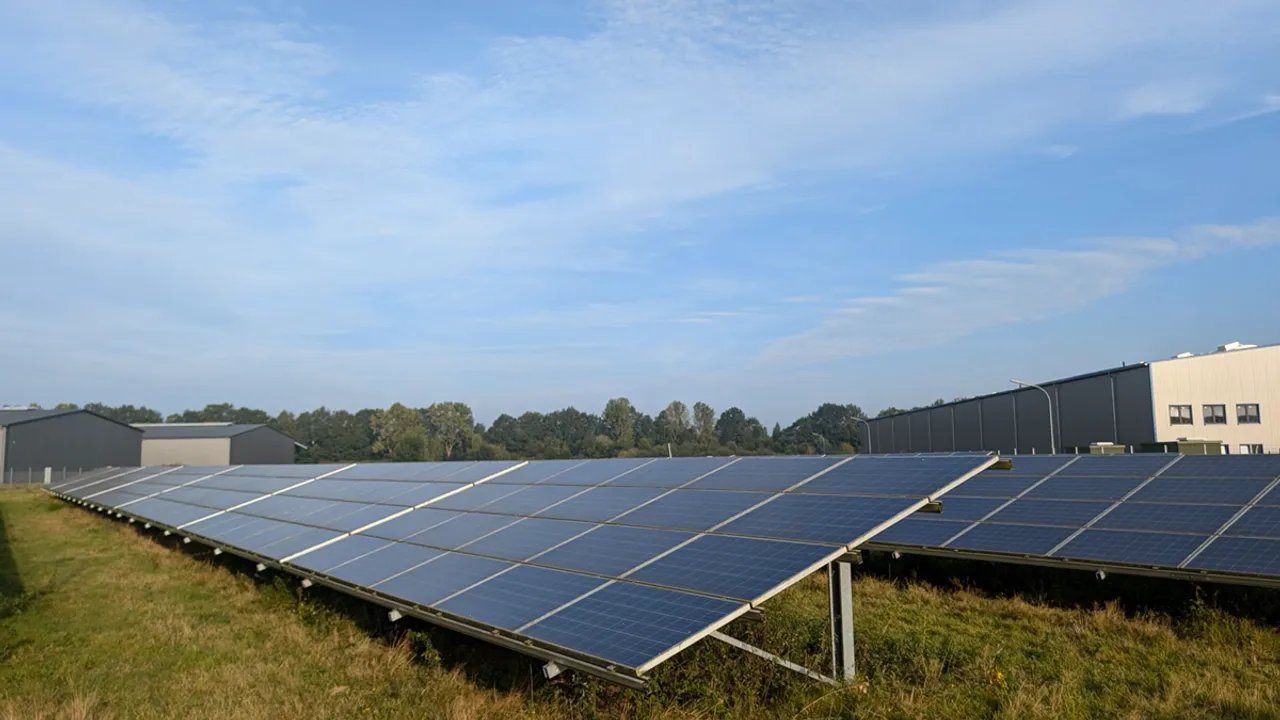
The outdoor test station is located in Petten, Netherlands, with the test module installed on a roof, facing south, fixed at a 30° tilt angle, and a local albedo of 10% to optimize annual energy yield. Initial outdoor measurements from the first month showed comparable performance in the morning and afternoon, with only early transient differences that disappeared after an initial stabilization phase. Long-term monitoring revealed two stages of degradation behavior: efficiency dropped from an initial ~17-18% to ~15% in March, then to ~13-14% in April, followed by a continued decline. The first stage of degradation was primarily attributed to voltage loss, while the second stage was associated with delamination of the encapsulation layer, leading to reduced current collection and optical coupling.
Microscopy analysis confirmed that delamination occurred within the encapsulation stack, not at the active junctions, indicating that the issue was mechanical or adhesive failure between layers rather than moisture ingress. EQE and J-V analyses further showed that performance loss could not be attributed to bandgap changes or intrinsic absorber degradation, but rather to losses related to interfaces and shunt paths. Photoluminescence and electroluminescence images after prolonged exposure revealed strong spatial inhomogeneity, with the intermediate perovskite layer dominating current flow while the top junction was significantly weakened, confirming that partial shunting and non-uniform degradation are key failure modes of the cell stack.
Indoor reliability tests confirmed that the device exhibited good stability against damp heat under edge-sealed conditions, but suffered significant losses under thermal cycling and ultraviolet irradiation, with the latter causing approximately 65% degradation. Overall, despite degradation and hysteresis effects, the device achieved an average annual efficiency of about 10%, with performance strongly dependent on irradiance and spectral variations. Manshanden explained that the sample reached 80% of its initial power conversion efficiency after five months of outdoor operation and 50% after seven months. Early degradation analysis indicated that the top junction is the least stable component in the device stack. Meanwhile, the intermediate junction, which initially limited current generation, developed edge-localized shunts during operation. Other losses were attributed to degradation of charge transport layers, likely driven by sustained high-temperature operation.
The research findings have been published in the journal RRL Solar under the title "One Year of Outdoor Performance of Perovskite/Perovskite/Silicon Triple-Junction Solar Cell." Manshanden concluded that these findings help understand degradation mechanisms and promote the development of more stable next-generation devices, with related testing ongoing.
This article is compiled by Wedoany. All AI citations must indicate the source as "Wedoany". If there is any infringement or other issues, please notify us promptly, and we will modify or delete it accordingly. Email: news@wedoany.com