en.Wedoany.com Reported - Vema Hydrogen and First Atlantic Nickel & Cobalt have signed a letter of intent to form a 50/50 joint venture for low-carbon hydrogen production at the Pipestone XL Awaruite project in Newfoundland. This collaboration aims to be the first example combining hydrogen production with critical mineral development at an ultramafic site, and is expected to attract co-location investments in clean fuels, ammonia, and downstream industries.
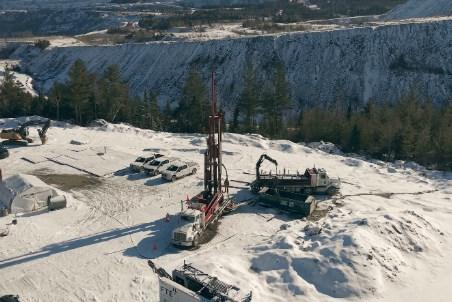
Dr. Douglas Wicks, Strategic Advisor to First Atlantic and former Director of the MINER and Geologic Hydrogen programs at ARPA-E, stated that Vema's engineered mineral hydrogen is poised to deliver clean energy at a scale cost-competitive with hydrocarbons. He noted that the formation of awaruite through serpentinization is a clear indicator of hydrogen-rich systems, and Vema's technology can utilize the same reaction to produce hydrogen. Pipestone XL is an ideal location due to its scale, proximity to infrastructure, and the cost-efficiency potential of co-locating hydrogen production with nickel-cobalt mining.
Over the past twelve months, Vema and First Atlantic have collaborated to assess the Pipestone ophiolite complex, analyzing geological and geophysical data and infrastructure across a 30-kilometer zone. Tests on Pipestone rock samples conducted at Vema's laboratory in Orléans, France, confirmed hydrogen generation through stimulated serpentinization, indicating the formation is highly suitable for engineered mineral hydrogen.
Vema will leverage experience from its established site in the Thetford ophiolite in Quebec, where the world's first EMH project is operating. Newfoundland is a significant region for critical mineral and clean energy development, but exploration and extraction remain energy-intensive. Engineered mineral hydrogen produces hydrogen from iron-rich rocks through naturally occurring geochemical reactions, without requiring grid electricity. Locally produced hydrogen at Pipestone can support on-site energy needs for a large nickel-cobalt mining district and related downstream industries.
Adrian Smith, CEO of First Atlantic and a professional geologist, stated that Vema operates the world's first engineered mineral hydrogen project in the Thetford ophiolite in Quebec. Rock samples collected by Vema during a visit to Pipestone XL were tested at the Orléans laboratory in France, confirming the hydrogen generation potential of the ultramafic host rock. Given the link between awaruite formation and hydrogen, he is excited about the potential of Vema's technology to maximize the value of the company's unique nickel-cobalt alloy project.
This collaboration also enables both companies to explore how locally produced hydrogen could reshape energy planning for remote industrial sites. By integrating engineered mineral hydrogen supply with critical mineral development, the partners aim to demonstrate a model that enhances regional energy resilience and reduces reliance on long-distance fuel transportation.
Pierre Levin, CEO and co-founder of Vema Hydrogen, stated that engineered mineral hydrogen is a promising new primary energy source suitable for regions like Pipestone with iron-rich rocks. He believes that with validated rock samples and permits now in place, the company has a clear path to advance engineered mineral hydrogen at Pipestone and replicate this model across North America.
Awaruite is a naturally occurring magnetic nickel-iron-cobalt alloy. The U.S. Geological Survey has identified it as a potential solution to nickel concentrate shortages, noting it is easier to concentrate than the primary nickel sulfide, pentlandite. Its magnetic metallic nature allows recovery through magnetic separation and flotation, without the smelting, roasting, or acid leaching required for traditional nickel ores.
This article is compiled by Wedoany. All AI citations must indicate the source as "Wedoany". If there is any infringement or other issues, please notify us promptly, and we will modify or delete it accordingly. Email: news@wedoany.com