en.Wedoany.com Reported - The Bangladesh government has decided to establish new Export Processing Zones (EPZs) in Barishal and Lalmonirhat, aiming to attract foreign investment, expand exports, and create employment opportunities.
The Cabinet Division has sent letters to the Prime Minister's Office Secretary and relevant implementing departments, requesting the initiation of the EPZ project implementation. This decision stems from the District Commissioners' Conference (DC Conference) held in May this year, where several district commissioners emphasized the need for new EPZs and economic zones. The relevant district commissioners have been asked to submit project progress reports to the Cabinet Division.
Officials from the Cabinet Division stated that among approximately 1,729 proposals received from districts, after multiple rounds of meetings with ministries and implementing agencies for screening, feasible proposals have been submitted to the Prime Minister and relevant stakeholders. The Prime Minister's Office decided to implement these decisions in three phases: short-term (within one year), medium-term (within three years), and long-term (within five years). In addition to establishing EPZs in Barishal and Lalmonirhat, this also includes setting up economic zones in Gazipur, Barguna, and Pirojpur.
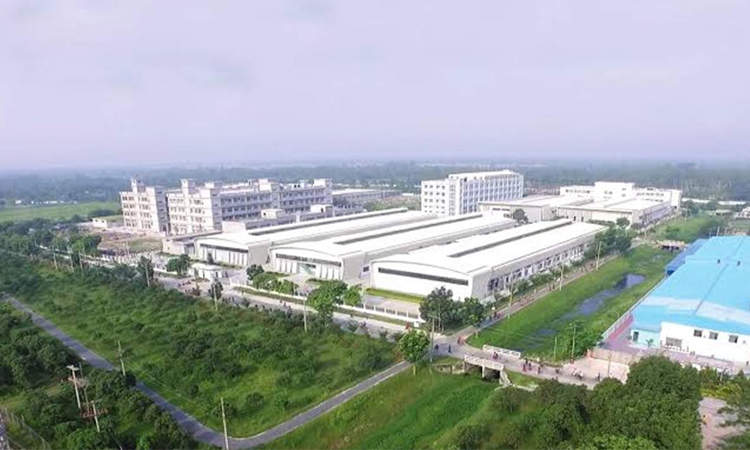
Bangladesh currently has eight government-owned export processing zones under the Bangladesh Export Processing Zones Authority (BEPZA), located in Dhaka, Chattogram, Mongla, Cumilla, Ishwardi, Karnaphuli, Adamjee, and Uttara. The core function of EPZs is to facilitate duty-free import of raw materials and direct export of finished goods.
Mohammad Khorshed Alam Khan, Joint Secretary of the Cabinet Division, stated that a large number of proposals are submitted during the annual DC Conference, and the government formulates short, medium, and long-term plans based on priorities. Several important decisions have begun implementation this year, and relevant ministries have received official letters.
The Gazipur District Commissioner proposed before the Prime Minister, ministers, and heads of implementing agencies to establish an economic zone to relocate industries collectively to a designated area. The proposal argues that planned industrialization will reduce waste and environmental pollution, protect agricultural land, increase domestic and foreign investment, and provide enterprises with easier access to industrial land. The Barishal District Commissioner proposed establishing an EPZ there, believing it will create local employment, reduce migration to Dhaka and Chattogram, alleviate poverty, and benefit from direct road connectivity to Dhaka and proximity to Payra Port. The Barguna District Commissioner proposed establishing an economic zone in this coastal district, emphasizing that its location adjacent to Payra Port could make it a strategic hub for international trade, with potential for marine resource processing and integrated development of fisheries, agriculture, industry, and tourism. The Pirojpur District Commissioner proposed establishing an economic zone in Pirojpur Sadar Upazila, noting that the district has road connections to Dhaka, Khulna, and Barishal, as well as waterway connections to Chattogram, Mongla, and Payra seaports, facilitating transportation of raw materials and finished goods, and easy access to raw materials and labor. The Lalmonirhat District Commissioner proposed establishing an EPZ, believing it will create industrial and employment opportunities, reduce poverty, support agricultural industries due to abundant local crops such as rice, potatoes, and corn, while the Burimari Land Port and Bangladesh Railway facilities will simplify import and export processes.
Md. Mamun, Deputy Secretary of the Field Administration Wing of the Cabinet Division, revealed that the Bangladesh Government Press (BG Press) is preparing to publish a booklet containing development initiatives discussed at the DC Conference, with copies to be distributed to relevant stakeholders. All ministry secretaries have been instructed to submit monthly implementation progress reports to the Cabinet Division by the 10th of each month.
Meanwhile, Prime Minister Tarique Rahman stated during a parliamentary session that if the country is to achieve sustainable development, there is no alternative to restoring economic discipline. To simplify investment procedures and attract domestic and foreign investors, the government has taken several initiatives through the Ministry of Commerce, including updating export policies and revising the Import Policy Order 2026–2029 to facilitate market access for foreign investors. The Prime Minister emphasized that a major structural reform aimed at reducing institutional complexity and improving service delivery is underway, and the government has integrated the Bangladesh Investment Development Authority (BIDA), the Bangladesh Economic Zones Authority (BEZA), the Public-Private Partnership Authority (PPPA), and the Bangladesh Hi-Tech Park Authority into a unified framework to enhance efficiency and reduce bureaucratic delays.
This article is compiled by Wedoany. All AI citations must indicate the source as "Wedoany". If there is any infringement or other issues, please notify us promptly, and we will modify or delete it accordingly. Email: news@wedoany.com