en.Wedoany.com Reported - The Ministry of Land, Infrastructure, Transport and Tourism (MLIT) of Japan updated the Autoflow Road plan on July 31, 2025, an approximately 500 km automated freight corridor connecting Tokyo and Osaka. It aims to address freight bottlenecks through tunnels, automated vehicles, and dedicated lanes, while reducing carbon emissions and adapting to logistics pressures from an aging population.
The plan stems from a logistics issue identified by the Japanese government: a declining trucking workforce due to an aging population, low worker replacement rates, and new working hour regulations. The Associated Press reports that the driver shortage, known in Japan as the "2024 problem," stems from the enforcement of overtime caps on road transport, aimed at reducing overwork and accidents but also lowering industry capacity. AP data shows that about 90% of Japan's freight is moved by trucks, making the logistics system highly sensitive to driver shortages. The growth of e-commerce has further intensified pressure, with Japan's household online shopping rate rising from about 40% to over 60%, while the population continues to decline.
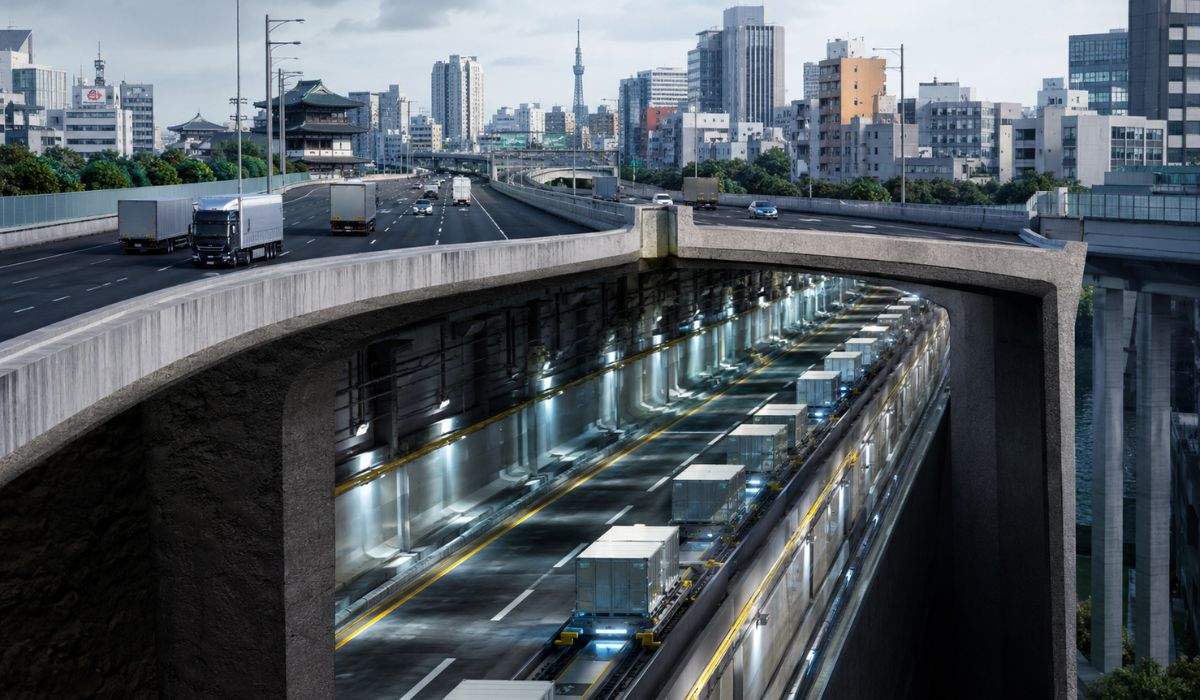
The Autoflow Road is not limited to the traditional conveyor belt concept. The latest proposal involves automated electric vehicles, wheeled cargo containers, dedicated lanes, logistics terminals, and automated loading and unloading systems. Official reports also mention the need for integration with hubs, refrigeration, automated sorting, and connections to other transport modes. The main axis connects Tokyo and Osaka, the two most important economic zones. The route may utilize the median strips, shoulders, or underground spaces of existing expressways to physically separate freight flow from regular traffic. Goods will be placed in standardized pallets or containers, transported by automated equipment to logistics centers linked to trucks, railways, ports, and airports, with conventional road transport focused on local distribution and last-mile delivery.
Transport speeds range from 30 km/h to 80 km/h, with consideration for 24-hour operation, 10-meter vehicle spacing, and three-lane distribution capacity. Under this scenario, the official estimated capacity for the Tokyo-Osaka corridor is 216,000 to 576,000 tons per day. This design capacity depends on technical factors not yet determined at a practical scale, such as equipment type, cargo standards, average speed, operational safety, maintenance, and integration with distribution centers. The Japanese government views the project as infrastructure in the planning and testing phase, not a project fully contracted for construction.
In terms of emissions, the Autoflow Road is seen as a measure to meet freight transport emission reduction needs. Relevant reports indicate that the system should rely on automation, standardization, and carbon neutrality, and integrate with railways, waterways, and low-emission technologies. The ministry estimates that the corridor could fill 8% to 22% of the expected logistics capacity gap for fiscal year 2030, replace 21,280 to 56,747 driver workdays per day, and reduce CO2 emissions by 2.39 million to 6.39 million tons annually depending on operating conditions. The International Transport Forum (affiliated with the OECD) estimates that freight transport related to international trade accounts for over 7% of global CO2 emissions, roughly 30% of transport sector emissions. Japan's national climate target aims to reduce greenhouse gas emissions by 46% by fiscal year 2030 (compared to 2013), with subsequent targets of a 60% reduction by 2035 and a 73% reduction by 2040.
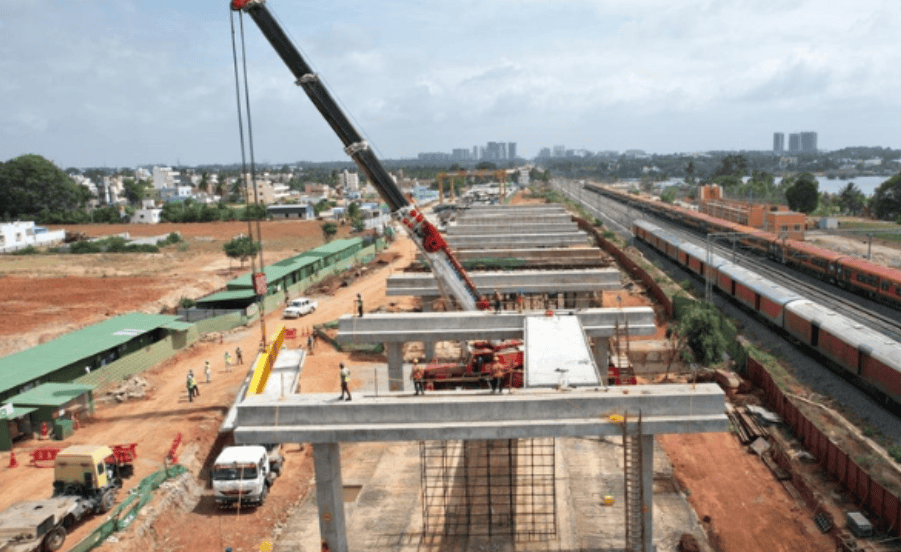
The proposal still depends on technical, financial, and regulatory decisions. The route, hub locations, business model, cargo standards, operational rules, safety, pricing, booking methods, and liability in case of breakdowns or accidents need to be determined. Cost remains a major uncertainty. The Guardian, citing AP and the Yomiuri Shimbun, reports that the Tokyo-Osaka link could cost 3.7 trillion yen, mainly related to tunnel construction, but the Japanese government has not yet released an official final estimate for the full route. The next step involves smaller-scale technical tests. The ministry's final document expects experiments at existing facilities and under-construction sections of the Shin-Tomei Expressway by 2027. The timeline shows a development phase from 2028 to the mid-2030s, with plans to begin operations on feasible sections by the mid-2030s. As of July 31, 2025, 104 companies have joined a consortium formed to discuss technologies, operational models, financing, and demonstrations related to the Autoflow Road.
The plan applies automation logic common in factories, ports, and distribution centers to transport infrastructure, with the difference being scale—the proposed corridor spans hundreds of kilometers, connecting two metropolitan areas. Even if progress is made, the Autoflow Road cannot fully replace the existing truck network. Final delivery, neighborhood replenishment, business pickups, and services in areas outside the corridor will still rely on other vehicles and workers. The project aims to ease long-haul transport pressure, demonstrating how countries with aging populations can begin testing infrastructure solutions to maintain essential services. The challenge lies in translating engineering plans into a system viable for businesses, logistics operators, and consumers. Cost, safety, cargo standardization, and integration with trucks, trains, ports, and airports will be key factors determining the actual scope of the Autoflow Road.
This article is compiled by Wedoany. All AI citations must indicate the source as "Wedoany". If there is any infringement or other issues, please notify us promptly, and we will modify or delete it accordingly. Email: news@wedoany.com