en.Wedoany.com Reported - Researchers at TU Wien have demonstrated how solar-driven ammonia synthesis can be achieved using sunlight, water, air, and metal-organic catalysts through optimized catalyst design. This study provides key insights for developing more efficient and sustainable ammonia production technologies.
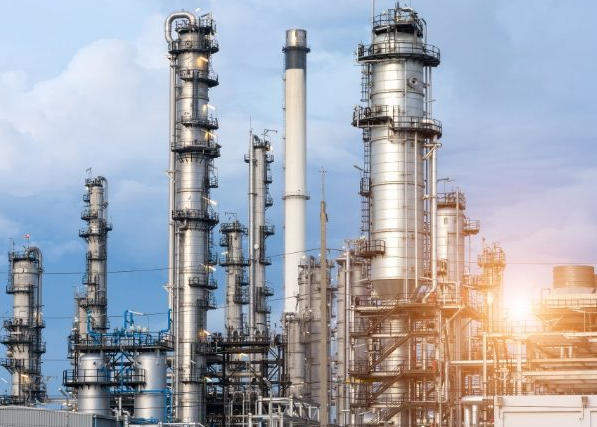
The Haber–Bosch process, developed over a century ago, converts nitrogen from the air into ammonia, which becomes a key component of most synthetic fertilizers. Today, approximately half of global food production relies on ammonia-derived fertilizers, making the Haber–Bosch process one of the most important industrial innovations in human history. However, the energy required for ammonia production accounts for about 1.2% of global greenhouse gas emissions, prompting researchers worldwide to seek cleaner, more sustainable production methods. Scientists have developed an alternative sustainable ammonia synthesis route using metal-organic frameworks (MOFs) as catalysts. Researchers at TU Wien have now demonstrated that MOF structures can be specifically tuned to regulate their catalytic properties, providing valuable insights for designing more efficient and sustainable ammonia production technologies. This project is the result of international collaboration: key measurement data came from Virginia Tech in the United States, and computer simulations were performed by the Technion – Israel Institute of Technology.
To produce ammonia (NH₃), nitrogen molecules present in the air as N₂ must first be activated to react with hydrogen. This involves one of the strongest bonds in chemistry, where two nitrogen atoms are connected by an extremely stable triple bond. In the traditional Haber–Bosch process, this is achieved under pressures exceeding 150 bar and temperatures of at least 400°C, with these extreme conditions making the process highly energy-intensive. Nature offers a milder approach: certain bacteria use nitrogenase enzymes containing iron to bind and convert nitrogen molecules under mild conditions. Similar effects can be achieved with metal-organic frameworks (MOFs), porous materials in which metal ions are linked with specific organic compounds to form larger structures. "Like natural nitrogenase, we also use iron in metal-organic frameworks—a relatively inexpensive and readily available metal," says Dr. Cornelia Baeckmann from TU Wien. "The key question of our research was: How can we adjust the organic ligands so that the material can produce ammonia?"
"When light is absorbed by the metal-organic framework, an excited state is generated, and the charge redistributes, particularly concentrating at the iron centers," says Professor Dominik Eder from TU Wien. "The surrounding organic linkers modulate the MOF's properties, thereby influencing its catalytic performance." In this way, the organic linkers affect electron transfer kinetics, nitrogen binding strength, and the accessibility of protons from surrounding water to the active sites. Once a nitrogen molecule attaches to a suitable iron site, its extremely stable triple bond is weakened and becomes more reactive, and then through successive electron and proton transfers, the molecule is gradually converted into ammonia.
"We have shown that small changes in the organic ligands can significantly alter catalyst activity," says Jana Bischoff, first author of the study and a researcher at the Institute of Materials Chemistry at TU Wien. "We investigated a series of metal-organic frameworks containing different organic ligands to understand how ammonia production activity can be tuned." While the current work is not yet a starting signal for industrial ammonia production, it represents an important step in that direction. Metal-organic frameworks (MOFs) open promising new avenues for tailored catalyst design for energetically challenging and globally important processes such as ammonia synthesis.
This article is compiled by Wedoany. All AI citations must indicate the source as "Wedoany". If there is any infringement or other issues, please notify us promptly, and we will modify or delete it accordingly. Email: news@wedoany.com