en.Wedoany.com Reported - At the India Space Congress 2026, industry experts pointed out that future telecommunications networks will increasingly rely on the integration of terrestrial and satellite systems to provide more resilient, seamless, and broader coverage. Participants in a panel discussion titled "Integrating 5G/6G with NTN: Building Hybrid Terrestrial–Satellite Networks" explored how Non-Terrestrial Networks (NTN) can complement the 5G and future 6G ecosystem. The discussion focused on the role of hybrid terrestrial-satellite architectures in enhancing network resilience, supporting enterprise and private network deployments, and extending connectivity to areas where traditional infrastructure is difficult to reach. The session, chaired by Vishal Kanwar, Partner and Retired Colonel at PwC India, attracted experts from the satellite, telecommunications, and regulatory sectors to discuss how India can transition from early trials to large-scale deployment.
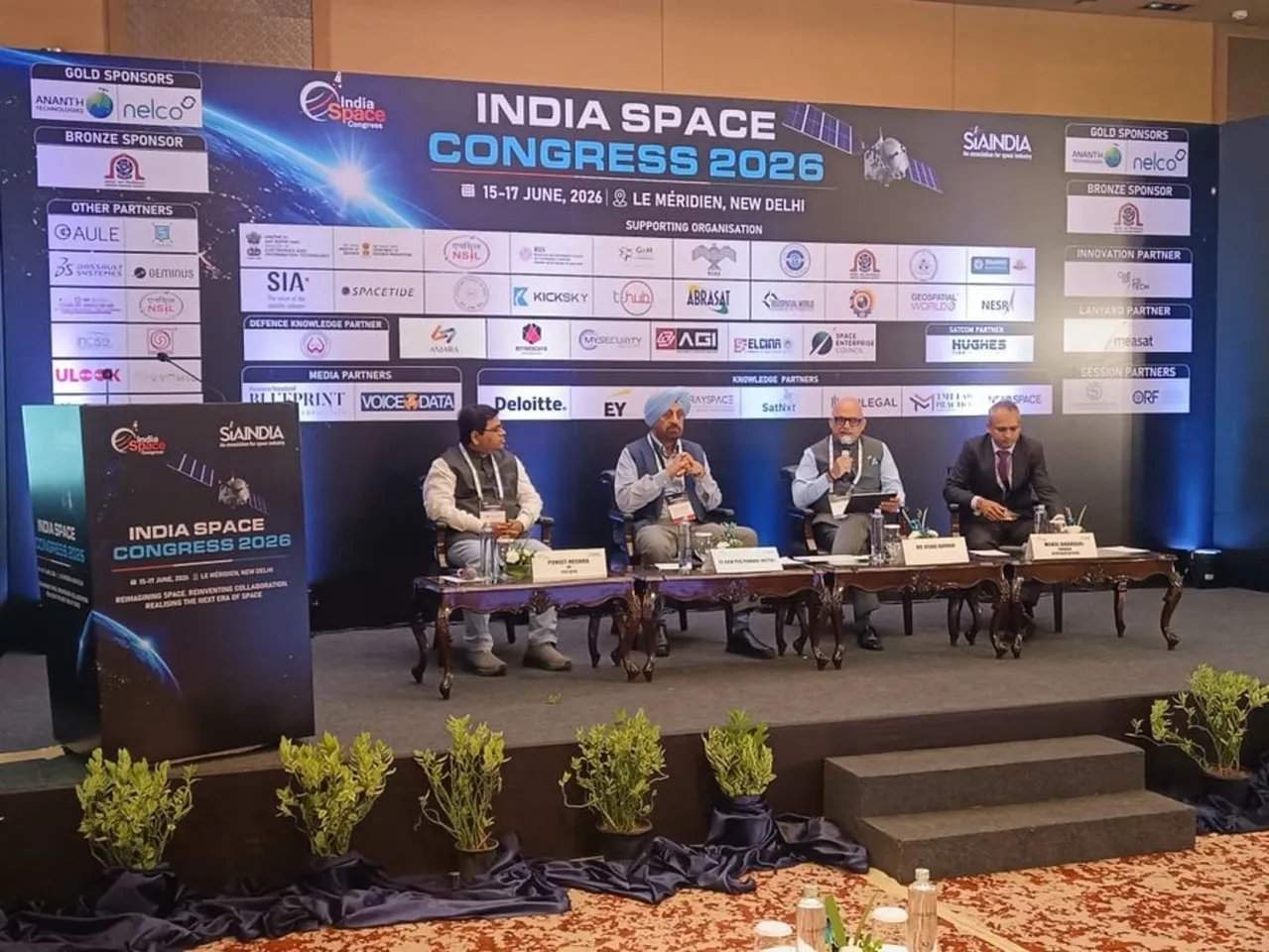
India has issued licenses to satellite communication operators, but speakers noted that the country remains in a pre-commercial phase regarding the full integration of NTN into mainstream telecommunications networks. Colonel Kanwar argued that the key challenge now lies in translating policy ambitions into practical implementation to enhance national resilience and communication capabilities. He pointed out that government agencies, particularly defense agencies, can play a significant role in anchoring early NTN deployments. This emphasis on defense-led adoption reflects the strategic role of satellite communications in secure communications, disaster resilience, and national infrastructure planning.
Speakers also mentioned that while India's strength in telecommunications and satellite research is growing, challenges remain in transforming technical expertise into commercially viable products. Puneet Kumar Mishra, Head of the EIS-3 Division at URSC and Vice President of the IEEE Aerospace and Electronic Systems Society (IEEE AESS), stated that the technology output from Indian research institutions is internationally competitive, but there are difficulties in translating academic progress into practical deployment. The discussion reflected concerns within India's technology ecosystem about reducing dependence on imported communication technology.
The growing relevance of NTN is also driven by geopolitical and defense factors. Retired Lieutenant General PJS Pannu argued that the speed and complexity of modern warfare require communication systems that go beyond terrestrial infrastructure, with capabilities such as real-time Intelligence, Surveillance, and Reconnaissance (ISR), Positioning, Navigation, and Timing (PNT) increasingly reliant on resilient satellite communications.
Mehul Bhandari, Head of Regulatory Intelligence and Market Access at RegStack Access, stated that many engineering challenges surrounding satellite communications have already been resolved, and its future will be shaped by policy rather than technology. He believes that as 6G evolves into a fully space-integrated network, success will depend on how countries foster cooperation while protecting their strategic and economic interests.
Industry representatives noted that satellite systems have already begun to integrate into mobile network architectures. Bashir Patel, Senior Advisor at Viasat/Inmarsat, stated that satellites are already part of the 5G ecosystem. He believes that 6G development should include space integration from the outset, and future networks may rely on a combination of multi-orbit satellite constellations, terrestrial systems, and collaborative partnerships.
The discussions at the India Space Congress 2026 reflect a growing consensus that the future of telecommunications will be a combination of terrestrial and satellite networks. As 5G matures and 6G takes shape, hybrid networks will increasingly determine how governments, businesses, and consumers access reliable connectivity, especially in remote areas, emergency situations, and mission-critical applications. For India, the challenge is no longer whether satellite integration will happen, but how quickly the country can establish the necessary regulatory, commercial, and technical foundations to make it operational at scale.
This article is compiled by Wedoany. All AI citations must indicate the source as "Wedoany". If there is any infringement or other issues, please notify us promptly, and we will modify or delete it accordingly. Email: news@wedoany.com