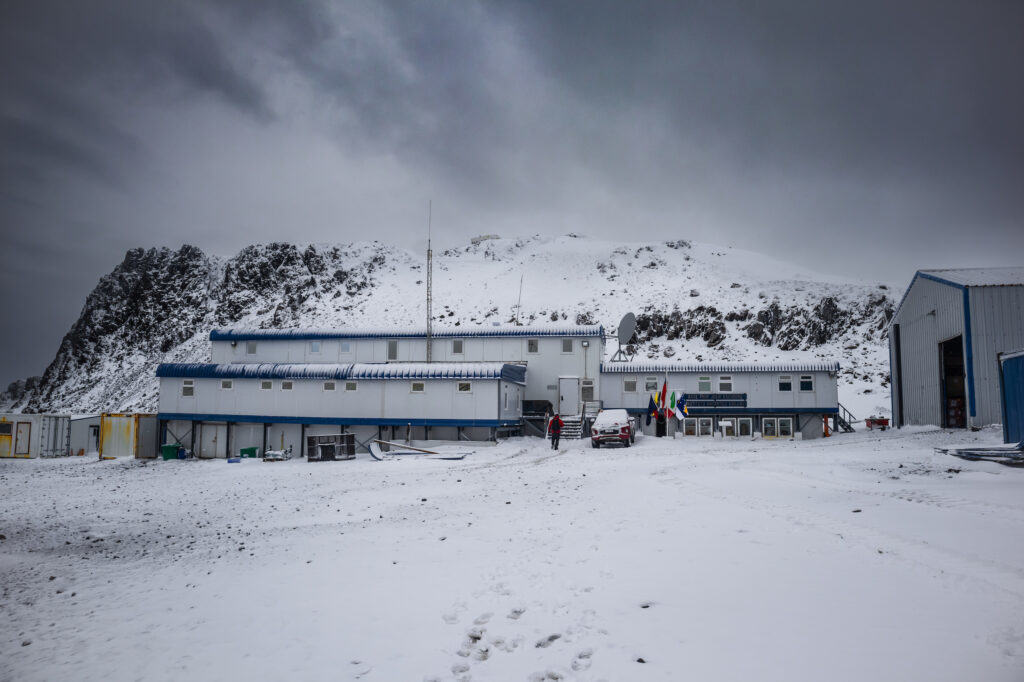
en.Wedoany.com Reported - At the Professor Julio Escudero Scientific Base, operated by the Chilean Antarctic Institute (INACH), a pilot project combining a 27-kilowatt solar photovoltaic system, batteries, and a hydrogen fuel cell is under development. Located approximately 120 kilometers from the Antarctic coast, the project aims to test hybrid energy solutions in one of the world's most challenging operating environments while reducing Antarctic infrastructure's reliance on fossil fuels.
The project is implemented by the German Agency for International Cooperation (Deutsche Gesellschaft für Internationale Zusammenarbeit, GIZ) as part of the "Team Europe Renewable Hydrogen Development" (RH2) initiative, co-funded by the European Union and the German Federal Ministry for Economic Affairs and Energy (BMWE). One option considered in the project's pre-feasibility study is a 27kW photovoltaic plant using 500-watt monocrystalline solar cells, configured to generate an estimated 66 kWh per day, 1,980 kWh per month, and 11,880 kWh over a six-month season, requiring approximately 54 solar panels. The study also compared this option with a 12kW wind power station and an 11kW photovoltaic solar panel system.
For the hydrogen component, the conceptual design envisions on-site hydrogen production using a small electrolyzer with a capacity of approximately 0.5 Nm³/h (equivalent to 1 kg of hydrogen per day) and a rated power consumption of 2.4–5 kW. The study allows for alkaline, PEM, or AEM electrolyzer technologies, all of which meet the pilot requirements. Hydrogen will be stored in gaseous form in fixed tanks or cylinders, with a minimum capacity of 5 kg and a maximum pressure of 30–40 bar. The stored hydrogen will supply a PEM fuel cell, designed to provide up to 30 kW of backup power to the base laboratory for a maximum of two hours per month, with an estimated hydrogen consumption of 4.14 kg per month, 25 kg per operating season, and 50 kg per year.
The electricity generated by the fuel cell requires a 30 kW inverter and an automatic transfer switch panel to isolate and directly power the laboratory during outages. The system design also includes hydrogen leak sensors, alarm systems, emergency shutdown mechanisms, thermal control, air renewal systems, water purification equipment, and stainless steel piping for hydrogen, water, and oxygen discharge. The project is based on studies from 2022 and 2023, which assessed the technical and economic feasibility of using hydrogen as a power and heat source under extreme conditions. The analysis concluded that developing a modular system capable of on-site production, storage, and utilization of renewable hydrogen is feasible.
This article is compiled by Wedoany. All AI citations must indicate the source as "Wedoany". If there is any infringement or other issues, please notify us promptly, and we will modify or delete it accordingly. Email: news@wedoany.com