HKUST Team Develops PEDOT:PSS-Free All-Perovskite Tandem with 29.1% Efficiency
en.Wedoany.com Reported - A research team from the Hong Kong University of Science and Technology has designed a fully PEDOT:PSS-free all-perovskite tandem solar cell, achieving a conversion efficiency of 29.1% by using a phenothiazine-functionalized phosphonic acid monolayer as the hole transport layer. PEDOT:PSS, a conductive polymer mixture, is widely used as a hole transport layer due to its high transparency, good hole conductivity, and suitable work function. However, its acidity and hygroscopicity degrade the sensitive perovskite layers in tandem cells, affecting long-term efficiency and operational stability.
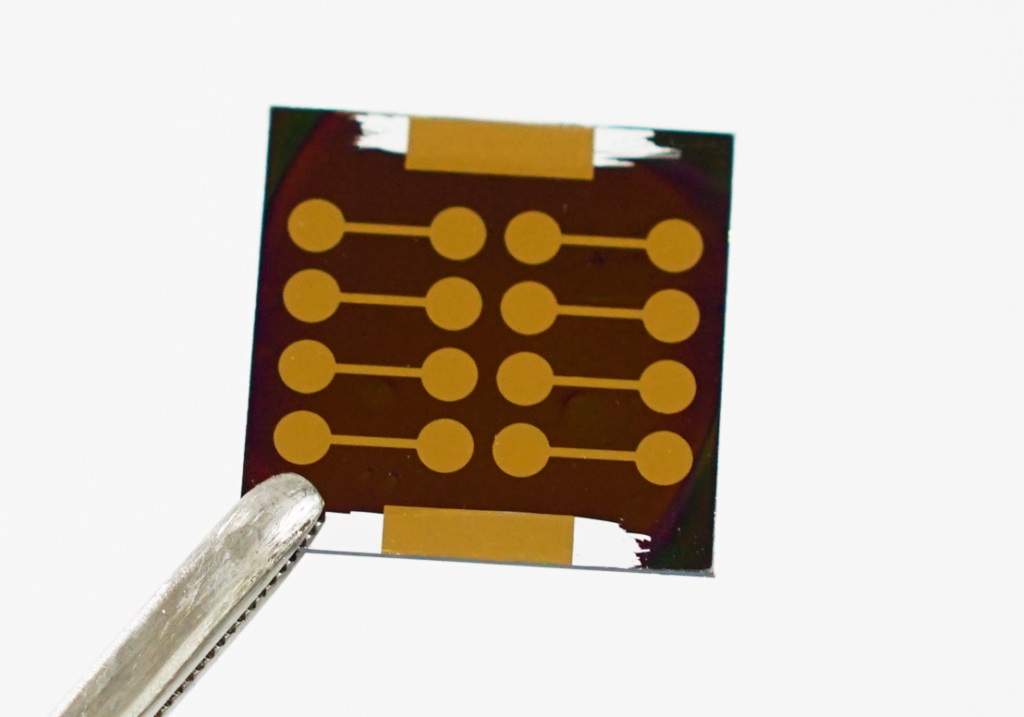
To overcome this challenge, the research team used in-situ characterization to reveal the unstable crystallization pathway induced by PEDOT:PSS in tin-lead mixed perovskite films and replaced PEDOT:PSS with a self-assembled phenothiazine-functionalized monolayer (abbreviated as 4PAPT). Compared to PEDOT:PSS, 4PAPT enables faster, more direct, and more uniform perovskite crystallization, suppresses the formation of the tin iodide-dimethyl sulfoxide (SnI₂–DMSO) intermediate phase, improves crystal orientation and interface stability, thereby reducing defect density and enhancing carrier transport.
The team developed a two-terminal monolithic all-perovskite tandem solar cell with a device architecture stacked on an indium tin oxide (ITO) transparent electrode. The bottom cell includes a wide-bandgap (WBG) perovskite absorber layer, interconnected via a carbazole-based naphthalene derivative (CbzNaph) as the hole-selective layer, followed by a fullerene (C60) electron transport layer, atomic layer deposited tin dioxide (ALD-SnO₂) as the recombination layer, and a gold (Au) electrode. The top cell employs 4PAPT as the hole transport interface, combined with a narrow-bandgap (NBG) perovskite absorber layer, a C60 electron transport layer, a bathocuproine (BCP) exciton blocking layer, and a silver (Ag) back electrode. The 4PAPT-based narrow-bandgap single-junction cell achieved an efficiency of 23.2%, while the PEDOT:PSS-free all-perovskite tandem cell achieved a conversion efficiency of 29.1%, the highest reported for this type. Encapsulated devices retained 90% of their initial efficiency after 800 hours of maximum power point tracking under simulated one-sun illumination at approximately 40°C.
Corresponding author Fengzhu Li noted that the molecular interface strategy enabled efficiency improvements in narrow-bandgap single-junction cells and was extended to tandem cells. Co-author Yen-Hung Lin emphasized that the instability of PEDOT:PSS is not only a material issue but also affects the formation of perovskite films at the buried interface; replacing it with a molecularly designed self-assembled monolayer can control crystallization from the outset. The study was published in the journal Joule under the title "Interface-mediated crystallization enables PEDOT:PSS-free all-perovskite tandems with 29.1% efficiency and enhanced durability."
This article is compiled by Wedoany. All AI citations must indicate the source as "Wedoany". If there is any infringement or other issues, please notify us promptly, and we will modify or delete it accordingly. Email: news@wedoany.com
Related Products


TAI Slew-drive Single-axis Independent 1P Tracking Bracket System
ANTAI TECHNOLOGY CO., LTD.

Electromagnetic Fluid Seawater Floating Oil Separation and Recover Equipment
Huate Magnet Group Co., Ltd.


KYN61-40.5 Indoor AC Metal-clad Removable Switchgear
Chongqing Transformer Co., Ltd.