en.Wedoany.com Reported - Researchers at Singapore's Nipsea Group have developed an ultra-black automotive coating that absorbs an average of 99.9% of incident light in the visible spectrum. The findings were published in the journal Matter & Light.
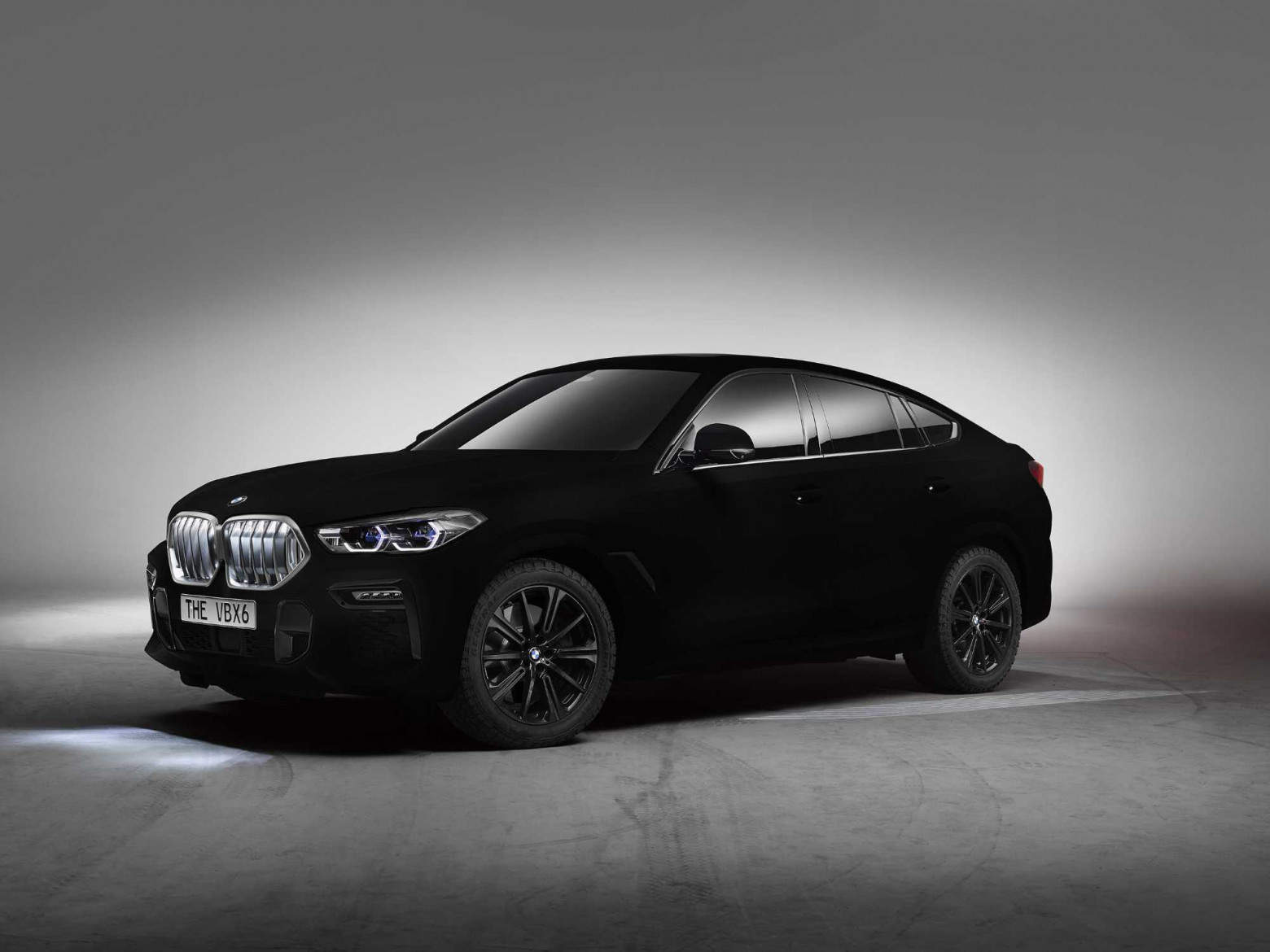
The core mechanism of the coating lies in the natural interaction between carbon black and carbon nanotubes (CB‑CNT), which causes the particles to form a "point-connected" structure within the paint mixture, thereby trapping light. Tests show that the new coating has an average reflectance of approximately 0.08% in the visible light band, slightly higher than Vantablack's 0.05%, but with comparable performance levels.
Vantablack, a coating developed by UK-based Surrey Nanosystems, was applied to a BMW X6 concept car in 2019. At that time, the manufacturer noted that surfaces covered with Vantablack "lose their characteristic to the human eye, making objects appear two-dimensional." Due to adhesion issues and the inherent brittleness of the nanotube coating, Vantablack ultimately failed to achieve mass production.
Nipsea Group claims its new coating offers significant improvements in durability. Samples passed water resistance tests (immersion in a 40°C water bath for 10 days) and humidity resistance tests (maintained at 95% humidity for 14 days) without visible defects, and met standard testing requirements. To maintain the three-dimensional visual effect of the car's exterior, the coating surface needs to be covered with a layer of clear gloss paint. Researchers indicate that the coating requires further improvements before commercial application.
This article is compiled by Wedoany. All AI citations must indicate the source as "Wedoany". If there is any infringement or other issues, please notify us promptly, and we will modify or delete it accordingly. Email: news@wedoany.com