en.Wedoany.com Reported - Dubai's Palm Jumeirah, a large-scale artificial island project, utilized dredging and land reclamation techniques, relocating a total of 110 million cubic meters of sand and using 9 million tons of rock, adding 72 kilometers of coastline to the area. The project was jointly constructed by Dutch maritime contractor Van Oord and Belgian marine engineering group Jan De Nul, aiming to reduce dependence on oil through the tourism industry.
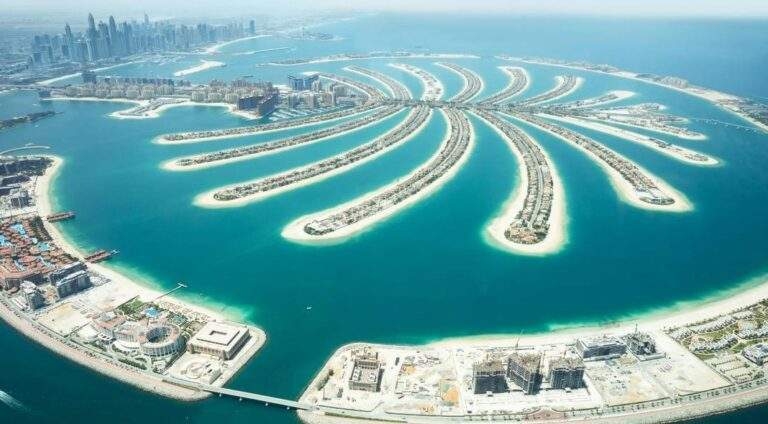
To reduce reliance on oil revenue, Dubai chose tourism as a new income source at the end of the 20th century. Sheikh Mohammed bin Rashid Al Maktoum proposed that Dubai should become one of the world's most renowned tourist destinations. Since the emirate covers less than four square kilometers and has a short coastline, it lacked the natural conditions for a traditional large-scale tourist resort. By designing and constructing massive land reclamation projects, Dubai changed this situation.
The first project was launched in 2001, namely the Palm Jumeirah. The island is shaped like a palm tree, consisting of a trunk, a crown with 16 fronds, and a crescent-shaped outer breakwater. The island extends five kilometers from the Dubai coast, with a width of approximately four and a half kilometers. Through this unique design, Dubai gained 72 kilometers of new coastline. According to the Sheikh's requirements, the island was built entirely from sand and rock, without using steel or concrete.
Project construction involved dredging and relocating 110 million cubic meters of sand using cutter suction dredgers (CSDs) and trailing suction hopper dredgers (TSHDs), creating a total of 700 hectares of new land. The outer breakwater of the crescent used 9 million tons of rock material sourced from 16 quarries in the hinterland. Land reclamation began in 2001 and was completed in 2003.
This article is compiled by Wedoany. All AI citations must indicate the source as "Wedoany". If there is any infringement or other issues, please notify us promptly, and we will modify or delete it accordingly. Email: news@wedoany.com