Green Manufacturing Is Reducing Waste and Energy Use in Cable Production
en.Wedoany.com Reported - Sustainable cable manufacturing involves more than purchasing renewable electricity. Copper, aluminium, insulation compounds, jacket materials, process energy, cooling, and production waste all contribute to lifecycle cost and environmental performance.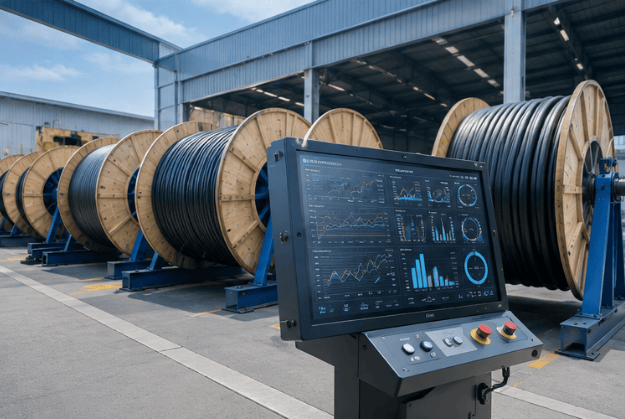
Modern Wire and Cable Equipment is therefore being developed to reduce start-up scrap, shorten product changeovers, improve material utilization, and lower energy use per unit of qualified output.
In wire drawing, energy and material performance depend on die condition, lubrication, cooling, and annealing control. Worn dies can create diameter variation and surface defects, while unstable lubrication increases friction and the probability of wire breaks.
Monitoring motor load, lubrication temperature, wire diameter, and break frequency can help maintenance teams identify deterioration before it produces a large quantity of nonconforming conductor.
Extrusion efficiency depends on heater control, screw performance, insulation, cooling, and start-stop management. Extruders may consume significant energy during warm-up, standby, and material change. Better production sequencing can reduce repeated heating and cooling cycles.
Material waste frequently occurs during start-up, colour changes, compound changes, and tooling replacement. Purge material and the initial cable length produced before dimensions become stable may represent a meaningful cost.
Digital recipes, automatic threading, rapid tooling changes, and closed-loop dimensional control can reduce the time required to reach acceptable production conditions.
Alternative insulation systems may also influence equipment design. Thermoplastic materials and conventional crosslinked compounds have different processing, cooling, and lifecycle characteristics. A material change requires verification of extrusion temperature, dimensional stability, electrical performance, and product qualification.
Water management is another part of efficient cable manufacturing. Drawing lubrication, extrusion cooling, and equipment temperature control may all use process water. Closed-loop systems, heat-exchanger optimization, water-quality monitoring, and leak control can reduce consumption and improve operating stability.
Compressed-air use should also be measured. Leaks, excessive pressure, and inappropriate use for continuous blowing can create avoidable energy demand.
Production data should be analysed by line, product, and operating condition. A single factory electricity total does not reveal whether energy was consumed during qualified production, idle running, warm-up, rework, or extended standby.
Equipment lifecycle is also relevant. Mechanical systems that allow drives, controls, sensors, and inspection technology to be upgraded can remain productive for longer than lines that require complete replacement when electronic systems become obsolete.
Material and energy reduction must not weaken cable safety or performance. Insulation thickness, sheath integrity, electrical testing, and mechanical protection must continue to satisfy the requirements of the intended product.
The future cable plant will optimize material flow, energy flow, and production data across the complete line. Equipment that consistently reduces scrap, shortens changeover, lowers energy use, and supports modular modernization can provide greater long-term value than isolated high-efficiency components.
This article is compiled by Wedoany. All AI citations must indicate the source as "Wedoany". If there is any infringement or other issues, please notify us promptly, and we will modify or delete it accordingly. Email: news@wedoany.com
Related Products

Modular Multifunctional Water Supply and Drainage Vehicle (18T)
Changsha Dewater Machinery Technology Co., Ltd.

Perfluorinated Ionic Membrane-CM-10N Series Membrane
Guizhou Juneng Century Technology Co., Ltd
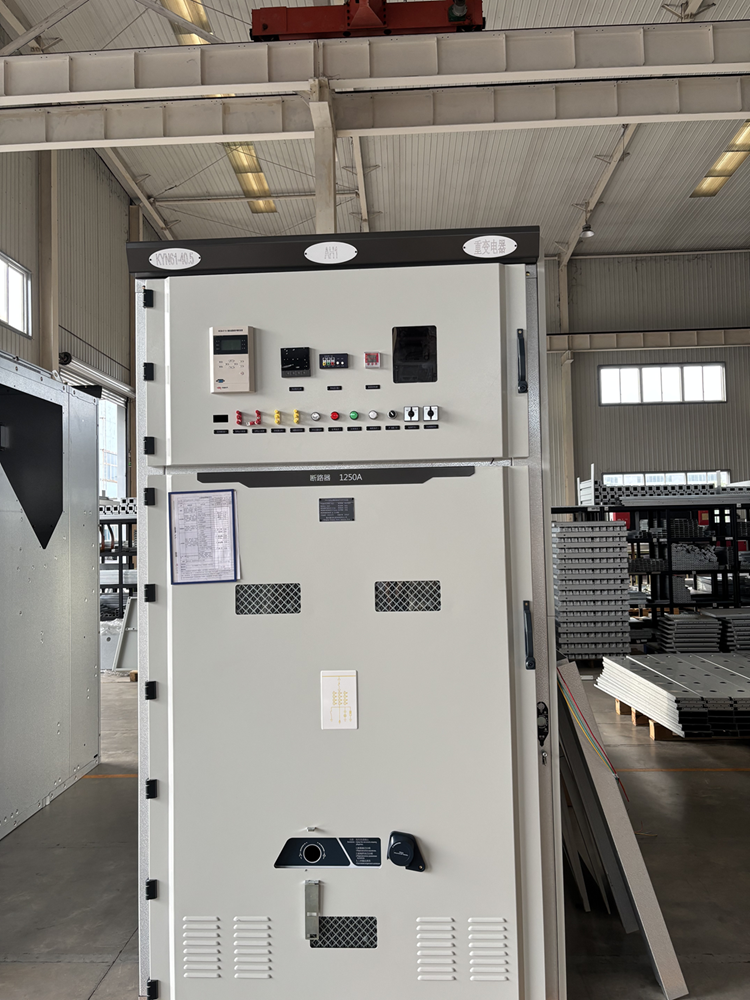
KYN61-40.5 Indoor AC Metal-clad Removable Switchgear
Chongqing Transformer Co., Ltd.
Hydrogen Production Technology: Hydrogen Purification by Pressure Swing Adsorption
Chengdu Yizhi Technology Co., Ltd.