Verizon urges Ericsson to accelerate Open RAN deployment
en.Wedoany.com Reported - Open RAN is an essential foundation for Verizon's 6G network strategy. With roughly four years until the first 6G products arrive, the operator says nearly half of its wireless network is already open-ready, meaning it runs on Samsung's virtual RAN (vRAN).

For Verizon, Open RAN means standard open interfaces between base station components and the ability to run RAN software on general-purpose x86 hardware, i.e., vRAN. The operator has one of the world's largest virtualized wireless networks, possibly the largest. It says it currently has about 60,000 vRAN sites in operation, including macro sites and small cells deployed in stadiums, large events, and enterprise private networks. In early 2025, the operator stated it had 22,900 vRAN sites in operation, with 40% of its network running on the vRAN platform, which includes Samsung equipment, HPE servers, and Wind River's software layer.
Verizon CTO Yago Tenorio confirmed to Light Reading that these vRAN deployments (which he calls Open RAN) currently all come from Samsung, because "Ericsson is not ready yet. But they now have a good plan, and we hope they will be ready soon." "For the industry as a whole, it is crucial that Open RAN from different vendors reaches a certain level of maturity before 6G, so that general-purpose off-the-shelf hardware can also support 6G," he said. "From an x86 perspective, (Intel's) Granite Rapids will provide enough compute power to meet the needs of the first few years of 6G." According to a recent Verizon blog, open standards and interoperability, such as O-RAN, are "non-negotiable architectural foundations" for next-generation wireless networks.
Tenorio stated: "Open interfaces allow you to deploy autonomous networks on top of them and connect intelligent systems." This can enable embedding multiple network language models or agents into the radio operating system to support new services or network functions. He added that this adds more "good reasons" for Open RAN, including avoiding vendor lock-in, being able to use more radio units with the same baseband, and switching vendors without replacing hardware.
This situation puts pressure on Ericsson to shift toward general-purpose servers. For Ericsson, Tenorio's comments indicate that another U.S. operator customer wants to see the Swedish supplier support general-purpose central processing unit (CPU) hardware. AT&T plans to deploy Ericsson's Cloud RAN using Dell servers and Intel Granite Rapids processors in its future wireless architecture. Cloud RAN and Open RAN are key parts of the $14 billion, five-year agreement between AT&T and Ericsson announced in December 2023. But Cloud RAN progress appears slow. According to AT&T's presentation at Network X Americas last month, two and a half years into the contract, AT&T has deployed Cloud RAN at only 21 sites in two cities, running on Intel's previous-generation Sapphire Rapids processors. AT&T decided to wait for Granite Rapids to become available because Intel's earlier processors required deploying two servers, which the operator wanted to avoid. Now that Granite Rapids is available, AT&T says it is beginning to scale up Cloud RAN.
Ericsson positions its radio software as deployable on any chip platform. Its Cloud RAN product is now commercially available on Intel Xeon processors and offers "prototype support" for AMD, Arm, and Nvidia. But the majority of its RAN is still supported by its own custom baseband hardware. Other factors may also limit the industry's future RAN vision. For example, some point out that AI demand has caused memory chip prices to soar, which could also increase the cost of CPUs for virtual networks and other custom telecom components. Wireless operators are considering RAN hardware options before 6G to explore the potential of running telecom and other workloads from remote sites. Nvidia's entry into the telecom field, proposing an AI-RAN solution that leverages its GPUs for RAN computing and investing $1 billion in Nokia, has brought these hardware options into focus. But there is no simple answer when application-specific integrated circuits (ASICs) perform excellently and drive most wireless networks. Omdia Senior Principal Analyst Gabriel Brown stated there are "trade-offs," concluding: "Dedicated hardware offers higher performance density; vRAN offers greater flexibility. It's a tough decision."
Related Products


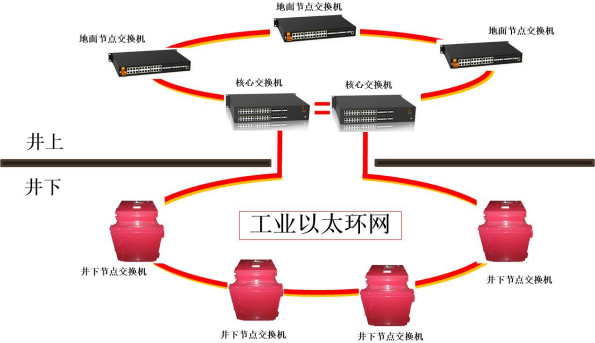
Mine Explosion-proof and Intrinsically Safe Industrial Ethernet Ring Network (10 Gigabit/Gigabit)
Chongqing Mas Sci&Tech Co., Ltd.



G.652.D Wavelength-extended Non-dispersion Shifted Single-mode Optical Fiber
HONGAN GROUP CO., LTD.




Flat Portable Satellite Terminal 0.35m Aperture Manual Portable Terminal
China Starwin Science & Technology Co., Ltd.