en.Wedoany.com Reported - Honeywell has launched a new module based on non-dispersive infrared (NDIR) optical technology for detecting flammable compounds in critical environments. The module can be integrated into both fixed and portable safety systems, suitable for industries such as mining, petrochemicals, plastics manufacturing, and oil and gas exploration, including infrastructure sectors.
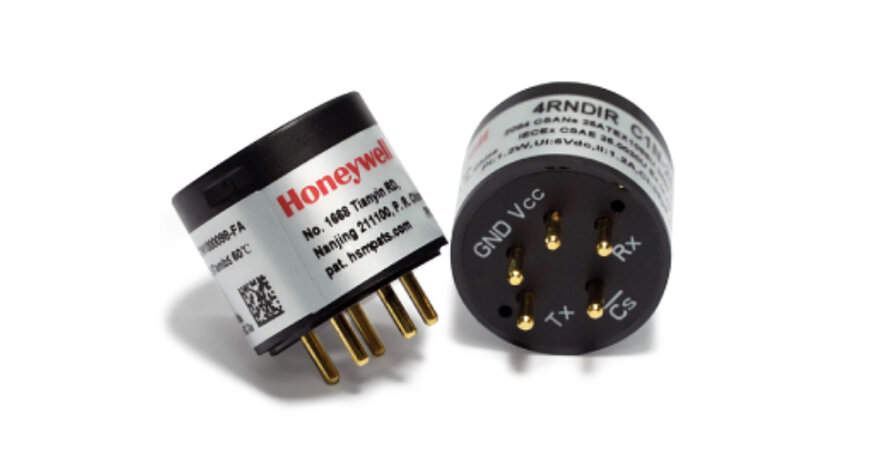
The Series 4 NDIR optical architecture is designed to identify the presence of hydrocarbons such as methane, propane, and butane without suffering from the structural degradation common in traditional detection systems. Conventional pellistor or catalytic bead sensors are prone to thermal degradation and chemical poisoning in harsh environments. Non-dispersive infrared technology uses light absorption to measure gas concentration, providing mechanical resistance to particulate contaminants. This mechanism stabilizes the monitoring process, reduces hardware failure rates, and minimizes false alarms in processing plants.
To support extreme temperature and dust concentration variations typical in confined spaces such as mines and refineries, the device integrates a system for physically reducing condensation. This system eliminates the accumulation of excess moisture in the optical cavity, maintaining analytical performance and photometric accuracy under high saturation conditions. Additionally, compared to traditional thermoelectric heating elements, the solid-state operation of infrared technology requires less power, reducing current consumption and extending battery life for mobile detectors used by field teams.
In underground infrastructure or enclosed indoor environments, the use of precise sensors is strictly necessary for triggering alarms upon exposure to hazardous concentrations. Carmen Becker, President of Honeywell Sensing Solutions, stated that in gas monitoring, the accuracy, precision, and reliability of sensing solutions are critical to worker safety. Calibration specifications are designed to ensure stability in continuous measurements. Willian Louzavio, Senior Commercial and Strategy Director for Latin America at Honeywell Process Technologies and Process Automation, commented that combining detection accuracy with higher durability and lower energy consumption meets the demands of increasingly complex industrial environments.
In the field of non-dispersive infrared sensors for hydrocarbons, established technologies from manufacturers focused on intrinsically safe technologies, such as Alphasense and Dynament, are already mature. In hardware benchmarking, entry-level competing optical modules typically provide only raw analog signals, requiring device designers to integrate additional electronic circuits and proprietary algorithms for thermal and humidity compensation. Honeywell's fourth-generation architecture differentiates itself by encapsulating processing within the module using UART digital communication protocols and delivering factory-linearized outputs. The device maintains a calibration tolerance margin of ±5% of the lower explosive limit (LEL) under certified environments (ATEX and IECEx), with accuracy standards comparable to higher-end pre-processed product lines from other manufacturers. Furthermore, the focus on low-voltage applications addresses key constraints in modern portable detector development, prioritizing minimal power consumption without increasing response time for optical readings.