Covestro Plans New MDI Production Bases in China and UAE
en.Wedoany.com Reported - German plastics and chemical materials manufacturer Covestro is accelerating its global capacity expansion, focusing investments in Asia and the Gulf region over the coming years rather than in its home country of Germany. The company announced on Tuesday that it plans to build a new large-scale MDI (methylene diphenyl diisocyanate) production base in Shanghai, China, while simultaneously launching a feasibility study for another MDI plant in the United Arab Emirates. Regarding this expansion plan, Covestro CEO Markus Steilemann stated in an interview that Europe, particularly Germany, is no longer suitable for such large-scale new investments.
MDI is one of Covestro's core products, widely used in polyurethane foam manufacturing for building and refrigerator insulation materials, automobiles, and various household appliances. According to the plan, the new Shanghai plant will adopt world-class production scale with an annual capacity of 660,000 tons, expected to commence operations in the early 2030s. Concurrently, Covestro will conduct a feasibility study for another MDI plant in the UAE. The project has not yet been finalized, but if successfully implemented, it will become the company's largest capacity expansion investment in the next decade. Although Covestro has not disclosed the specific investment amount, industry estimates suggest that a new MDI plant typically requires an investment of between 1.5 billion and 2 billion euros. Notably, the UAE project site is located where Covestro's new shareholder XRG is headquartered. XRG is an investment platform under the Abu Dhabi National Oil Company (ADNOC).
Steilemann stated that in Abu Dhabi, the company can simultaneously access well-established industrial infrastructure, ample raw material supply, and low-cost energy. "There, we have the opportunity to build one of the most globally competitive MDI plants." 
Previously, a large-scale survey of 1,000 companies conducted by a German newspaper showed that most German companies are planning to expand investments in growth markets such as China and the United States to cope with the persistent economic weakness in Germany. When asked why such an important new plant is not being built in Germany, Steilemann cited two main reasons. First, the overall decline in cost competitiveness in Europe. He said: "Europe has a fundamental cost disadvantage compared to Asia and the Middle East." Second, demand continues to shrink. He stated: "Many of our customers are scaling back their European operations, and we are facing a shrinking market." In contrast, although China's overall chemical industry faces overcapacity, particularly fierce competition in the petrochemical sector, the MDI market still maintains good growth prospects. Steilemann expressed confidence: "We are not afraid of competition in the Chinese market because we have leading technological advantages."
Steilemann specifically emphasized that what attracts the company to invest in China is not that energy prices are significantly lower than in Europe. In fact, China's industrial electricity prices and natural gas prices do not have a particularly large advantage compared to Europe. What truly impressed the company is the efficient support demonstrated by the Chinese government throughout the project advancement process. He said the company has experienced "very professional" project services from Chinese government departments. During communications with the Chinese side, the company believes that China has achieved a good balance between economic development and environmental protection. More importantly, Covestro expects to complete the plant construction at a very fast pace while ensuring climate-neutral operations for the new facility. It is understood that the company has received commitments for sufficient green electricity supply to meet the low-carbon production needs of the new plant. However, Covestro stated that the MDI produced at the Shanghai plant will not be exported to Europe but will primarily supply the Asian market.
The UAE project will be jointly advanced by Covestro and two local companies, including state-owned chemical park operator Taziz and ammonia producer Fertiglobe. The latter, like Covestro, is part of the XRG system. Ammonia is one of the most important basic raw materials in the MDI production process. In the future, MDI produced at the UAE plant will be mainly exported to India and regions spanning the European-Asian border, with Turkey becoming a key target market. Currently, these markets are primarily supplied by Covestro's European plants. However, Steilemann admitted that European plants are facing increasing pressure. He said: "Asian competitors are continuously entering these markets, and we are under tremendous competitive pressure." If the company does not build new, more cost-competitive plants, it would mean voluntarily ceding the market to competitors. He believes that due to high costs, existing European plants will find it increasingly difficult to compete globally through exports in the future. He also made a relatively pessimistic assessment of the development prospects for the European chemical industry. He stated that in the bulk chemical sector, where raw materials and energy heavily rely on cost advantages, Europe's structural disadvantages are likely to persist in the long term.
Therefore, the company must seriously evaluate which regions remain competitive in the future and reconfigure its global capacity accordingly. However, he also emphasized that Germany still holds significant advantages in high-value-added specialty chemicals. Competition in this field relies more on technological innovation, R&D capabilities, and customized customer services rather than simply cost. Covestro has already integrated related businesses into an independent business segment, continuing to focus on it as a key direction for future development.
Covestro believes that building a plant in the UAE can also enhance the security of the global supply chain. However, this view is somewhat surprising.
In response, he stated: "In the medium to long term, I believe the Gulf region will remain stable because major geopolitical powers will not want long-term turmoil there." But he also acknowledged: "Before it truly stabilizes, this period will still be quite bumpy."
Due to the recent situation in Iran, the German chemical industry experienced a brief positive period in the second quarter. Fearing future supply disruptions, many customers stockpiled chemical products in advance, leading to more orders for European suppliers. However, he believes this is only a short-term special situation. He said: "I think the global economy will still face considerable uncertainty and risks in the second half of the year."
Related Products


CAP1400 main feedwater flow nozzle flowmeter.
Jiangsu Hongda Instrument Technology Co., LTD.
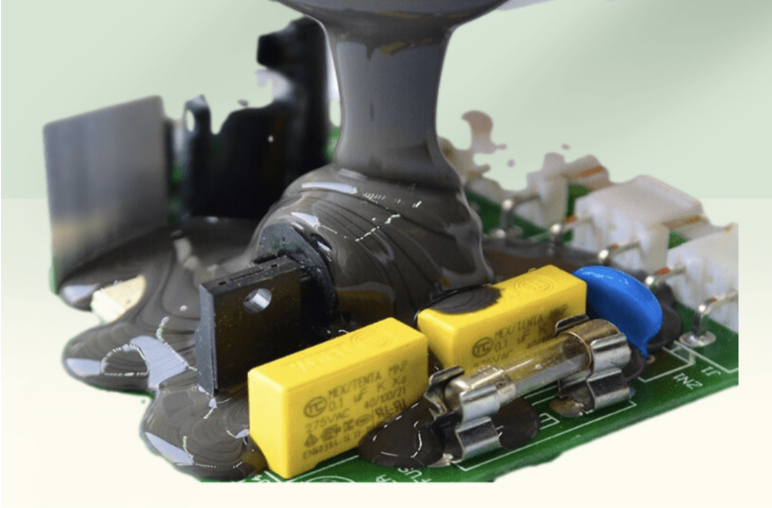
High Thermal Conductivity Encapsulating Resin
Nantong BESALL Sealing Technology Company.,Limited
Quick-Change Single-Seat Control Valve / Quick-Change High-Pressure Single-Seat Control Valve
Beijing Consen Automation Technology Co., Ltd.
Steel Plates for Chemical Pressure Equipment
Gansu JISCO Group Hongxing Iron and Steel Co., Ltd.
Gasification Furnace Series: Freely Combinable Aerospace Furnace
CHANGZHENG ENGLINEERING CO., LTD.