China's Ministry of Industry and Information Technology Releases the First Industry Standard for Digital Supply Chain Management in the Light Industry Sector
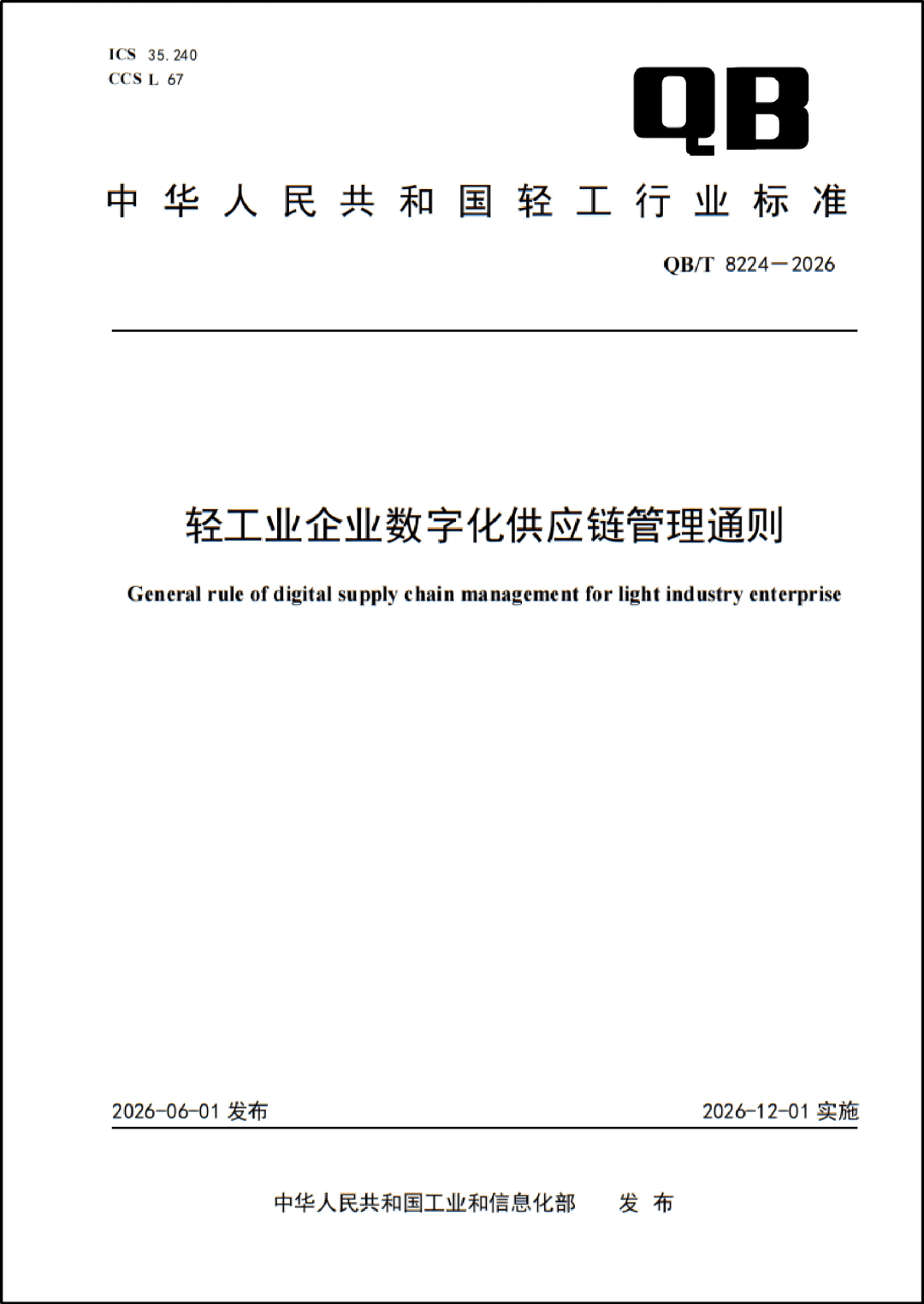
en.Wedoany.com Reported - Recently, the Ministry of Industry and Information Technology officially released the industry standard QB/T 8224—2026, "General Rules for Digital Supply Chain Management in Light Industry Enterprises." This standard was proposed and is under the jurisdiction of the China National Light Industry Council, led by the China Light Industry Information Center, and jointly developed with relevant entities across the industrial chain, including home furnishings, daily chemicals, maternal and infant products, food, baijiu, papermaking, batteries, light industry equipment, digital service providers, and university research institutes. It is the first industry standard targeting supply chain management in China's light industry sector.
The formulation of the standard implements the requirements of the "Guidelines for Improving the Supply Chain Management Level of Manufacturing Enterprises (Trial)" (hereinafter referred to as the "Guidelines") jointly issued by the Ministry of Industry and Information Technology, the Ministry of Transport, and the Ministry of Commerce. It addresses the shortcomings in light industry supply chain standardization and will promote the steady upgrade of the light industry towards high-end, intelligent, and green development.
I. Background of the Standard: Addressing Multiple Development Pain Points in the Light Industry Supply Chain
The Central Committee of the Communist Party of China and the State Council attach great importance to the resilience and security of industrial and supply chains. The "Guidelines" clearly state that the goal is to ensure smooth circulation as the baseline, improve quality and efficiency as the objective, and comprehensively enhance the supply chain management capabilities of manufacturing enterprises through digitalization and greening, deeply embedding modern supply chains into all links of the industrial chain. The light industry is a traditional advantageous industry in China's national economy, a crucial livelihood industry, and an industry with strong international competitiveness. It undertakes the important tasks of meeting consumption, stabilizing exports, and expanding employment. Its products cover various consumer needs in people's material, spiritual, and cultural lives, including food, clothing, housing, transportation, use, travel, education, and entertainment. However, characteristics such as long chains, multiple entities, and diverse product categories have long exposed the industry to supply chain weaknesses, including information silos, uneven digitalization levels, lagging risk response, and a lack of green standards:
First, the degree of supply chain digitalization is uneven. Small and medium-sized enterprises (SMEs) lack standardized construction guidance, making digital transformation costly and difficult to implement.
Second, upstream and downstream data are fragmented. Material coding and traceability rules are inconsistent, preventing information exchange across enterprises and platforms. Information asymmetry increases operational costs.
Third, there is a lack of unified standards for green, low-carbon, and full-process traceability management, making it difficult to meet consumer safety supervision and green development requirements.
Fourth, the risk prevention and control system is inadequate. Early warnings for issues such as raw material supply, logistics distribution, and quality defects are delayed, resulting in insufficient supply chain resilience against shocks.
The standard compilation team conducted multiple rounds of field research and multi-scenario technical verification tailored to the characteristics of the light industry. Balancing the implementation needs of large leading enterprises and micro, small, and medium-sized enterprises, they developed a unified management standard that is both universal and practical.
II. Core Framework of the Standard: Covering Full Lifecycle Supply Chain Management
The "General Rules for Digital Supply Chain Management in Light Industry Enterprises" closely follows the key development directions required by the "Guidelines," establishing a complete management framework encompassing top-level design, full-chain business, ecological collaboration, data governance, green and low-carbon practices, risk prevention and control, and evaluation and optimization. The content covers the entire process of digital supply chain construction:
(A) Clarifying the Scope of Application and Four Core Management Principles
The standard applies to the construction and operation of digital supply chains for all light industry enterprises. It also provides normative references for supply chain service providers, e-commerce platforms, consulting institutions, and bidding entities. It establishes four principles: digital-driven, business continuity, supply-demand balance, and open ecosystem. Aligned with the national guidelines, it requires enterprises to coordinate commercial flow, logistics, capital flow, and information flow to achieve full-chain visibility, controllability, and traceability of the supply chain, dynamically responding to various uncertainties in the market and industrial chain.
(B) Five Views for Top-Level Digital Supply Chain System Design
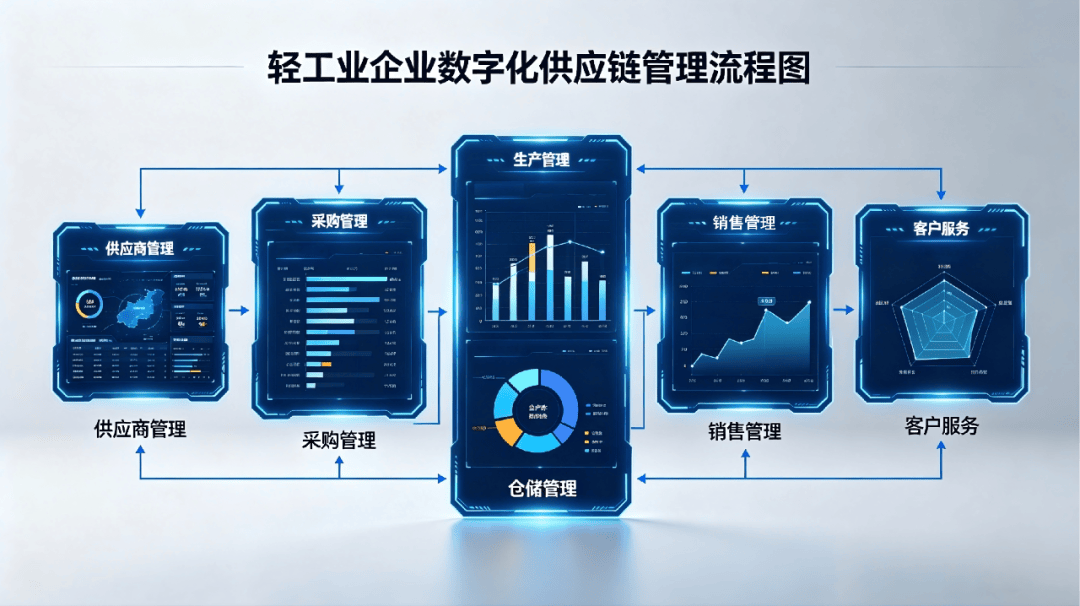
The standard specifies the overall architecture from five views: strategy, role, business, data, and technology. It clarifies the paths for enterprise supply chain strategic planning, upstream and downstream partner selection, industrial network layout, and digital operation rule formulation. It customizes digital transformation implementation paths for enterprises at different development stages (start-up, growth, maturity), implementing the tiered and categorized digital construction requirements of the "Guidelines."
(C) Full-Chain Digital Business Management, Promoting Lean Supply Chain Operations
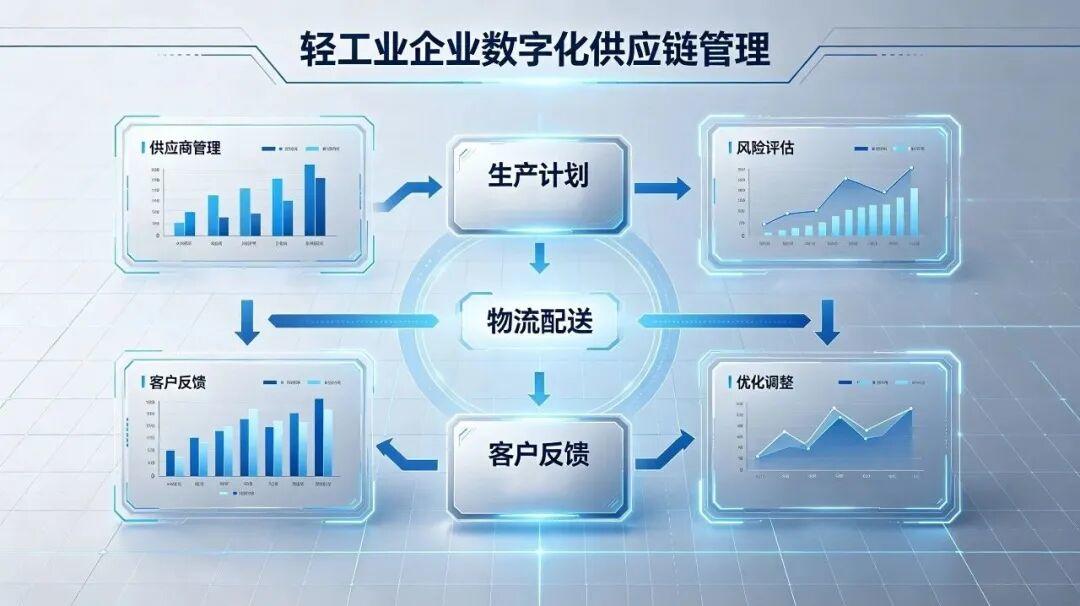
It covers digital control across the entire process of planning, ordering, procurement, production, logistics, and service. It fully implements the lean supply chain concept, eliminating resource waste in production, warehousing, and distribution.
Digital Planning and Ordering: Leveraging big data and digital twins for demand forecasting and production scheduling simulation, supporting personalized customization, enabling full-process visual tracking of orders, and breaking down information barriers between production and sales.
Digital Procurement and Production: Establishing a digital tiered access and performance evaluation system for suppliers, promoting the connection of production equipment to the cloud and MES system integration, and using machine vision and the Internet of Things for full-process quality traceability.
Digital Logistics and Service: Intelligent warehouse scheduling, multi-route logistics alternatives, building integrated online and offline after-sales service platforms, and driving product iteration and optimization based on consumer feedback.
(D) Bidirectional Digital Ecological Collaboration, Promoting Integrated Development of Large, Medium, and Small Enterprises
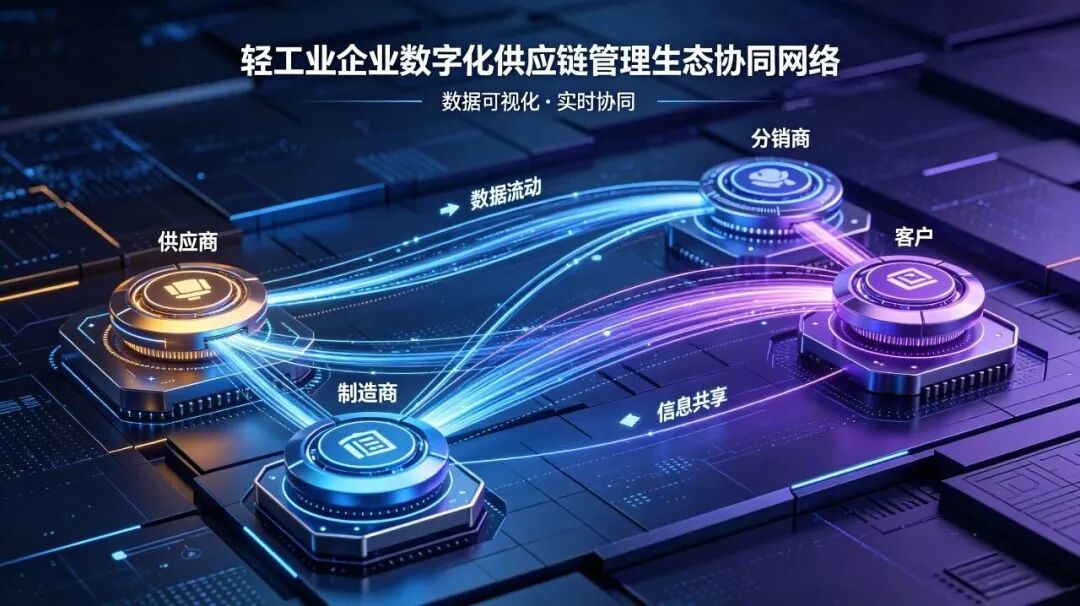
Implementing the "Guidelines'" requirement of "leading enterprises driving integrated development," the standard specifies upstream and downstream collaboration mechanisms: Upstream, real-time sharing of R&D, procurement, and logistics information with suppliers, enabling collaborative R&D and automatic replenishment. Downstream, building customer collaboration platforms for rapid response to customized demands and synchronized logistics information, promoting data exchange and resource sharing among large, medium, and small enterprises in the chain to achieve symbiosis and win-win outcomes.
(E) Full Lifecycle Data Governance, Strengthening Supply Chain Data Security Defenses
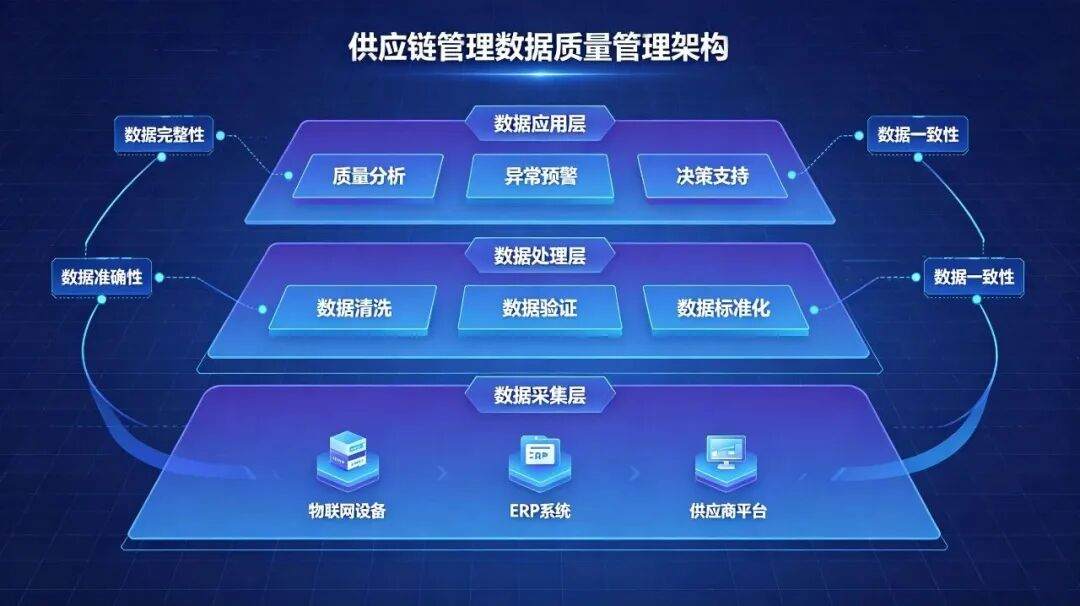
Unifying the full-process specifications for supply chain data collection, cleaning, storage, sharing, monitoring, and security. Clarifying the mandatory data list for each link, establishing mechanisms for data masking, encryption, tiered authorization, and exchange auditing. Strengthening supply chain data privacy protection and routine vulnerability checks to meet data security compliance requirements for industry digital transformation.
(F) Integrating Green Supply Chain Management, Guiding Low-Carbon Circular Development in Light Industry
Aligning with the "Guidelines'" requirements for green supply chain construction, embedding low-carbon and circular economy principles throughout the supply chain: Encouraging enterprises to select green raw materials, promote packaging reduction and reusable logistics containers, and standardize green supplier evaluation mechanisms. Supporting clean production and solid waste recycling, guiding leading enterprises to conduct product carbon footprint accounting, and establishing channels for disclosing green product information.
(G) Digital Full-Process Risk Control, Comprehensively Enhancing Industrial Chain Resilience and Security
Building a closed-loop risk control system of "risk perception - intelligent assessment - coordinated response," implementing the "Guidelines'" requirements for supply chain security enhancement: Utilizing IoT and AI for real-time monitoring of raw material quality, production capacity, logistics, and market fluctuation risks. Establishing diversified supplier backup pools, multi-region warehousing, and multi-route logistics networks, improving emergency response plans for contingencies, and reducing the risk of supply chain disruption at the source.
(H) Overseas Supply Chain Adaptation Guidelines, Assisting Light Industry Enterprises in Expanding International Markets
For light industry enterprises with cross-border operational needs, guiding them to coordinate overseas warehouses, build cross-border supply chain collaborative management systems, and enhance international market supply-demand matching and risk coordination capabilities.

(I) Closed-Loop Evaluation and Continuous Improvement Mechanism
Setting five evaluation dimensions: business digitalization level, ecological collaboration efficiency, data quality, risk resilience, and green development. Requiring enterprises to conduct regular internal self-assessments or third-party professional evaluations, optimizing processes, platforms, and risk control models based on identified weaknesses, forming a long-term iterative optimization mechanism.

III. Diverse Value of Standard Implementation, Empowering Synergistic Upgrades for Enterprises, Industry, and Consumption
(A) Enterprise Level: Cost Reduction and Efficiency Enhancement, Strengthening Risk Resilience
The unified standard significantly reduces the customization and transformation costs of digital systems for SMEs, breaking down internal data silos. Full-chain digital traceability allows for rapid identification of defective product batches, enabling precise targeted recalls and reducing enterprise economic losses. Digital collaboration models compress delivery cycles, optimize inventory and procurement costs, while diversifying supply and logistics channels, enhancing the risk resilience of enterprise supply chains.
(B) Industry Level: Breaking Down Industrial Collaboration Barriers, Cultivating New Quality Productive Forces in Light Industry
Unified data, business, and traceability standards address the pain points of platform incompatibility and information fragmentation within the industry, providing a standard basis for building public digital supply chain platforms for light industry clusters. Promoting leading enterprises to drive the synchronized digital and green transformation of upstream and downstream SMEs, improving the industry's green, low-carbon, and quality control systems, and facilitating the high-end upgrade of the light industry.
(C) Consumer Level: Full-Process Transparent Traceability, Continuously Boosting Consumer Confidence
Standardized unique traceability codes for individual products and unified public inquiry channels allow consumers to scan a code to view the entire process information of a product, from raw material sources, production testing, to warehousing and distribution, fully safeguarding consumers' right to know and supervise.
IV. Next Steps for Standard Implementation and Work Arrangements
After implementation, the China Light Industry Information Center, in conjunction with the China Light Industry Quality Certification Center, the China Academy of Information and Communications Technology, and the China Industrial Internet Research Institute, will coordinate the following implementation work:
(A) Conduct tiered standard promotion and training, release supporting practical guidelines, establish an expert service system, and guide enterprises in mastering evaluation indicators, certification processes, and rectification methods.
(B) Summarize excellent practical experiences from leading enterprises, create replicable demonstration models, assist micro, small, and medium-sized enterprises in benchmarking self-assessments, and orderly promote testing and grading evaluations.
(C) Collaborate with universities to cultivate professional talents for testing and certification, build an industrial chain supply-demand matching platform, promote upstream and downstream data interoperability and resource coordination, and support full-chain evaluation.
(D) Continuously collect feedback from standard implementation and testing, carry out tiered evaluation and certification, and lead the sustainable digital and green development of the industry.