en.Wedoany.com Reported - At the MathWorks China Automotive Conference held in June 2026, BorgWarner shared a machine learning-based method for online estimation of motor temperature. This method utilizes deep learning networks to predict the temperature of the motor rotor and stator in real time. It has completed bench validation and will proceed to vehicle-level testing.
Using AI for operating condition prediction is not a new technology, but a practical issue persists: how can an AI model trained in a Python environment be reliably deployed to an embedded platform? From model integration to code generation, from simulation verification to final deployment, uncertainties exist at every stage. This is precisely the key challenge for the large-scale implementation of embedded AI in the automotive industry today.
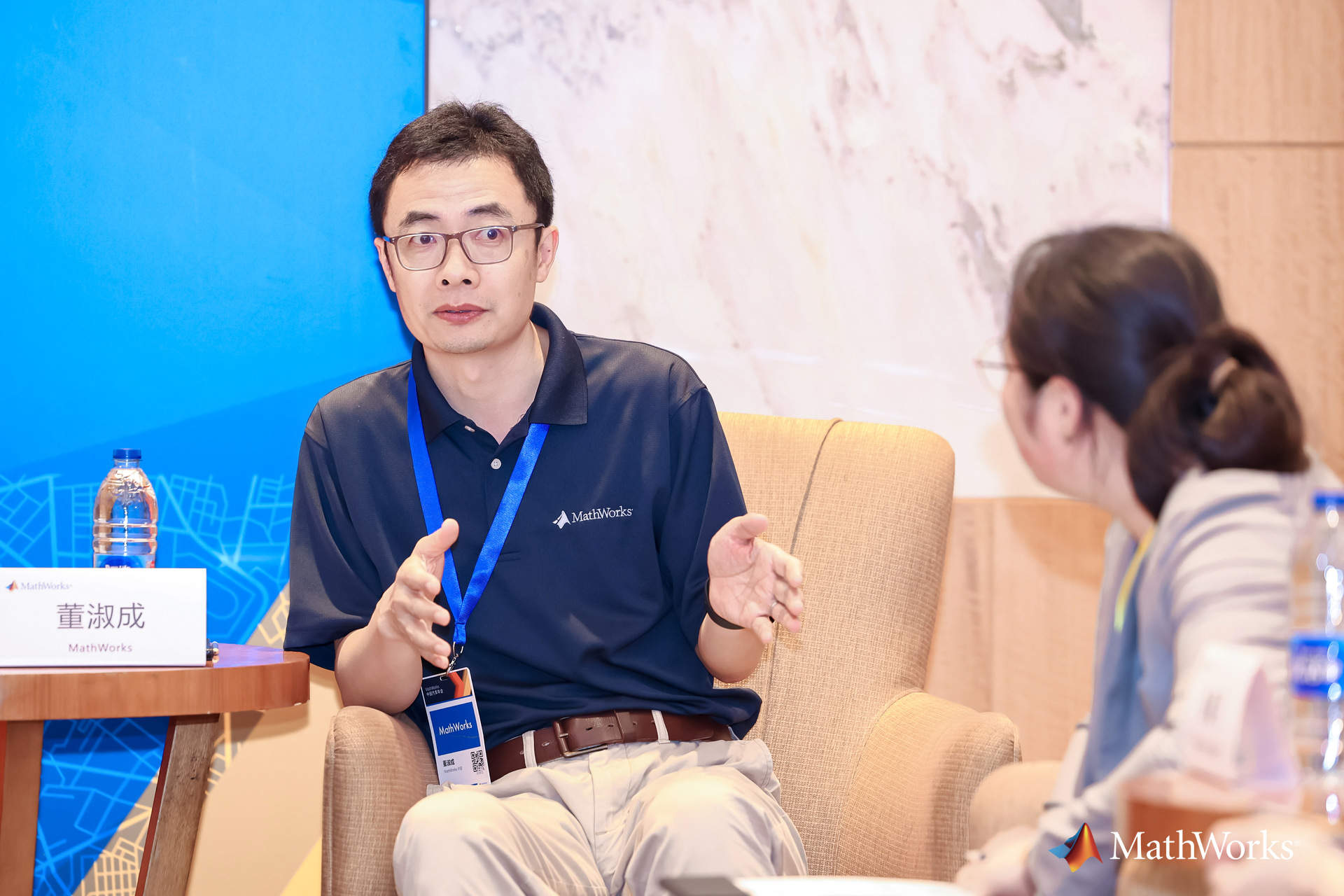
Dong Shucheng, Chief Expert and Team Manager of the MathWorks China Automotive Technical Team, noted that MATLAB has over 130 product toolboxes, but users often underutilize them due to development cycle constraints. Most underutilized toolboxes have high professional thresholds, with control theory and optimization modules requiring a certain level of theoretical knowledge from users. The R2026a version is changing this.
In April 2026, MathWorks launched the 2026a version (R2026a) of the MATLAB and Simulink product family, with a core focus on Agentic AI-driven workflows. Leveraging the MATLAB MCP Core Server, AI agents can interact with MATLAB/Simulink, not only outputting optimization suggestions but also performing operations such as code generation, code analysis, model creation, and editing, forming a closed-loop chain of generative AI-assisted design and verifiable computation. The role of Agentic AI is to enable engineers to call advanced toolboxes using natural language without deep interdisciplinary learning, thus utilizing functions they previously dared not or did not know how to use.
The MATLAB Agentic Toolkit and Simulink Agentic Toolkit provide Coding Agents with expert-level knowledge of MATLAB and Simulink workflows and usage standards. Combined, they enable generative AI systems to write code compliant with MATLAB/Simulink style, automatically generate and run tests, diagnose and fix errors, more efficiently leverage the built-in capabilities of MATLAB and Simulink, and reduce unnecessary token overhead while improving engineering quality.
The solution provided by MathWorks covers a fully traceable and verifiable process from training to deployment. The toolchain capabilities of R2026a can be understood at three levels: The algorithm development and training layer provides a complete modeling and training environment, supporting the design of network architectures such as LSTM, hyperparameter optimization, and training process management; In the model integration and simulation verification layer, Simulink offers modules for directly importing trained neural network models, allowing simulation of the inference process within Simulink. The R2026a version also supports simulating C and C++ code within the model, with no language restrictions and no need for additional wrappers; In the code generation and embedded deployment layer, models that have passed simulation verification can natively generate C code for deployment to automotive-grade MCUs.
These three layers form a complete closed loop: from data to model, from model to simulation verification, and from verification to code generation and deployment, every step is traceable and repeatable. However, a closed loop does not equate to automation. Deployment to MCUs still faces practical constraints such as inference speed and memory usage. Network compression, pruning, and precision loss are all trade-offs that must be addressed during the engineering process.
Zhang Tihuan, System Architecture Manager of the PDS Business Unit at BorgWarner (China) R&D Co., Ltd., pointed out that temperature sensors cannot be installed on the rotor during high-speed rotation. Traditional flux linkage methods have significant errors in low-speed, low-torque regions, while thermal network methods require engineers to have deep theoretical knowledge of motor structure and heat transfer.
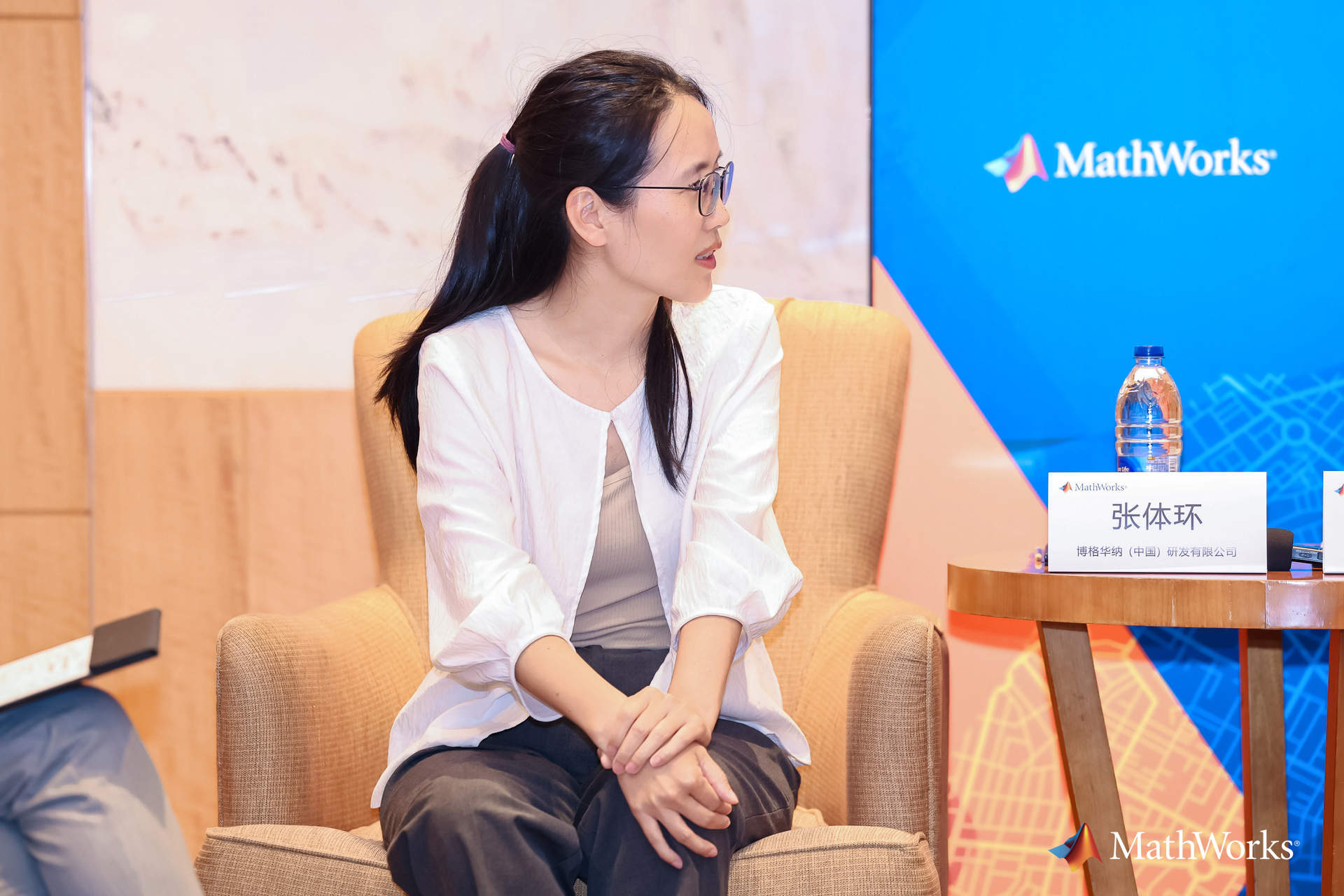
Zhang Tihuan stated that the value of AI lies in replacing complex physical modeling with data-driven approaches, lowering the development threshold. This project follows the MLE process group of ASPICE 4.0. Through MLE and SUP.11, the machine learning process is transformed into an assessable, verifiable, and traceable engineering activity. The core is to reduce uncertainty in process control, not to deny its existence. From problem definition, performance requirements, and operational constraints, to dataset preparation and hyperparameter optimization, and then to component-level testing, robustness testing, and final bench and vehicle verification, every step has clear process requirements. The MBD workflow ensures traceability across the entire process from data preparation, network design and training, verification in the Simulink environment, to C code implementation and deployment.
In Zhang Tihuan's view, the value of technology reuse is even more critical: AI machine learning enables knowledge transfer, applicable not only to temperature but also to other areas such as position sensors in the future. AI methods can also reduce the use of bench testing and calibration resources. By combining simulation and AI, in a parallel development mode for motors and electronic controls, algorithm verification can be performed in advance without waiting for the physical motor to be available.
For China's automotive industry chain in a competitive environment, the value of the MathWorks toolchain lies in helping Tier 1 suppliers achieve a single investment with multiple reuses of technology accumulation in fast-paced development, continuously amortizing development costs.
From an industry trend perspective, 2026 is hailed by the industry as the year of agents, with edge AI moving from the cloud to the physical world. MathWorks' mission is to accelerate the pace of engineering and science, and the 2026 MathWorks China Automotive Conference turned this mission into an ongoing engineering practice.