Germany to Host Fourth Robotics Conference in 2027, Promoting Construction Automation
en.Wedoany.com Reported - The Fourth International Conference on Robotics, Automation, and Intelligent Systems (Robotics-2027) will be held in Berlin from May 24 to 25, 2027. The technical directions covered by this conference agenda are increasingly becoming key factors in determining the future development of the construction and infrastructure industries.
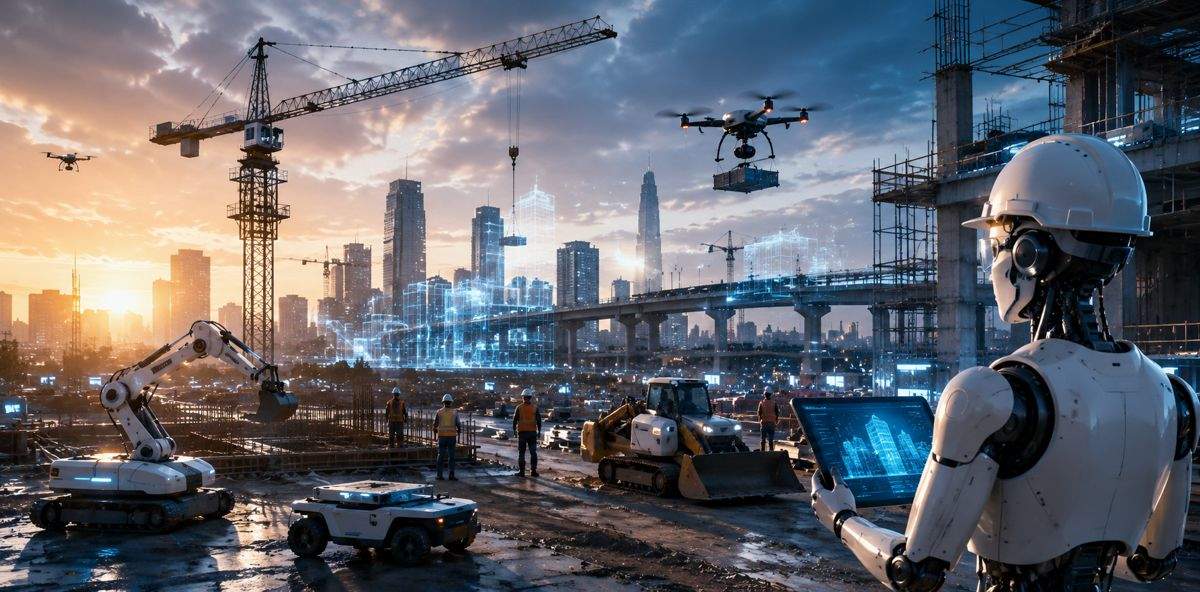
Organized by PAGES Conferences, Robotics-2027 targets scientists, researchers, academics, and industry professionals. Its agenda includes machine learning, human-computer interaction, autonomous systems, smart manufacturing, Industry 5.0, the Internet of Things, cyber-physical systems, digital twins, and advanced sensor technology. These topics directly map to application scenarios in the construction and infrastructure sectors, indicating technological directions that may appear on construction sites within two to three procurement cycles. The conference is described as a platform for knowledge exchange through keynote speeches, plenary sessions, oral and poster presentations, rather than a trade exhibition model, which is crucial for those seeking to capture early technology signals.
The core driver behind the construction robotics market is the persistent labor shortage. According to forecasts from the UK's Construction Industry Training Board (CITB), the British construction industry will need an average of approximately 41,200 additional workers annually between 2026 and 2030, with the total workforce expected to reach about 2.68 million by the end of this decade. In the host country Germany, around 86% of employers reported recruitment difficulties in 2025. This structural, rather than cyclical, labor pressure transforms automation from an efficiency improvement topic into a necessary means of ensuring project delivery.
Market data supports this trend. According to Grand View Research, the construction robotics market was valued at approximately $1.4 billion in 2024 and is expected to approach $3.66 billion by 2030, with a compound annual growth rate of nearly 18%. Material handling, demolition, and robotic arms are the main areas of current demand. If autonomous heavy equipment and inspection systems are included in a broader definition, market size estimates would be larger, but data from various sources are generally consistent on the direction and pace of growth. Deployment is expanding from a few flagship contractors to mainstream civil engineering and infrastructure delivery, with robotics transitioning from pilot projects to repeatable, priceable major work items.
Several technologies on the conference agenda are already applied in actual equipment. Advanced Construction Robotics has launched IronBOT for lifting and placing rebar, along with its companion TyBOT for tying, reportedly reducing rebar installation time by about half. Built Robotics achieves automation of repetitive earthmoving tasks by retrofitting standard excavators, while Komatsu has expanded its intelligent machine control systems for precision excavation. Companies like Brokk have improved remote-controlled robots for hazardous demolition work, and firms such as Dusty Robotics enable automatic transfer from digital drawings to templates. These products all originate from research in navigation, perception, and control.
For infrastructure owners, advanced sensor technology and cyber-physical systems underpin the rapidly developing field of robotics and drone inspection. Lidar surveying and automated structural assessment are replacing manual work at heights and in confined spaces for the maintenance of bridges, tunnels, and highways, offering significant safety and cost benefits. Digital twin technology extends this logic to lifecycle asset management, connecting sensor data from physical structures with virtual models that support predictive maintenance, shifting maintenance models from calendar-based to condition-based.
The conference agenda juxtaposes Industry 5.0 with automation topics, reflecting a shift in industry perspective. Industry 5.0 emphasizes collaborative robots, exoskeletons, and AI assistants as tools to augment skilled personnel rather than simply replace them. This concept maps to a Construction 5.0 paradigm, adopting human-machine collaboration, sustainability, and ethical technology use as organizing principles. This human-centric emphasis drives procurement demand for collaborative robots and wearable exoskeletons, with value assessments focusing not only on reducing headcount but also on extending the working lives of experienced operators, lowering injury rates, and improving output quality and consistency.
Europe's policy environment profoundly impacts the pace of technology scaling. The EU AI Act introduces obligations regarding transparency, risk classification, and accountability, which will affect autonomous construction systems as they mature. Manufacturers must elevate compliance and certification to the same importance as fundamental engineering. Europe's policy direction favoring human oversight and sustainability aligns closely with Industry 5.0, positioning the region uniquely in terms of construction robotics research density, manufacturing base, and standard-setting influence.
Currently, the Asia-Pacific region holds an early lead in construction robotics deployment, North America drives automation through severe labor shortages and large-scale infrastructure funding, while Europe's advantage lies in its density of industrial robotics research and standard-setting capabilities. For infrastructure investors and policymakers, the key question is whether Europe's research outcomes can be efficiently translated into deployable products and exportable expertise.
The transition of construction robotics from pilot projects to mainstream delivery varies by task. Rebar handling, autonomous earthmoving, robotic demolition, and drone-based inspection have moved beyond the experimental stage into priceable, repeatable work phases, particularly in labor-scarce or hazardous conditions. The most mature applications are characterized by repetitiveness, danger, or high physical demands. Digital twins and robotics form a complementary cycle, with high-resolution data collected by robots feeding virtual twin models to support condition-based maintenance. The impact of automation on employment points toward augmentation rather than replacement, with collaborative robots and exoskeletons designed to reduce physical strain and extend the working lives of experienced tradespeople. However, the need for skills transformation requires training to become a core component of automation strategies.
Related Products


Industrial and Commercial Point-Type Gas Detector
Jinan Benan Technology Development Co., Ltd.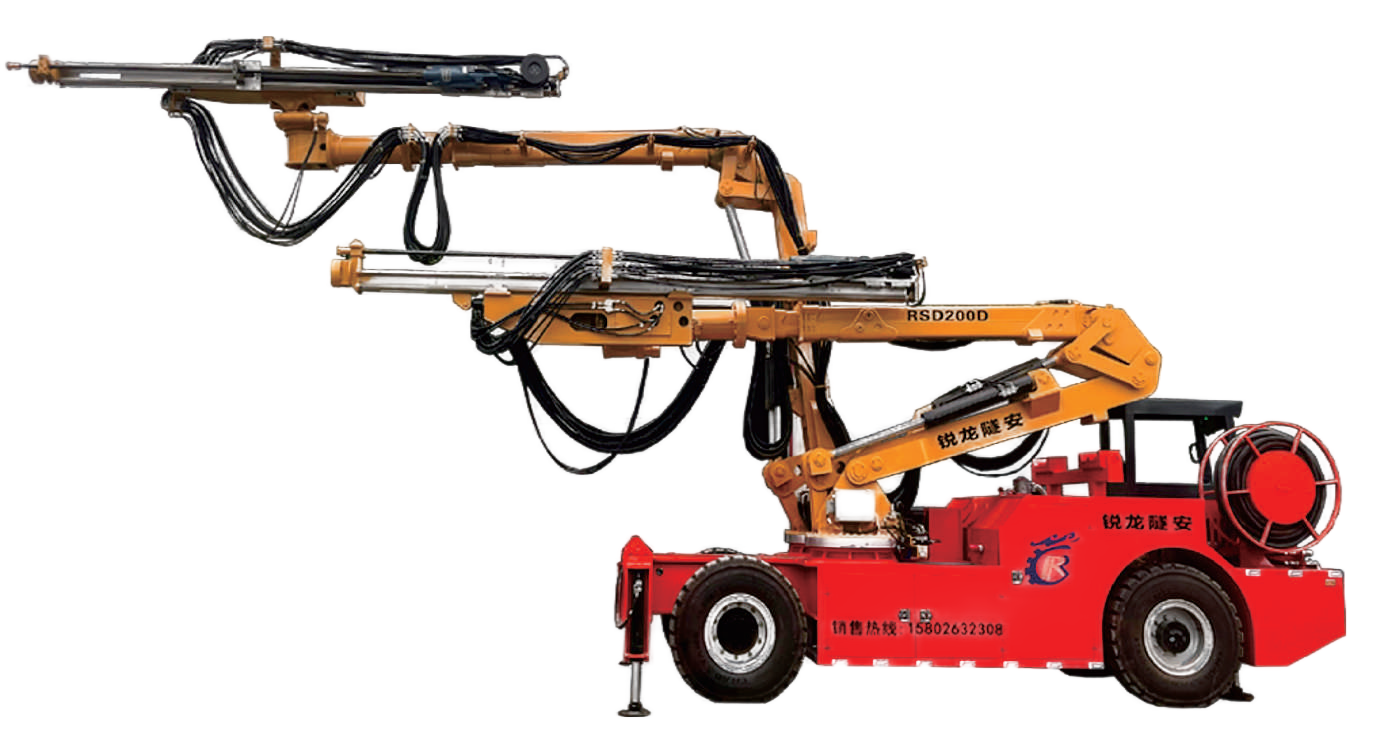
Dual-curved Arm Rock Drilling Trolley RSD200D
Chengdu Ruilong Machinery Manufacturing Co., Ltd.


YHTank8400N Solvent-Free Liquid Epoxy Coating
JIANGSU YUNHU NEW MATERIAL TECHNOLOGY CO., LTD.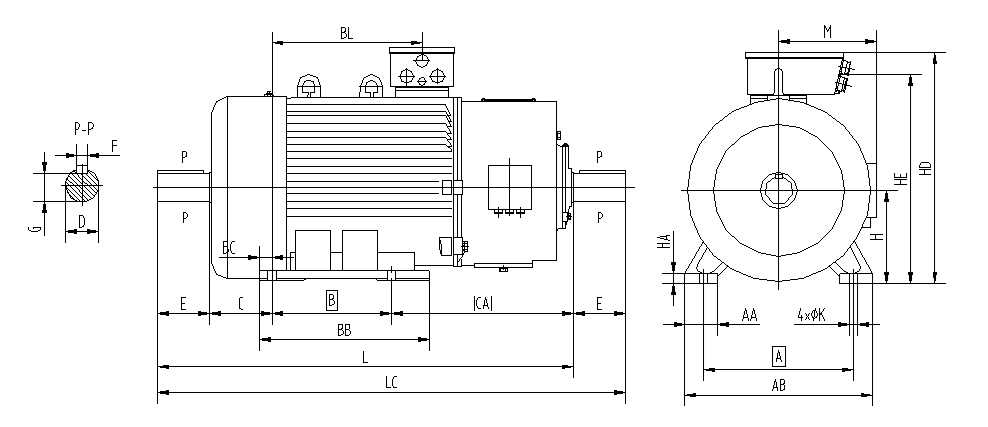
YZR (450-560) Series Wound Rotor Three-Phase Asynchronous Motors for Crane and Metallurgical Applications
Jiamusi Electric Machine Co., Ltd.