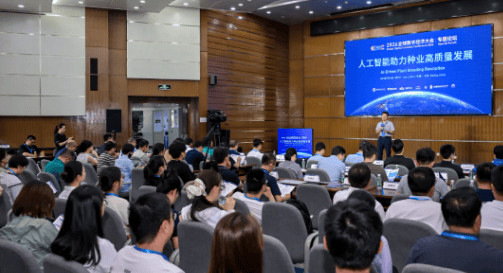
en.Wedoany.com Reported - On July 4, during the Global Digital Economy Conference, the 2026 Global Digital Economy Conference thematic forum "Artificial Intelligence Empowering High-Quality Seed Industry Development," hosted by the Global Digital Economy Conference Organizing Committee and co-organized by the Institute of Crop Sciences of the Chinese Academy of Agricultural Sciences (CAAS) and the Sustainable Social Value Division of Tencent, was held at the Institute of Crop Sciences. Leaders and experts attending the meeting included Wang De, Chief Economist of the Beijing Municipal Bureau of Economy and Information Technology; Gu Xiaofeng, Deputy Director of the CAAS Major Task Bureau; Zhou Wenbin, Director of the Institute of Crop Sciences; Venuprasad Ramaiah, Head of the Genetic Resources Center at the International Rice Research Institute; Liu Han, Deputy Director of the Informatization and Software Services Division of the Beijing Municipal Bureau of Economy and Information Technology; and Liu Zhouhong, Deputy Secretary-General of the Tencent Charity Foundation. The meeting was chaired by Guo Ganggang, Deputy Director of the Institute of Crop Sciences.
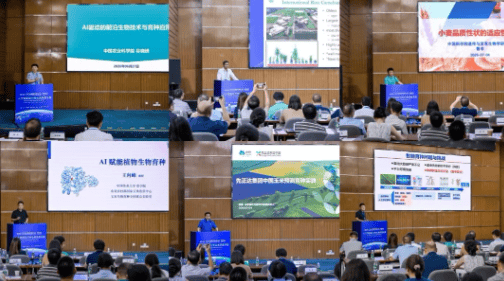
At the forum, experts from the International Rice Research Institute, Macquarie University (Australia), CAAS, the Chinese Academy of Sciences, China Agricultural University, and Syngenta Group China delivered special reports and engaged in discussions on topics such as AI-driven cutting-edge biotechnology, the conservation and utilization of international germplasm banks, adaptive evolution of wheat quality traits, visual recognition in smart agriculture, and breeding prediction practices. Participants noted that the rapid iteration of next-generation AI technologies, combined with the swift integration of biotechnologies like genomics, phenomics, and gene editing with digital technologies such as AI and big data, is propelling traditional experience-based breeding into a new phase of intelligent design breeding integrating BT and IT. This represents both a core pathway to achieving breakthroughs in seed industry technology and a key scientific and technological contribution to realizing the UN's 2030 Zero Hunger goal.
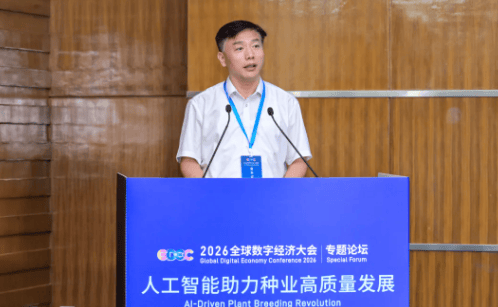
Wang De stated that Beijing has prominent advantages in seed industry resources, with one out of every ten seeds nationwide originating from Beijing. Currently, Beijing is fully committed to building itself as the "First City of AI," empowering the construction of the "Capital of the Seed Industry" with digital technologies. He pointed out that Beijing will continue to leverage its AI technology advantages to support the implementation of the "Tianshu Plan," host excellent AI breeding innovation competitions, and continuously deepen the application scenarios and technological iteration of AI in seed industry research and production. This will further consolidate the technological innovation foundation and industrial application base of Beijing as the "Capital of the Seed Industry," providing solid support for the high-quality and intelligent development of the city's seed industry.
Zhou Wenbin stated that since the launch of the "Tianshu Plan" in 2023, under the guidance of the Seed Industry Management Department of the Ministry of Agriculture and Rural Affairs and with the participation and support of Tencent, phased results have been achieved. The expert team from the Institute of Crop Sciences has developed intelligent agents for germplasm resource data mining and knowledge Q&A targeting the four major staple crops, forming data analysis capabilities based on natural language bioinformatics software and professional workflows. Leveraging over 200,000 germplasm accessions and more than 5 million phenotypic catalog records, intelligent recommendation and sharing services are being implemented. To date, the plan has completed the screening of 12,000 core germplasm resources and conducted full-growth-stage field phenotypic identification at 16 national evaluation sites, collecting multi-dimensional environmental monitoring data. This provides critical support for transforming germplasm resource utilization from "data aggregation" to "intelligent utilization."
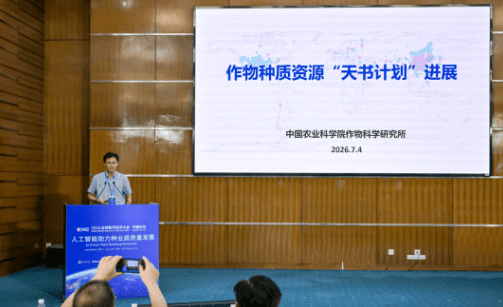
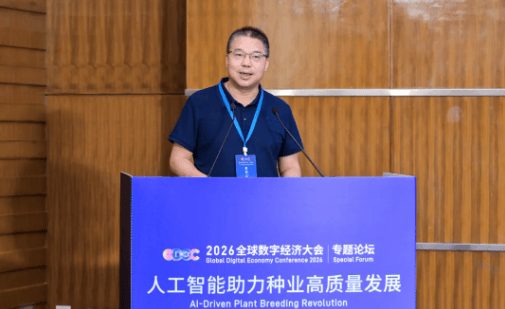
Liu Zhouhong stated that Tencent will continue to leverage its comprehensive advantages in corporate philanthropy, including technology, ecosystem, and connectivity, to deeply support the implementation of the "Tianshu Plan" and the AI Breeding Challenge. By opening up dedicated computing resources, intelligent algorithm tools, and germplasm data service platforms, Tencent aims to bridge the gap between AI technology and seed industry research, attracting interdisciplinary AI talent to engage in seed industry research and collectively tackle the challenges of germplasm resource analysis. In the future, Tencent will continue to deepen government-enterprise-research collaboration, using technology philanthropy as a lever to empower basic seed industry research, talent cultivation, and the translation of achievements, thereby continuously supporting the high-quality development of China's seed industry through corporate philanthropic efforts.
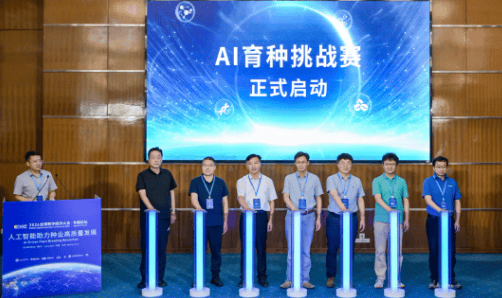
During the forum, the "Tianshu Plan—AI Breeding Challenge" was launched. This challenge is a series of algorithm competition platforms established under the "Tianshu Plan" to address key technical issues in intelligent breeding, aiming to promote the deep integration of high-quality breeding data, AI algorithms, and real-world breeding scenarios. The inaugural challenge, themed "Innovation and Application of Genomic Selection Algorithms," focuses on four major crop tracks: corn, rice, wheat, and soybeans. It is open to teams and individuals from global research institutions, universities, and enterprises, seeking accurate, stable, interpretable, and scalable intelligent breeding models and algorithmic solutions.
This forum marks the fourth consecutive year that the Chinese Academy of Agricultural Sciences, in collaboration with the Beijing Municipal Bureau of Economy and Information Technology and the Sustainable Social Value Division of Tencent, has co-organized this thematic forum of the conference. The event aims to establish a long-term platform for international government-industry-academia-research exchange and scientific talent matching at the intersection of the seed industry and AI technology. The forum attracted over 100 representatives from the AI and seed industry sectors nationwide.
It is understood that the Global Digital Economy Conference is an international digital economy exchange event jointly hosted by the Beijing Municipal People's Government, the Cyberspace Administration of China, the National Data Administration, Xinhua News Agency, the United Nations Development Programme, the United Nations Industrial Development Organization, the World Data Organization, and the Global Digital Economy City Alliance. Based on the global digital economy landscape of inclusive balance, innovative openness, win-win cooperation, and shared prosperity, the conference creates an international, high-end, and professional platform for exchange and cooperation. It has been successfully held for six consecutive sessions.