Multiple Brazilian municipalities vie for the title of "Cow City," with São Félix do Xingu's herd exceeding 2.5 million head
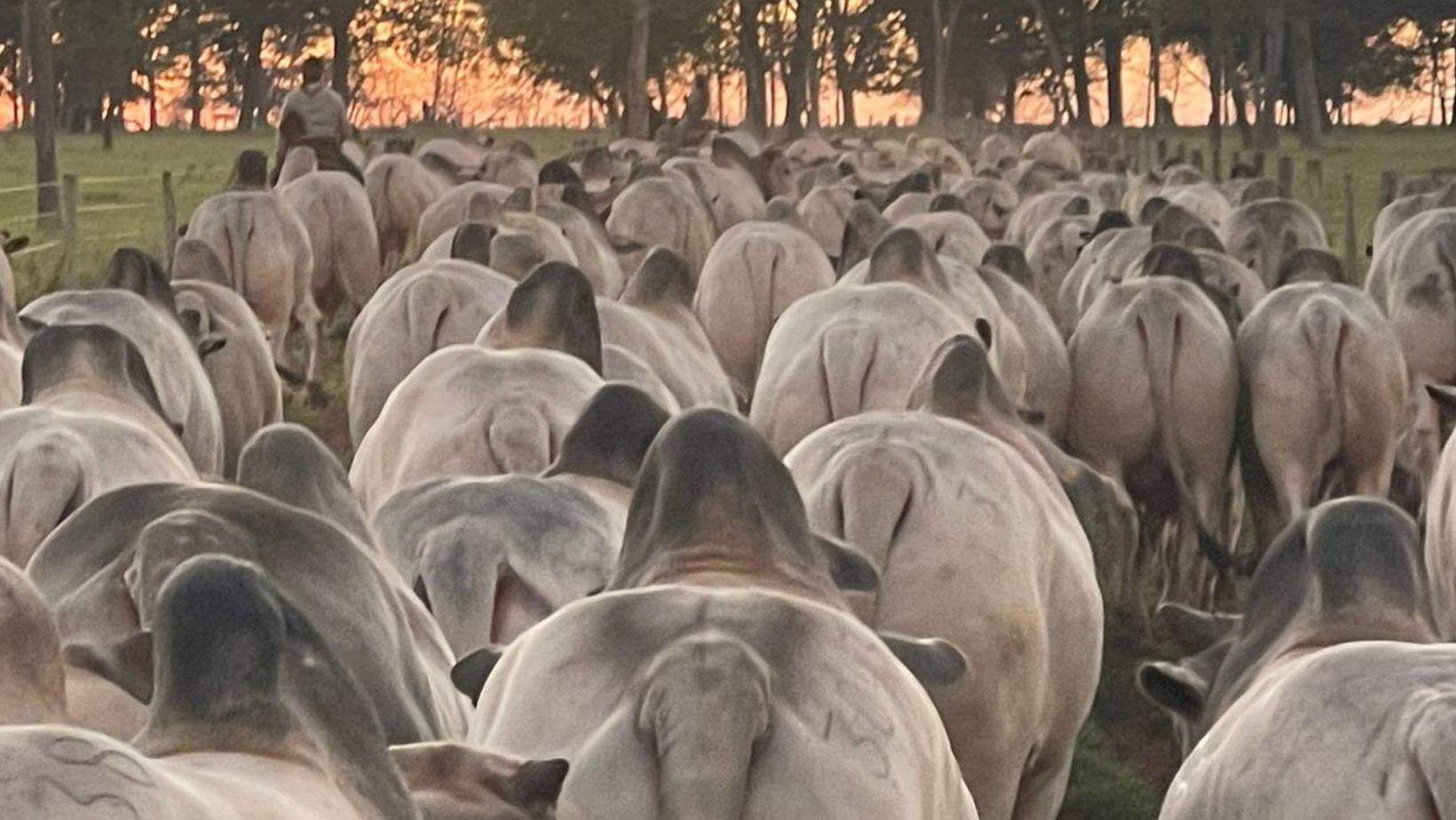
en.Wedoany.com Reported - Brazilian agriculture has multiple economic pillars, with beef cattle farming being one of the most strategically significant sectors. With a national herd exceeding 230 million head, the country has established its leading position in the international beef market. Some municipalities concentrate massive cattle populations, becoming veritable "Cow Cities." These regions drive billions of reais in capital flow and sustain local economies dependent on livestock farming.
These municipalities not only boast impressive herd sizes but also reveal the dynamics of Brazil's meat industry chain. These areas concentrate vast pastures, feature advanced genetics, and increasingly intensive rearing and fattening systems, directly connected to export slaughterhouses supplying markets such as China, the United States, and the Middle East.
Brazilian livestock farming is undergoing a phase of greater specialization, production intensification, and improved on-farm efficiency. Understanding the country's largest livestock hubs helps anticipate the industry's development direction. The national herd distribution map shows that livestock strength is primarily concentrated in states such as Mato Grosso, Pará, Goiás, Mato Grosso do Sul, and Minas Gerais, which offer a hard-to-replicate strategic combination of land availability, livestock tradition, technology supply, logistics integration, and large slaughterhouses.
Among the municipalities vying for the title of Brazil's "Cow City," some numbers are impressive. São Félix do Xingu (Pará) has become the country's largest individual livestock hub, with over 2.5 million head of cattle—a herd larger than that of many entire countries. The city has become a symbol of livestock expansion in the northern region but also faces challenges related to sustainability, traceability, and international pressure regarding the sourcing of beef from the Amazon.
Corumbá (Mato Grosso do Sul), located in the Brazilian Pantanal, has over 1.8 million head of cattle, relying mainly on extensive production systems. Most activities occur in flood-prone areas, requiring management adapted to the natural conditions of the Pantanal.
Ribas do Rio Pardo (Mato Grosso do Sul), known for pulp investments, is also growing in livestock importance. The city's large herd demonstrates how livestock farming, agriculture, and large industrial projects integrate into a new rural economic logic. Nova Crixás (Goiás), with one of the country's largest herds, has become a reference for commercial farming, breeding, genetic improvement, and supplying rearing and fattening animals. Cáceres (Mato Grosso), a historical symbol of livestock farming, has a massive herd and holds a significant position in the supply chain supplying animals to major export slaughterhouses in the state.
The formation of these livestock hubs results from a combination of structural factors, including vast land available for grazing, favorable climate, livestock cultural traditions, advanced bovine genetics, expansion of feedlot and semi-feedlot systems, proximity to export slaughterhouses, and access to rural credit and technology. In recent years, the pursuit of productivity per hectare has begun to strongly influence this landscape. While farm size was once the main competitive advantage, producers in these regions are now accelerating investments in nutrition, intensive management, traceability, and operational efficiency.
Although these cities still lead in absolute herd size, the industry is undergoing a significant transition from focusing on quantity to focusing on productivity. Traditional agricultural states are beginning to integrate crop-livestock integration (ILP) systems, feedlot operations are growing, and small farms are improving efficiency through technology. The future of Brazilian livestock farming may lie in regions capable of producing more beef on less land with higher economic efficiency.
The beef industry chain remains one of the most important gears in Brazil's rural economy. From producers to slaughterhouses and processing plants, and further to animal nutrition, genetics, transportation, exports, and financial markets, millions of jobs directly depend on livestock performance. These "Cow Cities" represent industrial hubs driving billions in capital flow and will continue to be strategic strongholds for maintaining Brazil's position as one of the world's largest producers and exporters of animal protein.
Related Products


714CD Series C-Band Weather Radar
Chengdu Zhongdian Jinjiang Information Industry Co., Ltd.
4HS-8 High-efficiency Peanut Inverted-laying Harvester
Hebei Yongfa Hongtian Agricultural Machinery Manufacturing Co., Ltd.

Industrial and Commercial Point-Type Gas Detector
Jinan Benan Technology Development Co., Ltd.