en.Wedoany.com Reported - As electricity networks expand to connect renewable power bases, industrial parks, urban load centers and new high-demand facilities, Power Line Fittings are gaining more attention from utilities, EPC contractors and equipment buyers. Although these components are often smaller than conductors, towers or transformers, they play a direct role in conductor support, tension transfer, insulator connection, vibration control and long-term line safety.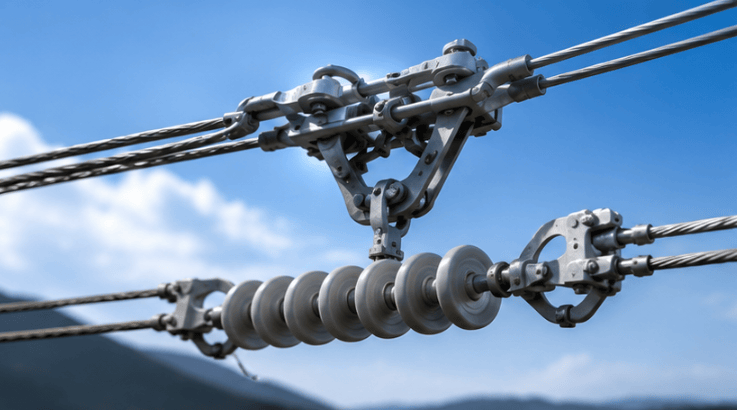
In many grid projects, line fittings used to be treated as relatively standard accessories. Procurement teams often focused on price, delivery time and basic dimensional compatibility. That approach is becoming less sufficient. Modern transmission and distribution lines are being built in more demanding environments, including coastal zones, deserts, mountain areas, high-wind corridors, heavy-ice regions and remote renewable energy bases. Under these conditions, material strength, galvanizing quality, fatigue resistance, anti-loosening design and corrosion protection can determine whether a line remains stable over years of operation.
The technical importance of line fittings becomes clearer when renewable energy integration is considered. Large-scale wind and solar resources are often located far from consumption centers, which means longer transmission routes and more complex terrain. Longer spans, higher mechanical loads and stronger exposure to weather all increase the stress placed on clamps, links, suspension hardware, tension fittings and protective fittings. A weak connection point can become a reliability risk for the whole line.
For project owners, the selection of line hardware should therefore move beyond unit-price comparison. It should be connected with conductor type, span length, tower design, insulator string configuration, wind deviation control, ice loading, maintenance access and the expected service life of the line. In overseas projects, compliance documents, type test reports, batch traceability and standard adaptability are also becoming important requirements.
This shift is changing the market position of line fittings. They are no longer only supporting parts in a bill of materials; they are part of the reliability architecture of the grid. Suppliers with stronger material control, surface treatment capability, mechanical testing, engineering design and international delivery experience are likely to gain more opportunities in transmission expansion, renewable power evacuation, distribution upgrading and cross-border power infrastructure projects.