en.Wedoany.com Reported - Indian launch startup Skyroot Aerospace is preparing for its first orbital launch attempt around July 12, with plans to increase launch frequency to once per month in subsequent phases.
Skyroot announced on July 2 that its Vikram-1 rocket has been positioned on the launch pad at the Satish Dhawan Space Centre in India. The launch window opens on July 12 and extends through August 4.
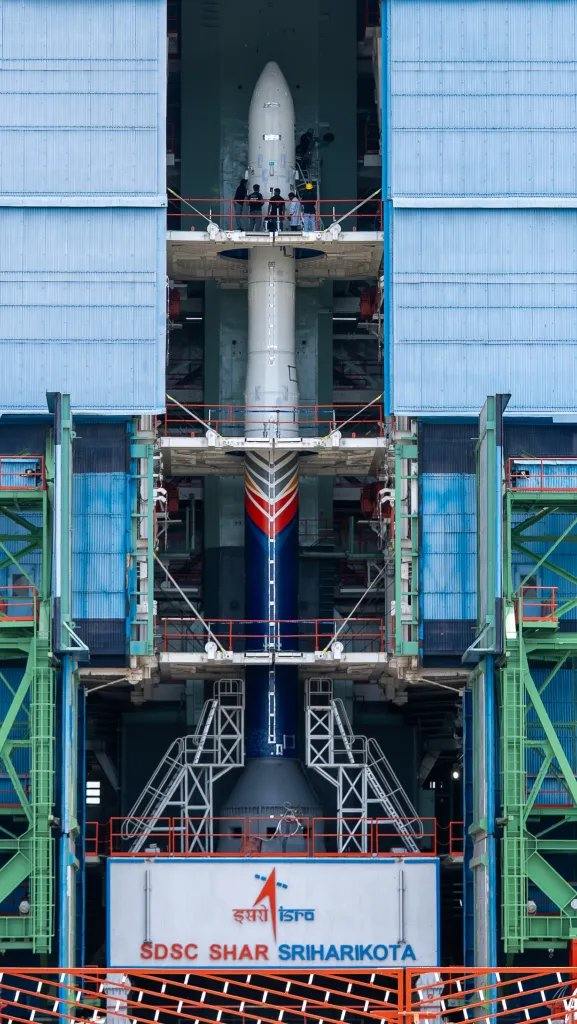
The company has named this mission Aagaman, primarily a rocket test flight, marking India's first privately developed orbital launch vehicle. The rocket will carry several CubeSats and hosted payloads from domestic and international customers, targeting an orbital altitude of 450 kilometers with an inclination of 60 degrees.
In a statement, Skyroot co-founder and CEO Pawan Kumar Chandana said the most important goal of the Aagaman mission is to obtain performance data for each system of the Vikram-1 in real flight conditions, which will help the company validate designs and inform the development of subsequent launch vehicles to establish a reliable, high-cadence commercial launch program.
The Vikram-1 is a four-stage rocket, with the lower three stages using solid motors and the upper stage using liquid propellant, offering a payload capacity of 350 kilograms to low Earth orbit. Some of the rocket's technologies were tested on the suborbital Vikram-S rocket launched in 2022.
Co-founder and COO Naga Bharath Daka stated that the 2022 Vikram-S validated the technology stack foundation, while the Vikram-1 represents the biggest step taken so far in building a reliable, high-cadence launch program in India to serve India and the world.
The upcoming launch comes after the company completed a $60 million funding round in May, achieving a valuation of $1.1 billion. Skyroot said the funds will enable it to scale up Vikram-1 production and develop the larger Vikram-2 rocket.
During a panel discussion at the Spacetide conference in Tokyo on July 7, Skyroot's Senior Vice President of Business and Strategy, Ashwin Mahavadi, said the company plans to conduct one or two more Vikram-1 launches this year. The company is also preparing to launch the upgraded Vikram-1U, equipped with strap-on boosters, in the first quarter of 2027, increasing its low Earth orbit payload capacity to 550 kilograms.
Mahavadi said that once the Vikram-1 enters service, the company hopes to rapidly scale up launches. With the Vikram-1 and Vikram-1U, the company has internal production capacity for approximately one rocket per month, a launch cadence it hopes to achieve in the coming months after reliability is confirmed.
Founded in 2018, Skyroot has benefited from space policy reforms in recent years driven by the Indian government to boost the country's commercial space sector, including access to test facilities and launch infrastructure of the Indian Space Research Organisation (ISRO). Mahavadi said that if the company had to invest in building its own test stands and launch pads, the capital requirements would be much greater. Skyroot's ability to attract capital and gain access to ISRO facilities has compressed product development timelines.
Mahavadi noted that a recent policy benefiting Skyroot is new government incentives encouraging companies to launch satellites using Indian launch vehicles. The program subsidizes 30% of launch costs, up to $3,000 per kilogram. This is a significant boost for India's emerging satellite companies, and Skyroot is one of the main beneficiaries.
He added that the company is open to expanding launch operations beyond India, including potentially establishing a subsidiary in Japan to serve Japanese customers, and eventually possibly conducting launches from Japan. However, the current primary focus is on getting the Vikram-1 into service, as launch vehicles must be reliable, and everything else is built on reliability.