In 2026, overseas brands account for 90% of China's high-end five-axis CNC systems
en.Wedoany.com Reported - The domestic production rate of five-axis linkage machine tools in China has exceeded 70%, but in the high-end five-axis CNC system sector, overseas brands still hold over 90% of the market share. This contrast reflects a reality: among domestically produced five-axis machine tools, at least half still rely on core control systems from Siemens or Fanuc. The application of digital twins in five-axis machining centers represents the most concentrated manifestation of the technological gap between China and foreign countries. Although many projects combining five-axis machining with digital twins have emerged in China, achieving functions such as virtual commissioning, thermal compensation, and collision avoidance simulation, feedback from field engineers indicates issues like "static precision is close, but dynamic precision is poor," "short-term usability but long-term inadequacy," and "thermal issues are still addressed with single-point compensation, while foreign countries have achieved full-chain coverage."
In 2026, Siemens is promoting the SINUMERIK ONE system in China, with its marketing focus on "six first-time-right" aspects: design, commissioning, programming, machining, service, and selection. This strategy is underpinned by Siemens' deep integration of NX CAD, CAM, CNC, and digital twins. In five-axis applications, the new NCU Link technology in SINUMERIK ONE can connect three NCU units, allowing a single system to control 93 axes. According to company disclosures, five-axis mold machining efficiency can be improved by up to 30%; the mid-range product, the fifth-generation 828D, integrates MEC multi-error compensation directly into the firmware, boosting CPU performance by 40%. This compensation is not calculated and sent by a host computer software but is embedded at the firmware level, enabling microsecond-level interpolation and dynamic axis correction, forming the technical basis for its claimed "first-time-right" capability. In comparison, domestic data in China shows that the interpolation cycle of high-end CNCs is generally 1 to 2 milliseconds, while the international top level has been compressed to under 0.5 milliseconds; in terms of machining accuracy, domestic levels are 1 to 2 micrometers, while international top levels are below 0.5 micrometers; the mean time between failures (MTBF) domestically is 3,000 to 4,000 hours, compared to 8,000 hours internationally. The interpolation cycle directly determines whether a digital twin model can achieve closed-loop control at the millisecond level, whereas most domestic solutions still remain at the second-level or process-level offline prediction.
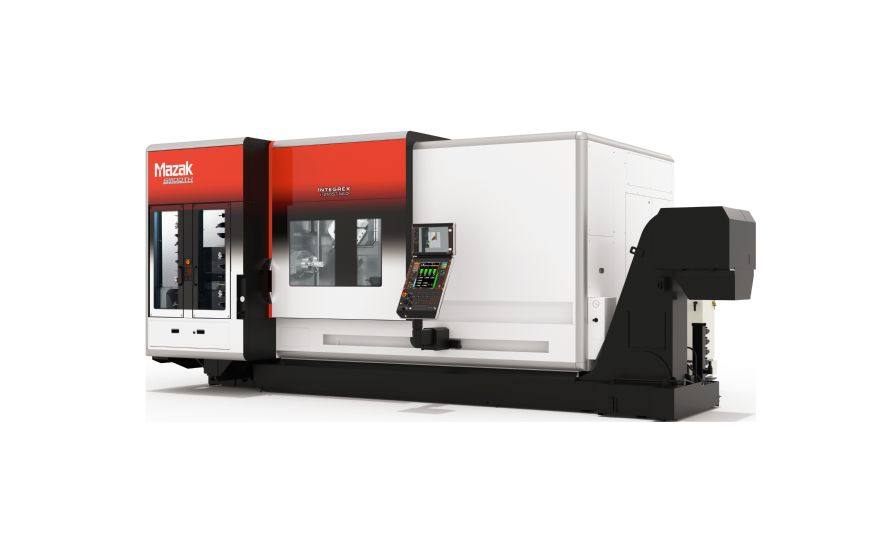
The core difficulty in five-axis machining lies in the coupling of thermal, mechanical, and servo multi-physics fields. Spindle heating can cause tool center point drift, affecting the machining accuracy of precision components like aerospace impellers. In this area, the technological differences between China and foreign countries are significant. Europe has formed a complete technical chain of "pre-process thermal balance design, in-process active cooling, and post-process thermal compensation." For example, DMG MORI's duoBLOCK uses a thermally symmetrical cast iron structure combined with comprehensive water-cooled feed drives, and the spindle employs SGS thermal expansion sensors for real-time compensation. Public data shows that its positioning accuracy fluctuation over 24 hours of continuous machining does not exceed 0.004 mm. Mazak's Smooth system's Dynamic Accuracy and Siemens' 828D MEC technology are both embedded at the firmware level, rather than being external software add-ons. In contrast, most domestic solutions in China still remain at the stage of single-point thermal elongation compensation, which involves arranging a dozen temperature sensors on the spindle head, column, and bed to perform temperature-deformation linear regression. In the academic field, the Modelica-LSTM dual-drive model proposed by Dalian Jiaotong University achieved an error reduction of more than half compared to a single-mechanism model on a DMG DMU 50 machine tool, with post-compensation fluctuation reduced by 70%. However, this technology is still in the laboratory stage and has not yet entered mass-produced CNCs. The five-axis real-time thermal error compensation patent proposed by Fulida in 2025 innovatively uses a data assimilation method, integrating measured data into a multi-member virtual thermal model for predictive compensation. This represents a step forward for domestic technology towards a "mechanism-plus-data dual-drive" approach, but mass production has not yet been realized.
Kede CNC is a representative enterprise pursuing a fully domestic self-developed chain. According to a report from the People's Political Consultative Conference website in May 2025, its core component self-sufficiency rate reaches 85%, and the overall machine domestic production rate exceeds 90%. Its GNC62 high-end CNC system benchmarks against Siemens 840D, scoring 95.85% of the 840D's performance in functional evaluations by the China Machine Tool Supervision and Testing Center, which is the highest level among domestic CNC systems. However, Kede CNC's R&D intensity in 2025 was as high as 35.43%, with revenue of 552 million yuan and net profit attributable to the parent company of 88.6 million yuan, with R&D investment 4 to 7 times that of its peers. This high-intensity R&D has primarily achieved "system-level collaborative optimization" through full self-development of the system, servo drives, spindles, rotary tables, and swivel heads. For example, the speed, acceleration, and jerk feedforward functions of the GNC62 system are specifically tuned for the dynamic characteristics of its self-developed servo drives, which cannot be achieved through an assembly route. In terms of digital twins, Kede CNC currently mainly relies on NX and Siemens virtual commissioning modules for external twinning. The twin modules embedded in its domestic CNC are primarily used for visualization and simple collision avoidance, and multi-physics coupling modeling is not its strength. Another technological route is represented by Huazhong CNC. Its AI CNC system has been deployed in over 50,000 units, and the 10-series system is equipped with an AI chip and large models. However, its digital twin module mainly focuses on adaptive control and process recommendation. Compared to Siemens SINUMERIK ONE's full-chain closed loop of "CAD-CAM-CNC-Twin," the domestic route in China still primarily relies on a patchwork of machine tool builders, system manufacturers, and third-party software, and the chain has not yet been fully integrated.
Data closed-loop is another key gap. DMG MORI's CELOS X has evolved into an app-based UI independent of the CNC, supporting standardized data exports via OPC UA, MT Connect, MQTT, etc., and through NET service remote diagnostics and CELOS Xchange cloud connectivity, each five-axis machine tool becomes a cloud-native node, with digital twin models iterating in the cloud and being deployed to the machine. Siemens SINUMERIK ONE follows a similar logic, where the model, once built, is reused across the four stages of design, commissioning, machining, and maintenance. Domestic digital twins in China face the problem of "intelligence lacking a data foundation." Industry reviews point out that without real, large-scale machine tool operation and machining data, accurate AI models cannot be built, and existing models fail when the environment changes. Universities lack the conditions, and enterprises are unwilling to invest. This means that the digital twins of Siemens and DMG are built on a mechanism-plus-data hybrid drive based on operational data from millions of machine tools, while domestic solutions in China are mostly single-machine, single-unit demonstration projects that require model retraining when the workpiece or workshop changes. Currently, there is no cloud-native digital twin product independent of the CNC comparable to CELOS X in China, and the support for protocols like OPC UA and MT Connect in domestic CNCs is inconsistent.
Overall, by 2026, the landscape of five-axis machining and digital twins between China and foreign countries exhibits several characteristics: In terms of complete machines and thermal compensation application scenarios, China is catching up relatively quickly, with the domestic production rate of five-axis machine tools reaching 70%. The domestic penetration rate in the aerospace sector has increased from less than 5% in 2020 to about 30% in 2026, and in the mold sector, it has exceeded 60%. Scenario applications have driven the popularization of digital twins as a supporting selling point. However, at the foundational level, the cores of CAD, CAE, CAM, and physics engines are still dominated by Europe and the US. It is difficult for China to produce competing products in the short term against routes like Siemens SINUMERIK ONE and 828D, DMG CELOS X, and Mazak SmoothAI. Thermal-mechanical-servo multi-physics coupling technology is the next watershed. Foreign countries have achieved firmware-level full-chain coverage, while domestic solutions in China still mainly rely on single-point algorithms or linear regression. Solutions like Modelica-LSTM, which are "mechanism-plus-data dual-drive," are key to transitioning from academic research to engineering applications. Whoever can mass-produce them first will gain an advantage. The data closed-loop is an invisible gap. The lack of cloud-native digital twins and standardized data exports means that most domestic solutions remain in a stage of "failure upon environmental change." As a high-quality track for "mechanism-level breakthroughs" in digital twins, five-axis machining centers in China have the scenarios, manufacturers, and customers. The core issue now is not whether to develop, but whether it is possible to leap from single-point compensation to multi-physics full-chain coverage, and from single-machine demonstrations to cloud-edge closed loops. Once this leap is achieved, the temperature difference between China and foreign countries in the five-axis digital twin field will significantly narrow. But before that, barriers like Siemens SINUMERIK ONE and DMG CELOS X will persist.
Related Products


Pneumatic high-pressure wear-resistant ball valve
Zhejiang Deca Control Valve Meter Co., Ltd.
CAP1400 main feedwater flow nozzle flowmeter.
Jiangsu Hongda Instrument Technology Co., LTD.
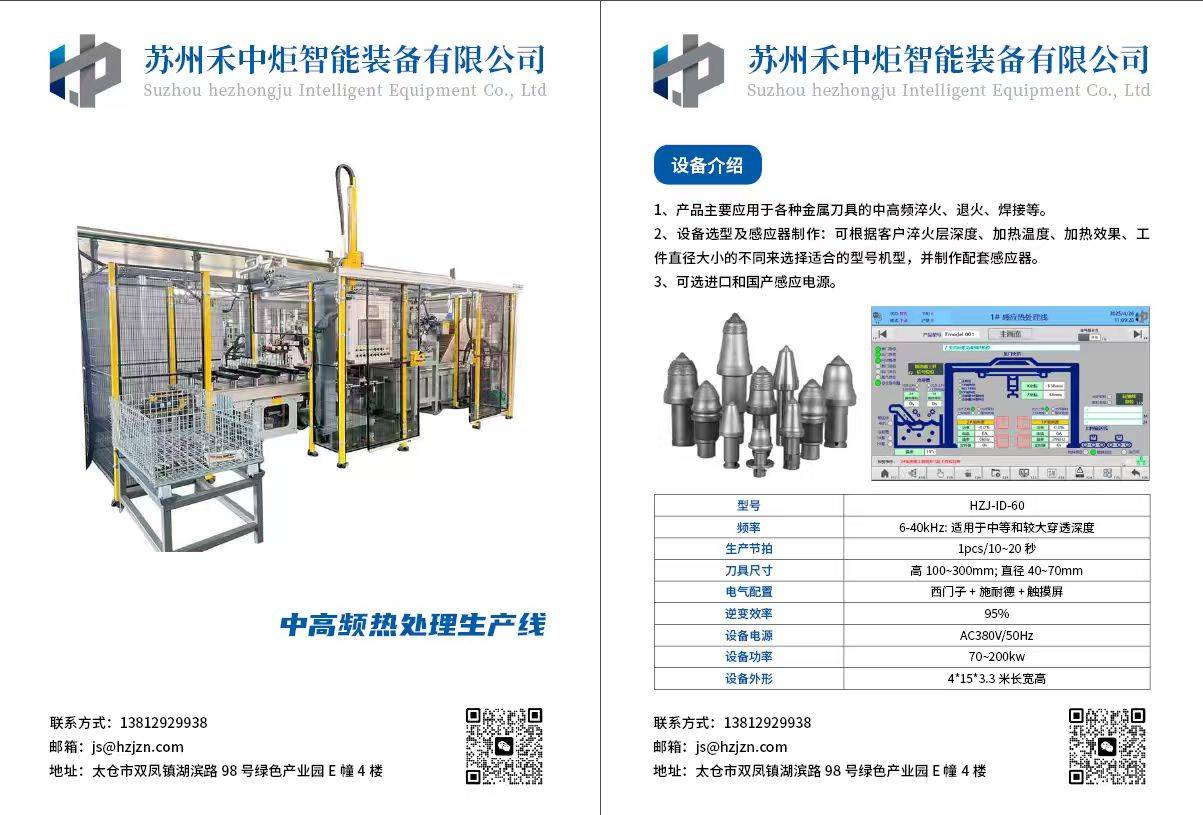
Excavator Bucket Teeth Heat Treatment Production Line
Suzhou Hezhongju Intelligent Equipment Co., Ltd.
LBH4000 Batch Environmental Protection Asphalt Mixing Plant | Asphalt Batching Plant | Asphalt Mixing Plant
Jilin Province Road Construction Machinery Co., Ltd.