en.Wedoany.com Reported - UK earthworks contractor MIDA Civils has added 15 Kubota compact machines to its excavator fleet, pushing the total fleet size beyond 100 units. The Bedfordshire-based company, founded in 2020, opted not to use a rental model but instead chose to purchase, brand, and operate its own equipment, directly linking equipment ownership to a self-delivery model. This decision reflects how a new generation of civil engineering firms plans growth through equipment asset allocation.
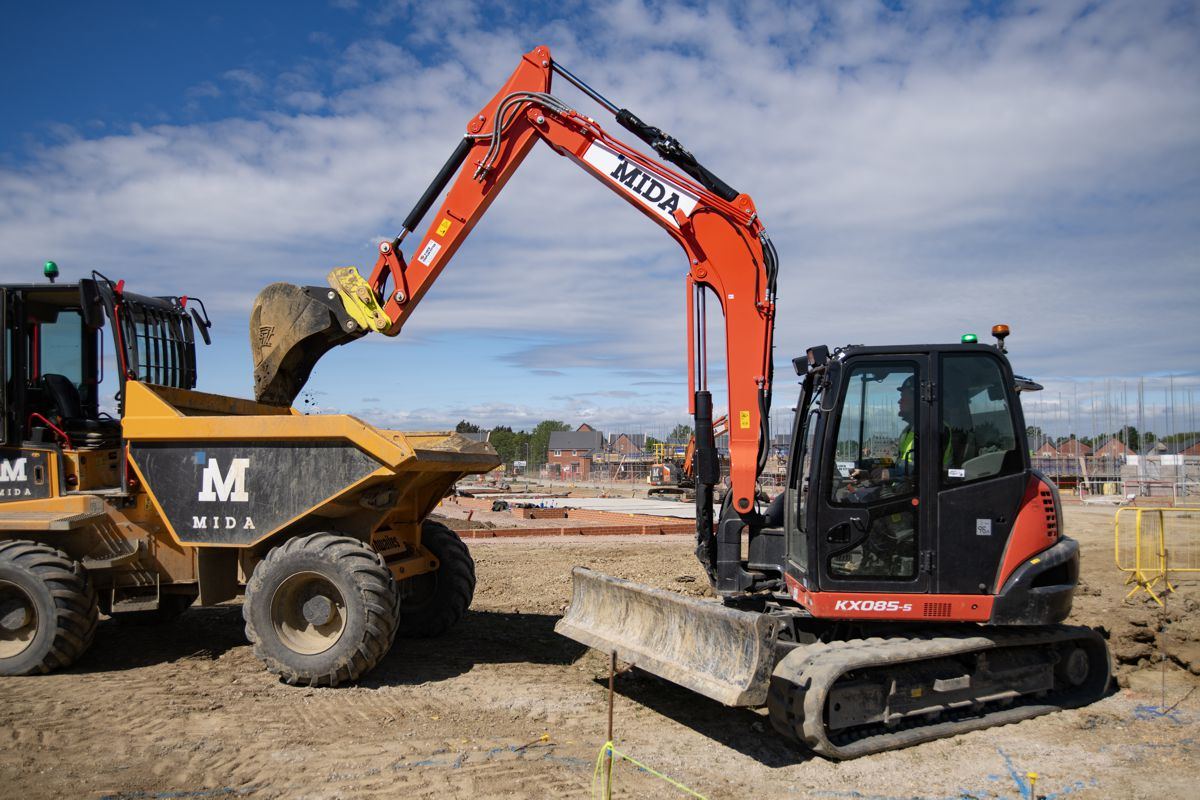
The 15 machines received by the company include 10 units of the 5-tonne U50-5 zero-tail-swing model and 5 units of the 8.5-tonne KX085-5 medium excavator, supplied and supported by authorized dealer Shellplant. This addition brings MIDA's Kubota equipment count to over 25 units, with the total excavator fleet covering a range from 1 to 8.5 tonnes. Equipment is renewed on a four-year replacement cycle and deployed exclusively on the company's own projects under its self-delivery strategy.
MIDA opened a dedicated equipment workshop in 2025, bringing an increasing amount of maintenance work in-house, while Shellplant continues to provide warranty services and spare parts support. The company's procurement priorities cited focus on reliability, operator familiarity, performance, and residual value, reflecting a fleet operation aimed at productivity rather than short-term rental economics.
The company's business proposition is built around a self-delivery model, retaining a directly employed workforce as well as a wholly owned fleet of equipment and heavy goods vehicles. This structure enables the company to mobilize quickly, control standards for operators and machinery, and avoid availability gaps when industry demand for rental equipment peaks. Vicky Carr, MIDA's Head of Equipment and Procurement, noted that Shellplant has been extremely supportive, and the company is bringing more work in-house, with the dealer supporting this process.
Finance Director Daniel Clorley prioritizes reliability first in procurement, followed by driver familiarity, strong performance, and good residual value. These criteria explain the steady accumulation of Kubota equipment in the fleet. The 5-tonne U50-5 features a zero-tail-swing design, making it particularly efficient in dense residential plots and confined urban sites. The 8.5-tonne KX085-5 is powered by a Kubota Stage V turbocharged diesel V3307 engine with a rated power of approximately 66 horsepower, offering a reach of over 7 meters and a digging depth of nearly 4.5 meters. It comes standard with safety and comfort features such as anti-drop valves, a rearview camera, rollover and operator protective structures, and an anti-theft system. The load-sensing dual-pump hydraulic system supports smoother simultaneous movements and auxiliary attachment operation.
The telematics system built into the new machines allows operators to monitor performance, plan maintenance, and support safety via remote equipment monitoring. In a fleet of over 100 excavators spread across multiple active sites, this visibility directly serves the self-delivery model, helping the equipment department schedule repairs, track utilization, and reduce the risk of unplanned downtime. Tom Hayward, Sales Manager at Shellplant, described the trajectory of this partnership, stating that he has appreciated MIDA's growth since its inception, the Kubota excavator fleet continues to expand, and he looks forward to collaborating to secure and support more Kubota business in the coming years. Research firm Arizton estimates the UK compact construction equipment industry at approximately 36,000 units in 2022, projected to grow to around 48,500 units by the end of this decade, with a compound annual growth rate of about 4%.
MIDA's scope of work covers pre-construction services, preliminary works, earthworks, and final landscaping, with operations extending north to Peterborough and Oakham, south to North London, and west to Oxford. The company's confidence is underpinned by a structurally healthy compact equipment market, where urban densification and limited plot sizes favor smaller, more agile machines, and Stage V emission regulations continue to push contractors toward newer, compliant equipment. The strict four-year replacement cycle keeps the fleet aligned with these trends, ensuring equipment is efficient, compliant, and attractive to operators.