en.Wedoany.com Reported - A 26-member advance team from the CNNC 22 project department, with an average age under 30, successfully commissioned the water supply lifeline project on schedule in the Gobi Desert, Gansu, through process innovation and efficient construction. To address the bottleneck in pipeline welding inspection, the team replaced traditional radiographic testing with ultrasonic testing. During the connection of newly built pipelines to existing operational ones, key nodes were completed after multiple rounds of scheme optimization, making the entire line ready for water supply.
At the start of construction, the team faced challenges including no access roads, no working surfaces, and no stable water source, with summer ground temperatures in the camp area approaching 50 degrees Celsius. As the advance team, they were responsible for route surveys, temporary prefab housing setup, and trench excavation, advancing the project from scratch.
After rapid progress in pipeline welding, the weld inspection process became a bottleneck. The originally planned radiographic testing was constrained by operational windows, unable to inspect welds in time, affecting the schedule. Chen Jie, head of the third work area, led a task force including assistant director Fan Donggang and technician Wang Baolong to initiate the process change from radiographic to ultrasonic testing. Wang Baolong conducted on-site parameter measurements during the day and reviewed and adjusted plans at night. After dozens of rounds of process validation and trials, the ultrasonic testing plan was finally approved, enabling "inspect as you weld" for welds, significantly improving construction efficiency.
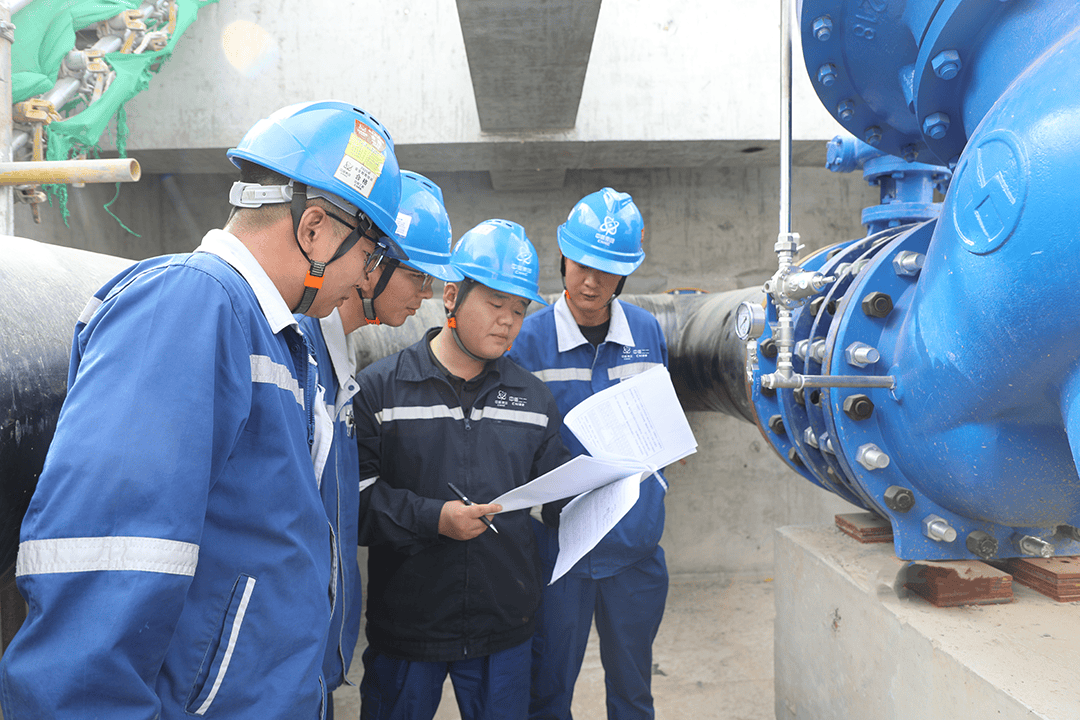
The connection of new pipelines to existing operational ones was the highest safety risk across the entire line. After the initial plan was rejected due to safety hazards, construction workers Wang Hanliang and Yu Xingyong spent four months conducting repeated surveys, collaborating with the design team to optimize details such as pipeline offset, excavation slope, and support methods through multiple rounds. After the 13th version of the plan was approved, two critical connection points were safely completed, achieving the water supply target on schedule.
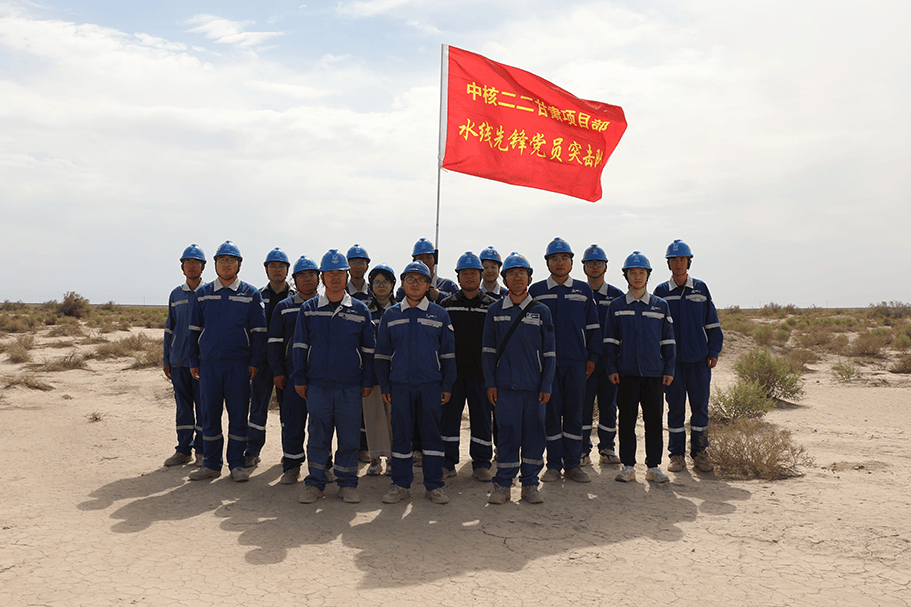
Currently, the Gobi water supply pipeline has taken initial shape, providing support for subsequent construction by the CNNC 22 project department. The team will continue to advance the project deep in the Gobi Desert.