Aluminum Prices Rebound as Iran Closes Strait of Hormuz; Middle East Production Capacity Halted Reaches 2.22 Million Tons
en.Wedoany.com Reported - In the early hours of July 12 local time, the Navy of the Islamic Revolutionary Guard Corps of Iran issued a statement declaring that it had fired warning shots at a vessel attempting to deviate from its approved course and ignore warnings within the Strait of Hormuz, and subsequently struck the violating vessel with a cruise missile. The statement noted that due to the unsafe situation "caused by illegal interference from foreign forces," the Strait of Hormuz would be temporarily closed until further notice. No vessels are permitted to transit until the United States ends its intervention in the region.
This round of geopolitical conflict has had a substantial impact on the global aluminum supply side. According to industry statistics, as of July 10, the confirmed halted electrolytic aluminum production capacity in the Middle East has reached 2.22 million tons, accounting for approximately 3% of global supply. On March 28, Iran launched attacks on aluminum plants in the United Arab Emirates and Bahrain. The Al Taweelah aluminum plant, operated by Emirates Global Aluminium (EGA), saw its full 1.6 million tons of capacity shut down, while Alba (Aluminum Bahrain) also began phased production halts due to disruptions in Strait shipping. Aluminum plants in Qatar and Iran have experienced varying degrees of production cuts. The total installed electrolytic aluminum capacity in the six Middle Eastern countries is approximately 7 million tons per year, representing 9.2% of global capacity. The region's self-sufficiency rate for alumina is only 34%, with over 90% requiring transport through the Strait of Hormuz. As a result, global seaborne trade volume of electrolytic aluminum has shrunk by 12%.
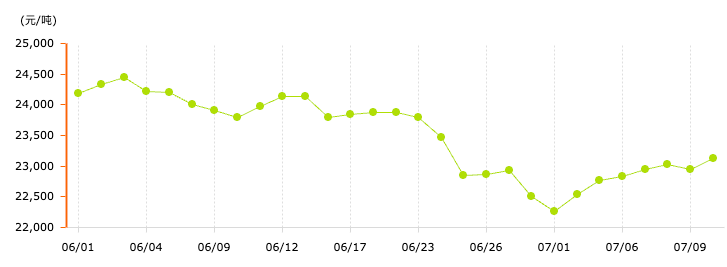
Aluminum prices have experienced sharp fluctuations following the outbreak of the US-Iran conflict. At the end of February 2026, with the onset of the Middle East conflict and plant closures, Shanghai aluminum prices surged directly from the 21,000 yuan/ton range to a record high of 25,000 yuan/ton. LME three-month aluminum prices briefly touched $3,787.5 per ton in June, hitting a nearly four-year high. On June 17, the US and Iran signed a memorandum of understanding, with the core being an end to conflicts on all fronts and the reopening of the Strait of Hormuz. Aluminum prices subsequently corrected, with LME aluminum at $3,383 per ton and Shanghai aluminum falling to 23,795 yuan/ton. On July 10 (last Friday), due to the return of geopolitical risks, LME aluminum stood at $3,210.5 per ton, up 2.29%; Shanghai aluminum was at 23,105 yuan/ton, with the spot market average price of A00 aluminum ingots at 23,120 yuan/ton.
Due to the unique nature of the electrolytic aluminum process, production capacity cannot be quickly restored after being halted. Industry analysis indicates that the restart cycle often takes 6 to 12 months and requires stable power supply and sufficient raw material availability. JPMorgan Chase expects Middle East aluminum production to decline by 36% year-on-year in 2026, with a loss of approximately 2.4 million tons. Wood Mackenzie analysis suggests that the Middle East conflict could lead to a global aluminum production reduction of 3 to 3.5 million tons in 2026.
In the short term, the renewed escalation of the US-Iran conflict has brought shipping through the Strait of Hormuz to a near standstill. According to analysis by CICC Futures, with 2.22 million tons of confirmed halted production capacity in the Middle East, combined with the long restart cycle and difficulty of resuming electrolytic aluminum production, geopolitical risk premiums are expected to push aluminum prices higher again. However, the current period is a consumption off-season, with downstream procurement primarily driven by essential demand and limited willingness to chase price increases. Fundamentals present a mixed picture, and the upside for aluminum prices may be constrained. Whether aluminum prices can continue to rise significantly still depends on the duration of the Strait closure and the subsequent direction of the conflict.
Related Products
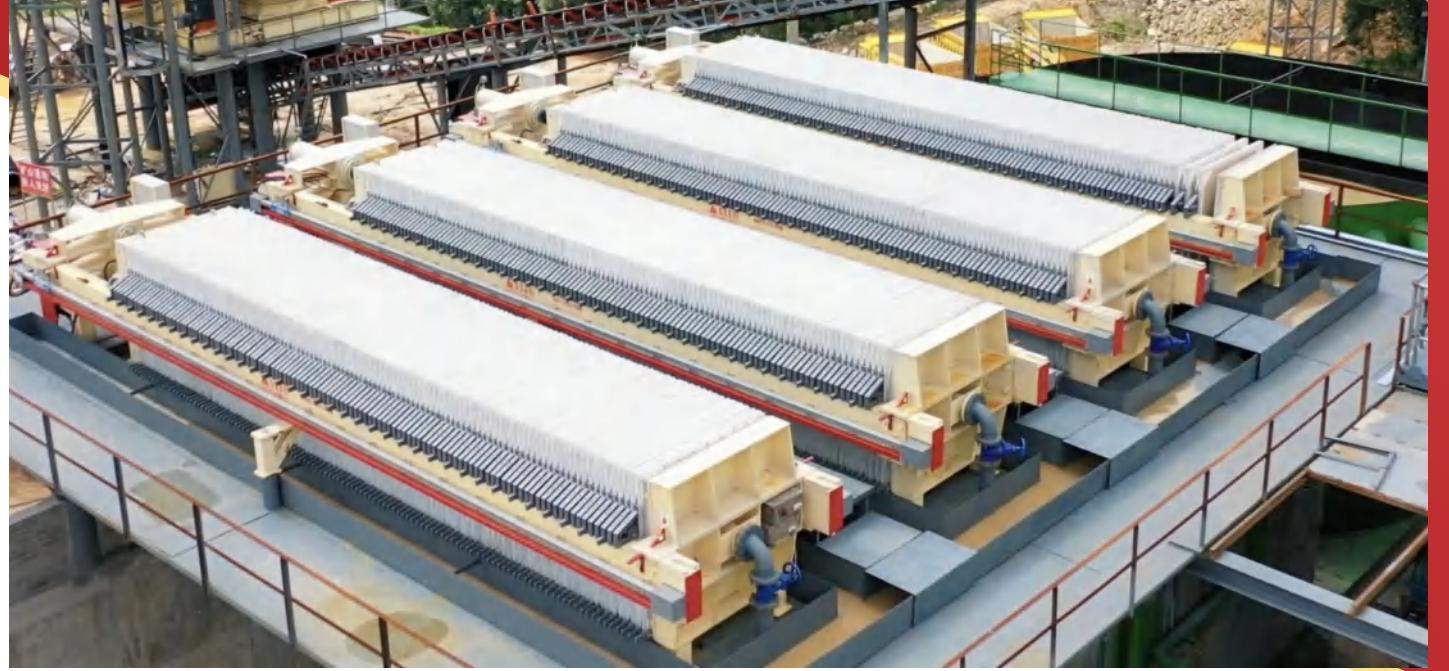

Hydraulic Plate and Frame Filter Press
Guangdong Leimeng Intelligent Equipment Group Co., Ltd.
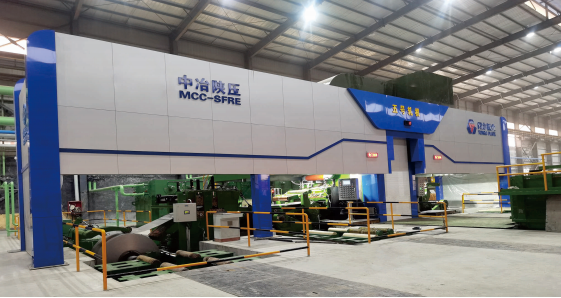
1050-1750mm Steel Strip Single-stand Reversible Cold Rolling Production Line
MCC-SFRE HEAVY INDUSTRY EQUIPMENT CO., LTD.
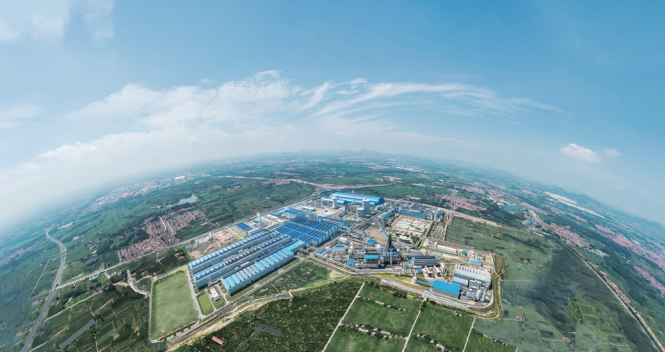
Linyi Steel Investment Special Steel 2.7 Million Tons per Year High-quality Special Steel Project
Capital Engineering & Research Incorporation Limited

Industrial and Commercial Point-Type Gas Detector
Jinan Benan Technology Development Co., Ltd.

Comprehensive Mining Automation Control System
Beijing Tianma Intelligent Control Technology Co., Ltd.
CITIC Heavy Industries Metallurgical Equipment Steel Smelting Engineering Equipment
CITIC Heavy Industries Co., Ltd.