Meta Releases Muse Spark 1.1 Multimodal AI Model
en.Wedoany.com Reported - Meta has officially released the multimodal reasoning model Muse Spark 1.1, which enhances planning, collaboration, and execution capabilities for AI agent tasks, while also improving performance in tool invocation, code development, and application operations.
Muse Spark 1.1 strengthens multi-agent collaboration mechanisms: the primary agent is responsible for gathering information and formulating plans, then breaking down tasks and assigning them to multiple sub-agents for parallel execution, thereby reducing processing time for complex projects. The model supports a context length of up to 1 million tokens, allowing it to retain key information and recall earlier content during long-duration workflows.
In terms of application operations, Muse Spark 1.1 can continuously execute long-duration tasks across multiple applications, autonomously deciding based on the scenario whether to directly click on the interface, write scripts for automation, or complete multiple operational steps at once, reducing manual intervention and improving execution efficiency.
In code development, the new version can diagnose and fix complex program errors, develop new features, and perform large-scale code migration tasks. The model can also plan development steps in advance, break down sub-tasks, and retain important context during long development processes. Meta stated that its internal developers and researchers already use Muse Spark 1.1 daily to assist with software development and model evaluation.
Meta also emphasized the safety of Muse Spark 1.1: the model has completed pre-deployment evaluation according to the internal safety framework "Advanced AI Scaling Framework," maintaining safety levels in frontier risk areas such as chemical and biological safety, cybersecurity, and loss of control risks. The new version also improves resistance to attack methods like prompt injection and jailbreak attacks, while reducing model hallucinations and user-pleasing tendencies.
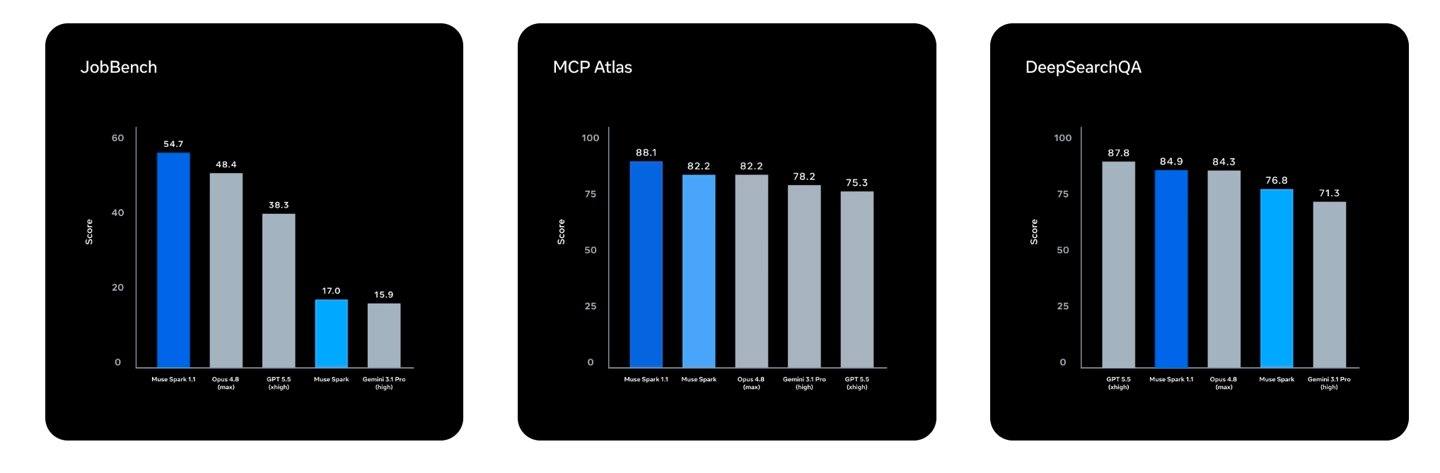
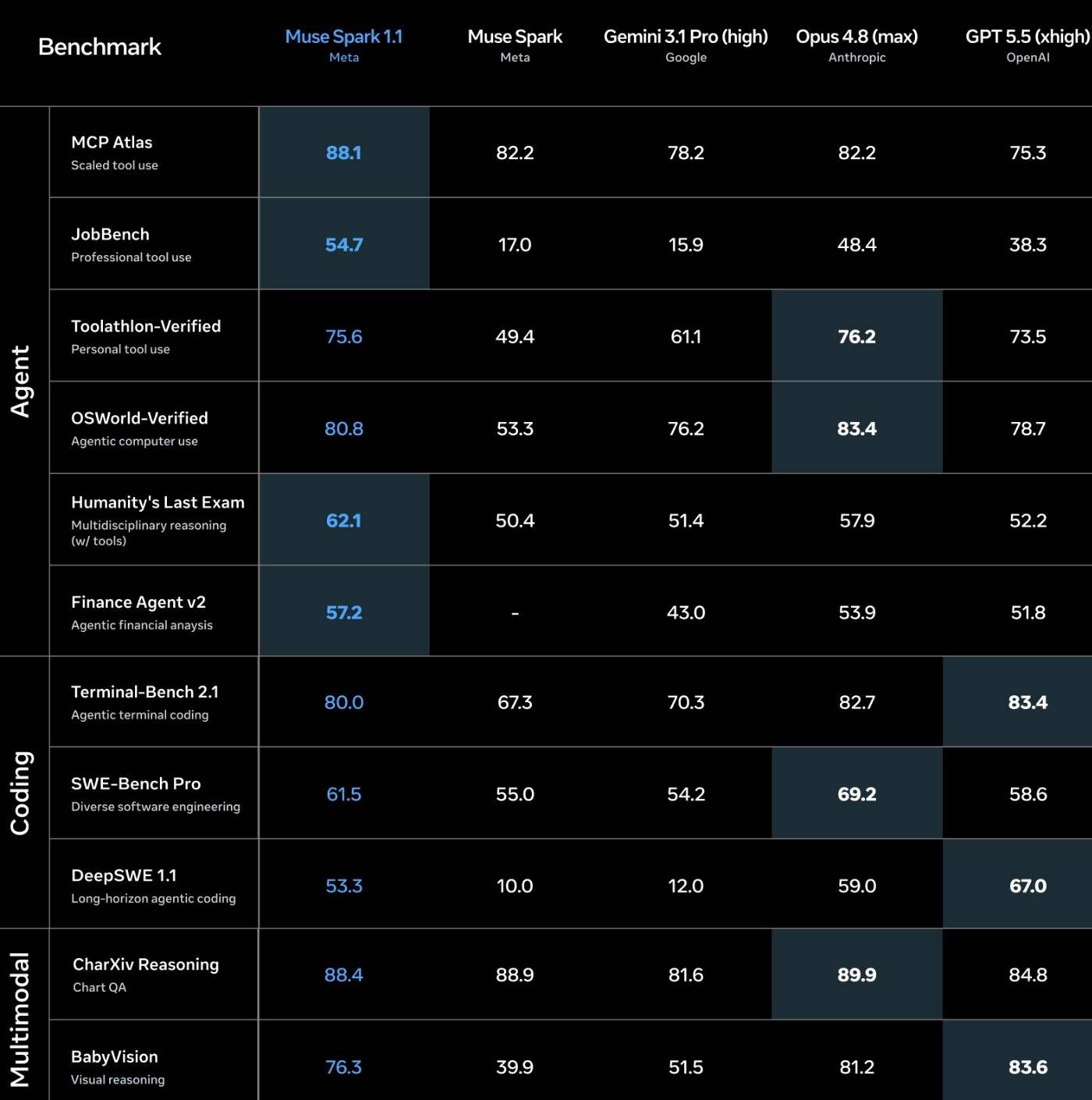
According to the evaluation results of Meta's internal AI safety governance framework, Muse Spark 1.1 shows significant improvements over its predecessor in agent capabilities, code development, and general reasoning, while also achieving major improvements in indicators such as confidence calibration, risk identification, and deception tendencies. However, in some computer operations, long-context tasks, and code development tests, its performance still lags behind GPT-5.5 and Claude Opus 4.8.
Muse Spark 1.1 is now available in the Thinking mode of the Meta AI App and meta.ai. Meta has also officially released a preview version of the Meta Model API for developers, allowing them to call Muse Spark 1.1 through this API and integrate it into their own applications.
Related Products
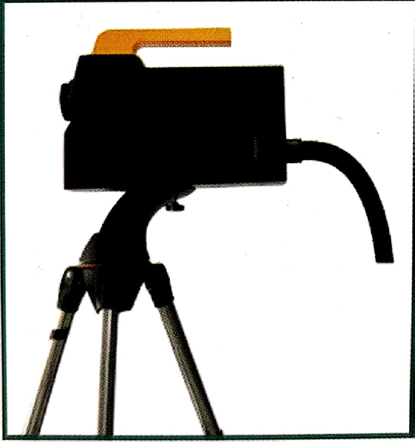

Automatic Aiming Laser Remote Obstacle Removal Robot
Pinggao Group Weihai High-Voltage Apparatus Co., Ltd.

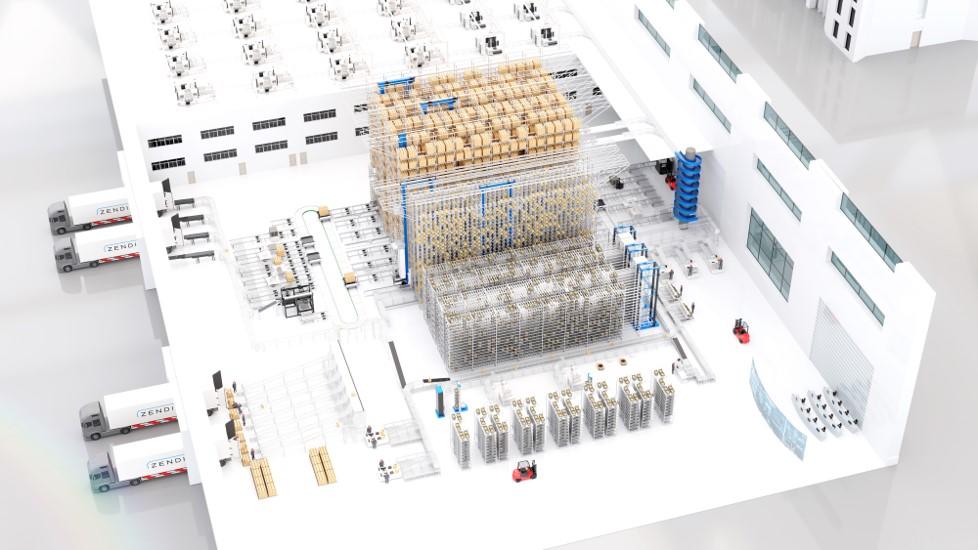
One-Stop Steward Service for the Entire Logistics System Integration Chain
Zhongding Intelligent (Wuxi) Technology Co., Ltd.
Flat Portable Satellite Terminal 0.35m Aperture Manual Portable Terminal
China Starwin Science & Technology Co., Ltd.


Multi-function Marine Monitoring Low-altitude Detection Radar Sea-air Boundary Ocean Dynamic Environment Measurement
Chengdu Dixin Technology Co., Ltd.
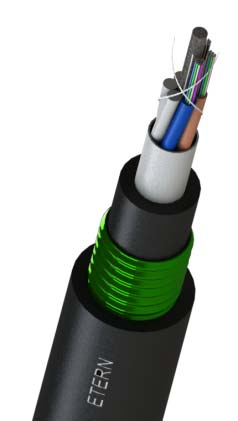

Mine Explosion-proof and Intrinsically Safe Industrial Ethernet Ring Network (10 Gigabit/Gigabit)
Chongqing Mas Sci&Tech Co., Ltd.