en.Wedoany.com Reported - Researchers have proposed using underground seasonal cold energy storage technology to address the summer overheating issue of condensers at a 10 MW solar thermal power plant in Dunhuang, China. Simulation studies indicate that this solution can improve power generation efficiency and conserve scarce water resources.
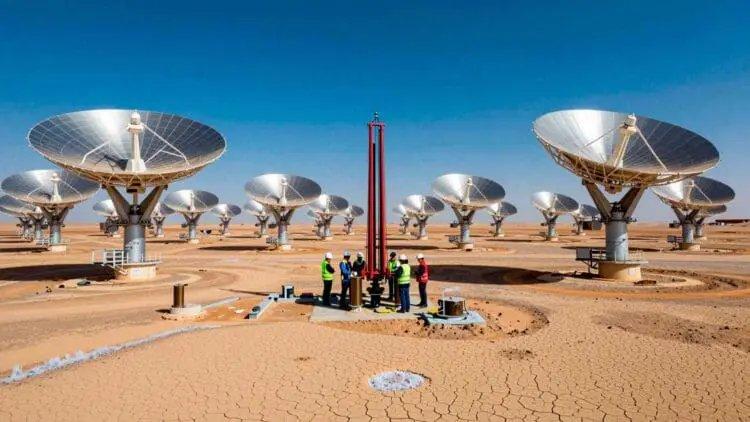
In Dunhuang, Gansu Province, a concentrated solar thermal power plant faces unique cooling challenges. High summer temperatures reduce the efficiency of dry air-cooled condensers, while severe water scarcity precludes the use of water cooling. The region experiences extreme seasonal temperature differences, with harsh winters and scorching summers. The research team envisions storing winter cold energy underground for use in cooling condensers during summer.
The core of this solution is the Borehole Heat Exchanger (BHE)—vertical pipes drilled into the ground, through which fluid circulates and exchanges heat with the surrounding rock. In winter, cold air cools the fluid, and the cold energy is stored in the underground soil; in summer, hot water from the condenser flows through the same pipe array, where the soil absorbs heat and cools the water before it returns to the condenser, eliminating the need for freshwater consumption.
To verify feasibility, researchers used TRNSYS software to conduct dynamic simulations based on typical meteorological year data for Dunhuang, tracking soil temperature evolution and cold energy storage and extraction on an hourly basis. Simulation results show that compared to traditional water-cooled condensers, the seasonal cold energy storage system can improve plant efficiency by up to 1.54%; compared to dry air-cooled condensers, efficiency gains reach up to 2.74%. At a 10 MW scale, a 1% to 2% efficiency improvement translates into significant additional power generation. Additionally, this solution can substantially reduce freshwater consumption from evaporative cooling, which is critical for arid regions.
The techno-economic assessment covers capital costs, maintenance, operating expenses, and payback period. Although the upfront drilling costs for the borehole system are high, its low operating costs make it financially viable over the project's full life cycle. Researchers note that the current analysis is based on simulations, and actual performance depends on underground geological conditions, requiring validation through field pilot tests.
Full citation of the study: Abbas, Z., Li, Y. & Wang, R. Numerical simulation of underground seasonal cold energy storage for a 10 MW solar thermal power plant in north-western China using TRNSYS. Front. Energy 15, 328–344 (2021). https://doi.org/10.1007/s11708-020-0676-1