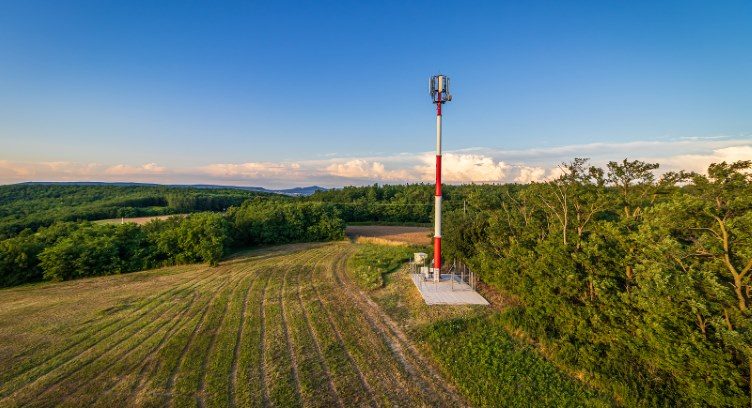
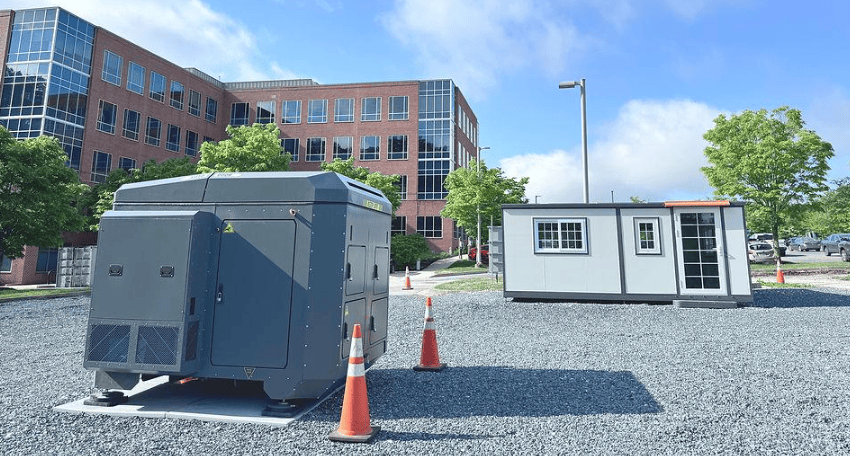
ITU Digital Connectivity Commitment in Geneva, Switzerland Surpasses $100 Billion
en.Wedoany.com Reported - The International Telecommunication Union (ITU), headquartered in Geneva, Switzerland, announced during the 2026 World Summit on the Information Society that the cumulative commitments to the Partner2Connect Digital Coalition have exceeded $100 billion. Since its launch in 2021, the coalition has brought together governments, telecom operators, technology companies, international organizations, development banks, and civil society institutions, focusing on supporting communication network construction, digital skills training, technological innovation, and the popularization of digital services. Currently, approximately one-quarter of the global population still lacks internet access. The core mission of Partner2Connect is to expand reliable and affordable network coverage and help more people acquire the ability to safely use digital services.
ITU Secretary-General Doreen Bogdan-Martin stated that $100 billion is not the endpoint; the subsequent focus is on translating commitments into operational communication infrastructure and digital service projects. The ITU provides a unified platform to track project implementation and promote the sharing of construction experiences among different countries, enterprises, and institutions. Since the coalition's inception, participants from 149 countries have submitted over 1,000 commitments, with more than 190 countries and regions implementing related projects. Africa and the Asia-Pacific region lead in the number and scale of projects. Digital infrastructure accounts for the largest share of all commitments, while women, children, and people with disabilities are the most commonly covered beneficiary groups.
Among the projects announced in this round, the Asian Development Bank proposed implementing the Asia-Pacific Digital Highway Initiative, aiming to mobilize $20 billion in public and private resources by 2035 to build cross-border digital infrastructure and regional digital hubs. The initiative seeks to improve network interconnectivity among different countries in the Asia-Pacific region, enabling data transmission, cloud services, and digital public platforms to operate across borders, potentially improving digital connectivity conditions for up to 650 million people. Cross-border digital infrastructure involves not only building communication lines but also coordinating submarine cables, terrestrial backbone networks, international internet gateways, data exchange nodes, and regional data centers. The feasibility of these projects will depend on cooperation among countries regarding construction standards, network access, and data management.
Microsoft committed to connecting over 450 rural and underserved community centers in Kenya through Azure Space satellite technology, combining satellite communication with terrestrial networks to provide access in areas where fixed broadband coverage is difficult. The company also plans to invest approximately $18 billion in Australia by 2029 to expand artificial intelligence and cloud computing infrastructure, enhance network resilience, and provide AI and digital skills training to over 3 million Australians. These two initiatives address basic connectivity in remote areas and high-density computing infrastructure construction, reflecting that the current digital divide is not only about "having internet access" but also about obtaining stable bandwidth, cloud services, computing resources, and the ability to use digital tools.
ZTE plans to invest $450 million over the next three years in ecological cooperation projects, building an open collaborative system around AI technology, industry applications, and cooperation platforms to lower the barrier for different institutions to deploy intelligent systems. South Africa's Telkom will invest $6.1 million to establish an AI academy, providing local personnel with AI and digital technology training. SoftBank plans to build communication networks for AI services through AI-RAN technology and open innovation, combining wireless access networks with AI computing capabilities to enable network infrastructure to handle more complex data processing and service scheduling tasks. The Global System for Mobile Communications Association proposed advancing an African AI language model project to develop AI systems that reflect African languages and cultural contexts, providing local users with digital services better suited to local usage scenarios.
In addition to network and computing infrastructure, Partner2Connect also includes digital application projects in healthcare, education, employment, and poverty reduction. Boston Consulting Group committed $500 million to collaborate with charities and non-profit organizations to apply AI in social services. The implementation of such projects relies on stable networks, data platforms, and computing resources. Only when infrastructure, application systems, and personnel training advance simultaneously can digital technology truly enter schools, medical institutions, community services, and employment training scenarios.
Kosmas Lakison Zavazava, Director of the ITU Telecommunication Development Bureau, pointed out that the key to the next phase is accelerating project execution, establishing more cross-institutional cooperation, and continuously monitoring actual construction progress. The ITU estimates that achieving universal and meaningful internet connectivity by 2030 may require $2.6 trillion to $2.8 trillion globally. While the current $100 billion in commitments represents a significant scale, it still falls short of the overall needs for global communication networks, data centers, satellite systems, digital public platforms, and skills training. Whether Partner2Connect can generate more completed, operational, and sustained projects will determine whether these commitments can truly bridge the digital infrastructure gap.
Related Products



Automatic Aiming Laser Remote Obstacle Removal Robot
Pinggao Group Weihai High-Voltage Apparatus Co., Ltd.



Mine Explosion-proof and Intrinsically Safe Industrial Ethernet Ring Network (10 Gigabit/Gigabit)
Chongqing Mas Sci&Tech Co., Ltd.
KJD127(A) Mining Explosion-Proof and Intrinsically Safe Computer
Taiyuan Xiangming Intelligent Control Technology Co., Ltd.

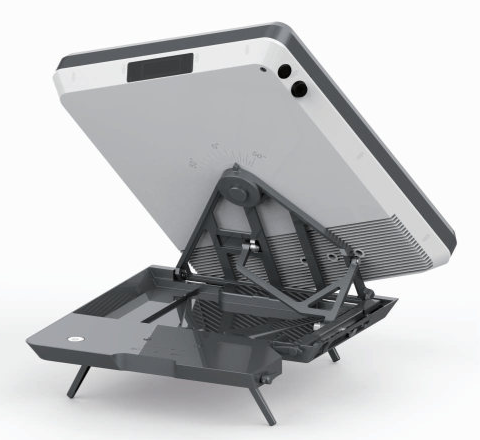
Flat Portable Satellite Terminal 0.35m Aperture Manual Portable Terminal
China Starwin Science & Technology Co., Ltd.