Sweden's Bahnhof Expands FTTH Services in Germany, Covering 2 Million Household Access Points
en.Wedoany.com Reported - Swedish telecom operator Telenor has signed a majority stake transaction agreement with Swedish internet service provider Bahnhof, pending regulatory approval. Compared to the capital changes, Bahnhof's subsequent network construction and business expansion are more noteworthy: the company plans to retain its existing broadband, cloud, and data center business systems, and expand its service coverage to up to 2 million sellable fiber-to-the-home access points across four German federal states through its German subsidiary Bahnhofinternet, which will access E.ON's Westconnect fiber optic network.
Founded in 1994, Bahnhof currently provides fiber broadband, cloud computing, and data center services to over 500,000 customers in Sweden. The company emphasizes that after the transaction is completed, its existing technical team, service model, data protection mechanisms, and user data processing methods will remain unchanged. Bahnhof CEO Jon Karlung stated that the company has long focused on high-speed broadband and internet user rights, and will continue to explore new network service models within the Telenor system. For Telenor, Bahnhof's existing fiber access, cloud platform, and data center resources can complement its business capabilities in enterprise connectivity and digital infrastructure.
The German market will be a key direction for Bahnhof's next phase of expansion. Bahnhofinternet has signed an open access agreement with Westconnect, covering North Rhine-Westphalia, Lower Saxony, Rhineland-Palatinate, and Hesse. According to the arrangement, starting from autumn 2026, households within Westconnect's network coverage area can directly subscribe to internet services provided by Bahnhof.
This partnership does not require Bahnhof to build a complete access network from scratch in Germany; instead, it will use Westconnect's already deployed fiber-to-the-home infrastructure through an open access model. Westconnect is responsible for building and operating the FTTH network, including backbone fiber, regional aggregation nodes, neighborhood distribution facilities, and household access lines. Bahnhof, in turn, provides internet access, network management, and user-facing services on top of this infrastructure. The open access model allows multiple operators to share the same physical network, avoiding duplicate cable laying in the same area while increasing the number of broadband service providers available to end users.
Westconnect, jointly established by E.ON's Westenergie and Igneo Infrastructure Partners, currently provides high-performance internet access to over 2 million residents and businesses. With Bahnhof's access, Westconnect's fiber network will gain a new retail service provider, allowing household and business customers to choose different operators' packages, network services, and customer support systems based on their needs without changing the underlying fiber lines. Bahnhof plans to continue offering symmetrical internet services in Germany, ensuring consistent upload and download speeds, which are more suitable for applications such as video conferencing, cloud backup, remote work, content uploading, and enterprise data transmission.
Philipp Riederer, CEO of Bahnhof Nätverk, stated that Germany still needs to expand fiber coverage and increase user choice, and partnering with Westconnect allows Bahnhof to enter a larger household broadband market. Robin Weiand, Managing Director of Westconnect, also noted that the company will continue to collaborate with telecom operators through open access to enable more services on existing FTTH infrastructure. For the German fiber market, as physical network construction and retail services gradually separate, network operators can improve the utilization rate of already deployed lines, while internet service providers can reduce the pressure of initial civil engineering, cable laying, and access equipment construction.
From an overall business structure perspective, Bahnhof is forming a service system comprising local fiber broadband, cloud computing, data centers in Sweden, and open access operations in Germany. After Telenor's entry, whether the two parties can achieve synergies in cross-regional transmission, enterprise networks, cloud connectivity, and data center interconnection will determine whether this equity change translates into actual network capabilities. The German project already has a clear implementation timeline. After the service launch in autumn 2026, the number of covered households, actual activation rates, network quality, and system integration between different operators will be key indicators for monitoring project progress.
Related Products


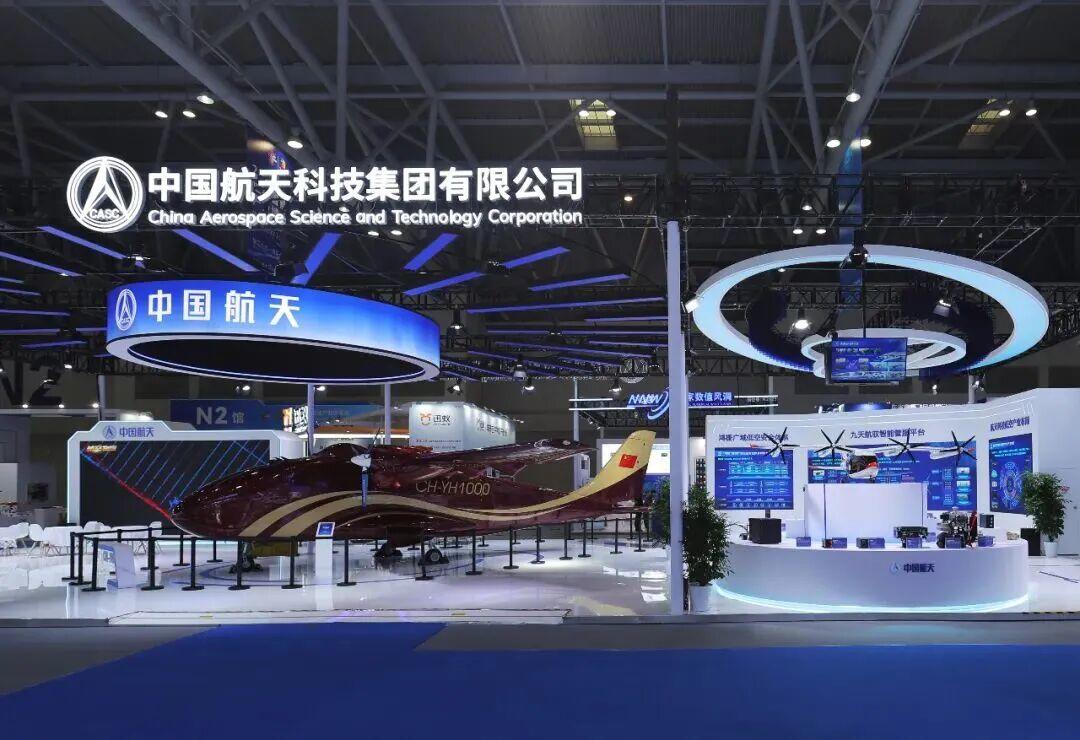
JiuTian OneSky Pilot—Intelligent Management And Service Platform
China Times Prospect Science & Technology Co., Ltd.


Automatic Aiming Laser Remote Obstacle Removal Robot
Pinggao Group Weihai High-Voltage Apparatus Co., Ltd.

Mine Explosion-proof and Intrinsically Safe Industrial Ethernet Ring Network (10 Gigabit/Gigabit)
Chongqing Mas Sci&Tech Co., Ltd.
KJD127(A) Mining Explosion-Proof and Intrinsically Safe Computer
Taiyuan Xiangming Intelligent Control Technology Co., Ltd.

G.652.D Wavelength-extended Non-dispersion Shifted Single-mode Optical Fiber
HONGAN GROUP CO., LTD.
GYTA Type Non-Self-Supporting Aerial/Duct Optical Cable
TONGDING INTERCONNECTION INFORMATION CO., LTD.
MUX Series Communication Interface Device for Security and Stability Control System
Nanjing NR Electric Co., Ltd.