Brazil's Unicamp develops hydrogel to remove water from diesel
en.Wedoany.com Reported - A research team from the School of Chemical Engineering (FEQ) at the University of Campinas (Unicamp) has developed a process using superabsorbent materials to remove water from liquid fuels such as diesel. The study was conducted by researcher Patrícia Lucente Fregolente during her postdoctoral work, coordinated by Professor Maria Regina Wolf Maciel, and funded by FAPESP.
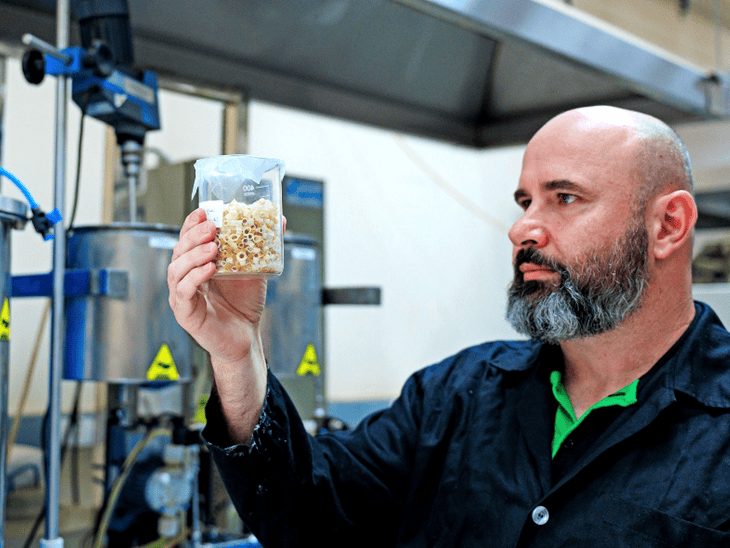
Water in fuel can cause equipment corrosion and performance degradation. The process employs superabsorbent materials such as polyacrylamide as "molecular sponges" to directly absorb water from the fuel without the need for heating or salt, and the material is renewable and reusable. The research began in 2010, when Brazil anticipated an increase in biodiesel content in diesel consumption, making diesel more hydrophilic, prompting the team to develop a practical water removal solution. The research outcome can handle two different types of water in fuel: soluble water and emulsified water.
In 2017, Professor Leonardo Fregolente, who had worked at Petrobras for over a decade, joined the team. After further efforts, the research produced an absorbent material based on polyacrylic acid hydrogel with optimized composition, which improved water removal efficiency and enhanced mechanical strength compared to the first generation. Henrique Luiz Gonçalves also participated in the related development work. The technology was developed over approximately ten years, initially validated at the laboratory scale, then evolved into a continuous process, and was tested using a pilot plant.
The technology attracted the attention of Matryx, a Brazilian company specializing in wastewater treatment in multiple sectors. Matryx learned about the team's research through an article in the 2024 issue 341 of FAPESP Research magazine. Company partner Rodrigo Massena stated that close ties between industry and universities help reduce risks in the technology transfer process. Matryx's R&D coordinator Rafaela Carvalhal noted that the technology aims to reduce emulsified water to acceptable levels, allowing diesel to maintain quality for longer periods, with potential applications in sectors such as mining and diesel distribution. Currently, the technology is in the technical solution validation phase, with the next step being the development of a pilot-scale system.
The team also won the Licensed Intellectual Property category award at Unicamp's 2026 Inventor Awards for the "Polyacrylamide-based hydrogel for water removal from fuels" technology. The awarded inventors include Maria Regina Wolf Maciel, Patrícia Bogalhos Lucente Fregolente, Leonardo Vasconcelos Fregolente, and Henrique Luiz Gonçalves.