Hikvision's AI Intelligent Encoding Solution Saves Over 50% Storage Space
en.Wedoany.com Reported - Hikvision has introduced large model semantic understanding capabilities into its intelligent encoding solution, enabling the encoder to "understand the scene before deciding on encoding" while adhering to the H.265 standard, typically saving over 50% storage space over a 24-hour recording cycle. By integrating a visual large model, this technology shifts the encoding logic from traditional "pixel-based compression" to "object-based encoding," significantly reducing redundant data while preserving the quality of key targets.
Although the traditional H.265 (HEVC) standard saves 30% to 50% of transmission bitrate compared to H.264 through techniques such as CTU variable block partitioning and multi-mode intra prediction, its underlying algorithm performs only mathematical operations on pixel signals and cannot identify core surveillance objects like people or vehicles in the scene. Standard encoding applies differentiated bitrate processing to static backgrounds and moving areas, but only slightly reduces bitrate for non-monitoring areas such as static walls, with over 70% of idle backgrounds continuously outputting full bitstreams, resulting in persistent storage waste.
The core technical system of Hikvision's intelligent encoding consists of three stages. In the semantic understanding stage, the visual large model enables scene-level understanding of video footage, allowing the system to accurately analyze key targets such as people and motor vehicles, achieving a target detection rate of 99% and supporting up to 64 target identifications simultaneously. The encoding process shifts from the traditional "capture-encode-store" to "capture-understand-encode-store."
In the ROI differentiated encoding stage, the system applies varying compression levels to foreground targets and background areas through fine-grained region segmentation. Key areas such as faces and license plates have lower QP values to preserve details, while non-critical areas have higher QP values to save bitrate. This process is achieved solely through QP adjustment in encoding, without altering the original video's pixels, timestamps, or resolution, resulting in an average bitrate savings of over 50% while ensuring target image quality.
The scene-adaptive bitrate allocation stage introduces a dynamic adjustment mechanism that adjusts the encoding strategy throughout the day based on video content complexity. Taking a subway scenario as an example, full bitrate is used during morning rush hours to restore details, 50% compression balances quality and efficiency in the evening, and compression can be reduced to 10% in the early morning to maximize storage savings. In static scenes with few targets, such as an unoccupied office, the system classifies the entire frame as a highly compressible background, achieving near 90% extreme savings.
This solution strictly complies with the H.265 international standard, ensuring that the output bitstream is 100% compliant through protocol conformance testing, and can seamlessly integrate with all compliant H.265 devices without the need to replace existing decoding equipment or surveillance platforms. The ROI differentiated encoding technology itself has been included in the national standard "Technical Requirements for Digital Video and Audio Encoding in Public Security Video Surveillance," and is a mature technology in the security field.
In practical deployment, taking a 2000-channel 1080P@2Mbps, 90-day storage scenario as an example, compared to traditional encoding, this solution can achieve a 60% reduction in hard drives, a 60% reduction in equipment room space, and a 50% reduction in electricity costs over five years. By trading AI computing power for storage capacity, it helps users meet longer-term compliance archiving needs within existing budgets.
Related Products
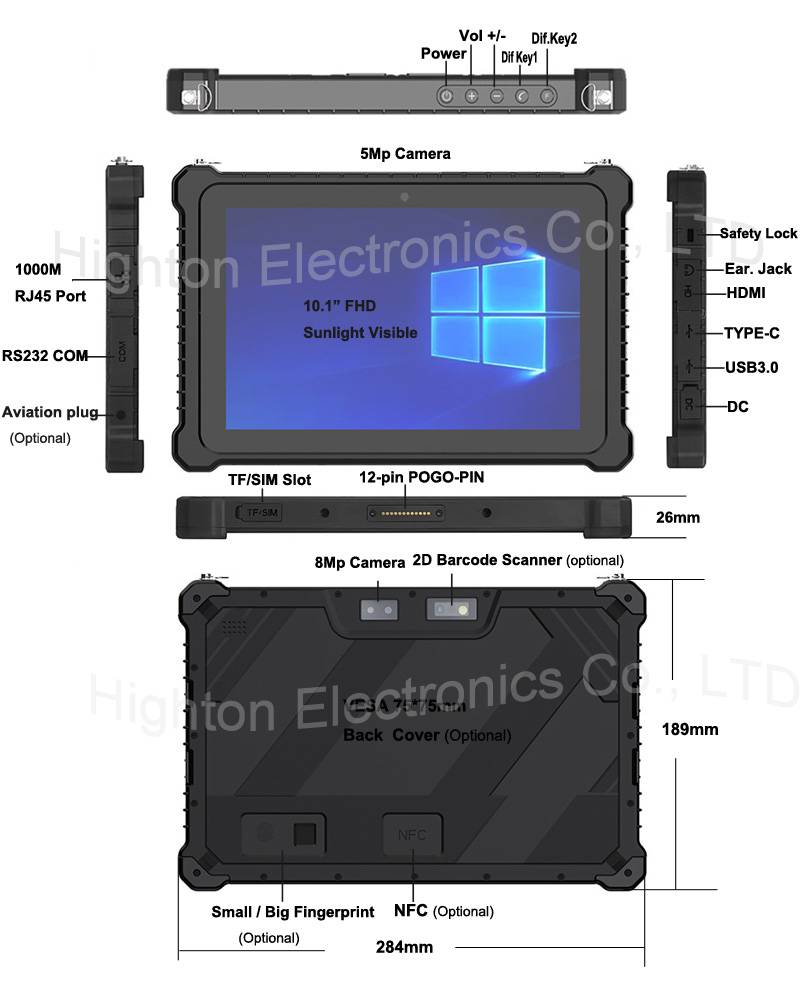

Hot Selling 10 Inch Intel N5100 I5 I7 FHD 8 +128GB 16+256GB Win10 Pro Win11 Pro 4G 5G Rugged Tablet PC Pad with NFC Barcode
Highton Electronics Co., Ltd.

Conveyor Belt Intelligent Monitoring System
LUO YANG WIRE ROPE INSPECTION TECHNOLOGY CO., LTD.
MUX Series Communication Interface Device for Security and Stability Control System
Nanjing NR Electric Co., Ltd.

GYTA Type Non-Self-Supporting Aerial/Duct Optical Cable
TONGDING INTERCONNECTION INFORMATION CO., LTD.

Industrial and Commercial Point-Type Gas Detector
Jinan Benan Technology Development Co., Ltd.
G.652.D Wavelength-extended Non-dispersion Shifted Single-mode Optical Fiber
HONGAN GROUP CO., LTD.