Swedish PowerCell and US Company ECL Reach 300MW Hydrogen Power Generation Cooperation
en.Wedoany.com Reported - On July 13, 2026, Swedish listed company PowerCell and AI computing power center operator ECL entered into a strategic cooperation, with PowerCell supplying industrial-grade hydrogen fuel cell power systems for ECL's computing centers. The cooperation includes ECL's confirmed firm purchase order for PowerCell PS190 fuel cell systems, as well as a non-legally binding memorandum of understanding signed by both parties, planning to add approximately 300 megawatts of hydrogen power capacity during ECL's expansion of the FlexGrid computing center.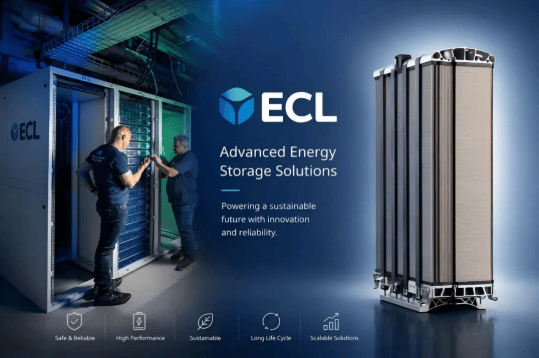
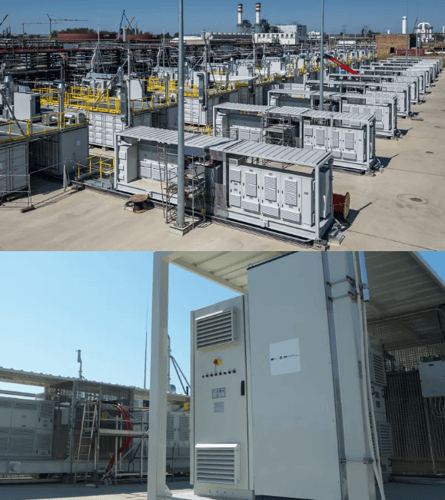
The first batch of equipment for the project will be deployed at the 35-megawatt CSC-1 computing campus in Santa Clara, California, USA. The containerized PowerCell fuel cell system will be integrated into ECL's self-developed FlexGrid microgrid, working in coordination with the municipal power grid, gas generators, and energy storage batteries. Prior to this, PowerCell equipment has already been commissioned at the MV-1 campus in Mountain View, California, where hydrogen has served as the core power source for over two consecutive years.
This memorandum of understanding is merely an expression of cooperation intent, is not legally binding, does not lock in procurement volumes or corresponding revenue, and any future hydrogen power installation projects will require separate legally binding formal agreements.
Richard Berkling, CEO of PowerCell Group, stated that very few computing power operators globally can achieve stable commercial operation of hydrogen power while simultaneously building an integrated intelligent dispatch system for hydrogen, energy storage, and diverse energy sources. ECL's firm order for the PS190 system and the 300-megawatt expansion intent indicate that hydrogen-powered AI computing centers have moved from the demonstration pilot phase into the period of large-scale industrialization and implementation.
Yuval Bachar, founder and CEO of ECL, pointed out that the constraining factor for the development of the AI industry is not creativity, funding, or market demand, but the gap in power supply. Over the past two years, ECL has continuously operated and optimized liquid hydrogen-powered AI computing infrastructure at the MV-1 campus. After comparing multiple fuel cell products under real production conditions, ECL ultimately selected PowerCell. This batch of PS190 equipment is not a test prototype or proof-of-concept product; the entire solution has been validated by long-term field operational data. The 300-megawatt expansion intentions stem from the surge in computing power demand from AI companies, as traditional grid power capacity can no longer match market growth.
PowerCell, originating from the Volvo Group, has over 25 years of experience in fuel cell research, development, and deployment, with products accumulating over one million hours of field operational data across various scenarios including vehicles, ships, and stationary power generation. Bosch, both the largest shareholder of PowerCell and its exclusive mass production partner, can provide large-scale production capacity and localized maintenance services in North America to support the advancement of ECL's computing campus projects.
Tilo Müller, Senior Vice President of Bosch's Fuel Cell Business, stated that for hydrogen fuel cells to achieve industrial popularization, standardized production control, stable and uniform product quality, and lifecycle maintenance support are required. Leveraging its mature industrial manufacturing system, Bosch, together with PowerCell and ECL, aims to transform hydrogen technology into a long-term stable, safe, and reliable new energy infrastructure through this cooperation.
PowerCell's distributed master control system will interface with ECL's self-developed Lightning real-time energy management platform, enabling intelligent dynamic load dispatch among fuel cells, energy storage batteries, the municipal grid, and gas generators within each FlexGrid campus.
About ECL: The company is a next-generation computing center service provider, focusing on building high-density computing campuses tailored for AI workloads, with a strategic emphasis on areas lacking traditional power infrastructure. The company's self-developed FlexGrid microgrid architecture and Lightning real-time energy management platform integrate municipal power, natural gas, energy storage batteries, and hydrogen fuel cells to provide stable, low-carbon power solutions for AI inference and high-performance computing. In 2024, ECL built the world's first commercial hydrogen-powered AI computing center at the MV-1 campus in Mountain View, California, and is currently promoting this FlexGrid energy system in the US domestic and overseas markets. The company is backed by Molex Ventures and Hyperwise Ventures, providing scalable, low-carbon computing support for AI, high-performance computing, and edge computing workloads.
About PowerCell: The company is a global hydrogen power solution provider, independently developing fuel cell stacks and complete power generation systems, with business covering aviation, marine, stationary power generation, rail transit, off-road construction machinery, and road transportation. Headquartered in Gothenburg, Sweden, the company has a global sales network and is listed on the Nasdaq Stockholm exchange.
Related Products

Hydrogen production and hydrogenation charging refueling gas integrated energy station
Shenzhen Kohodo Hydrogen Energy Co., Ltd.
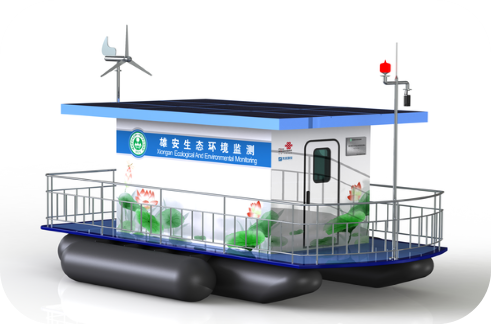
Floating Boat Water Quality Automatic Monitoring System
Hebei Sailhero Environmental Protection High-tech Co., Ltd.
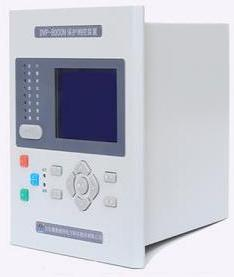
Microcomputer Protection and Substation Automation
Beijing Agent Devote Power Technology Development Co., Ltd.
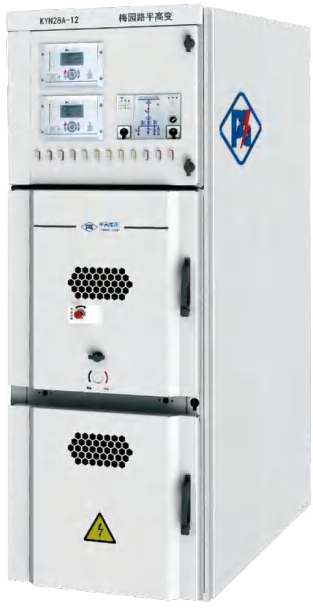
KYN28A-12 Metal Armored Removable Switchgear
Tianjin Ping Gao Intelligent Electric Co., Ltd.
Yingping Mining Section Open-pit Tailings Backfill Treatment of Goaf Ecological Restoration EPC Project
China Bluestar Lehigh Engineering Corporation