en.Wedoany.com Reported - Germany's Porr company has completed the first concrete pour on the Hanover southern highway tunnel project, marking the official start of the tunnel's main structure construction.
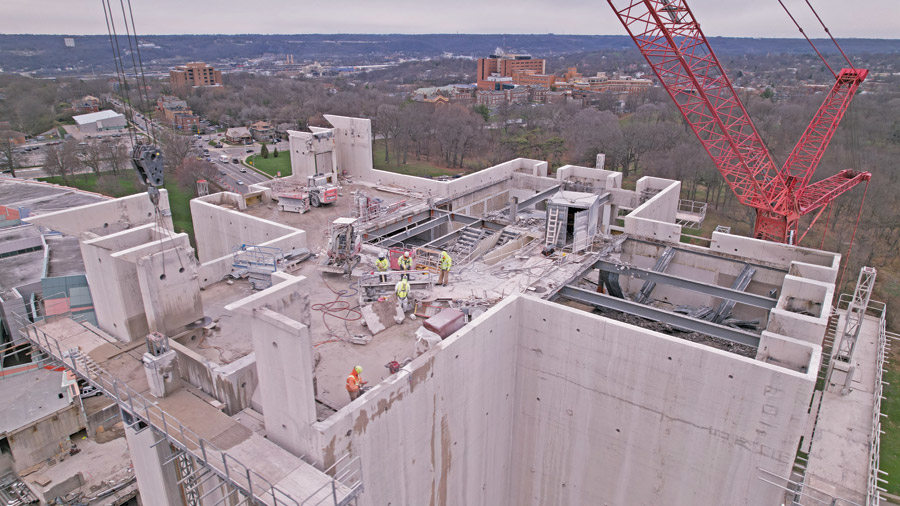
In construction pit 4, the construction team poured approximately 440 cubic meters of concrete, forming a base slab about 1.2 meters thick at a depth of approximately 18 meters. The tunnel is being built using a segmented block system, comprising a total of 80 enclosed tunnel sections and 31 open trough sections at the entrances. Each section is generally uniform in size, measuring approximately 10 meters long, 12 meters wide, and 9.5 meters high. This construction principle allows for flexible alignment adjustments in both vertical and horizontal directions.
A total of 111 concrete base slab foundations and 240 concrete walls are planned for the tunnel sections. Additional wall structures will also be added to the trough sections, requiring a total of 431 individual concrete pours. The work is carried out in stages, following a repetitive construction sequence designed for high process stability.
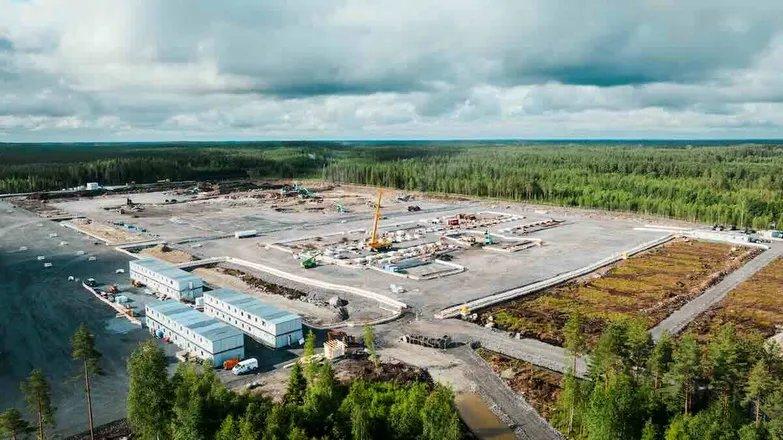
Prior to the start of tunnel structure construction, extensive excavation work was completed. Since November 2024, ten construction pits have been built during the demolition of existing bridges and subsequent excavation. Up to six construction pits were simultaneously at different stages of completion, with underwater concrete slabs poured in four sections.
To stabilize the pits, approximately 1,000 meters of diaphragm walls were driven about 20 meters deep into the ground and secured with approximately 2,000 anchors. In areas with particularly high requirements for load-bearing capacity and impermeability, 4,500 cubic meters of concrete stabilization measures were used to reinforce the foundation soil. For the pit bottoms, an additional 12,000 cubic meters of concrete were poured under challenging conditions to create a solid foundation for subsequent work. Approximately 300,000 cubic meters of earth will be excavated during tunnel construction and transported from the city center site.
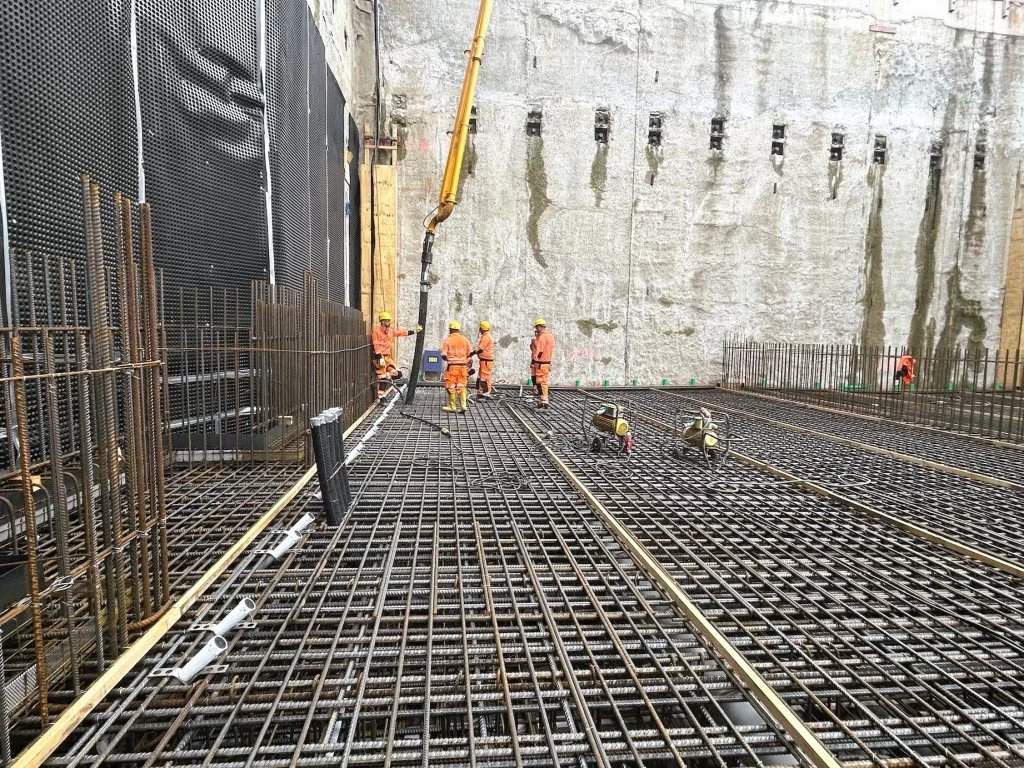
Porr began preparatory work in construction pit 4 in April this year, including installing formwork systems, joint construction, embedded parts, and reinforcement work before concrete pouring. A key structural element is the use of joint panels that remain permanently in the structure, playing a central role in crack control for large-volume components. Precisely positioned controlled crack cross-sections guide shrinkage cracks to designated areas. Combined with integrated sealing elements, the joint design prevents water ingress.
While tunnel sections and trough sections are being continuously constructed, more construction pits are being prepared and entering the construction phase. Additionally, approximately 4 kilometers of pedestrian walkways are being built along the tunnel structure. The expansion of the main structure, including road construction, is scheduled for completion by the end of 2029.