Daewon Chemical and FNS Tech Collaborate on CMP Sub-Pad Development for Glass Substrates
en.Wedoany.com Reported - On July 14, 2026, Daewon Chemical and FNS Tech have initiated a joint development project to create a Chemical Mechanical Polishing (CMP) Sub-Pad for Artificial Intelligence (AI) semiconductor glass substrate processes. Both companies possess over a decade of technical expertise in the abrasives field, and the industry is closely watching whether this collaboration can achieve mass production supply.
The CMP process utilizes the chemical and mechanical actions of slurry and a pad to remove microscopic irregularities from the substrate surface, achieving planarization. The CMP pad directly contacts the substrate for polishing, while the Sub-Pad disperses pressure underneath, providing support and cushioning. The larger the glass substrate area, the more difficult it becomes to achieve uniform polishing and pressure control. Daewon Chemical anticipates that the Sub-Pad will help equalize pressure while reducing issues such as micro-cracks and edge chipping.
In this joint development, FNS Tech is responsible for the large-area CMP pad for glass substrates, while Daewon Chemical handles the Sub-Pad based on polyurethane (PU) material technology. The collaboration aims to optimize the combination of both products, improving polishing pressure uniformity and process stability.
According to data from SEMI, the global semiconductor materials market reached $73.2 billion in sales last year, a 6.8% year-over-year increase, setting a new record. The industry believes that with the expansion of investments in 300mm logic, DRAM, and 3D NAND, demand for process materials, including CMP, will continue to grow. The expansion of High Bandwidth Memory (HBM) production also supports demand. SEMI forecasts that driven by demand for HBM and DDR5, DRAM equipment investment will increase by 29% year-over-year in 2026, reaching $37 billion. The more complex the stacking structure, the more critical surface flatness management becomes for each layer, thereby increasing the consumption of consumable materials like CMP pads and slurry.
Daewon Chemical has expanded its abrasive material product line based on polyurethane material technology. The company obtained a patent in 2008 for manufacturing polyurethane pads used to fix workpieces, subsequently accumulating material design and processing technologies for polyurethane film manufacturing, backside grinding and cleaning, and durability-enhancing pads. In 2015, it listed the "DANOX Glass Grinding PAD" as an R&D achievement, launched "T-SUBA" for glass and wafer grinding in 2018, and introduced the "JD-2500 Series Semiconductor Grinding Materials" in 2021, expanding applications to semiconductor processes. FNS Tech acquired the CMP pad production technology and related assets of US-based Innopad Technology in 2013, establishing a technical system from material design to production. It localized CMP pads for semiconductors in 2015, beginning supply to major semiconductor manufacturers; in 2024, it included the development and supply of CMP pads for HBM in its corporate history. Related patents have expanded to areas such as micro-groove structures, multi-layer structures, porous polishing pads, and high-hardness pads for wafer backside. In 2024, it co-registered a patent for recycled polishing pads with Samsung Electronics.
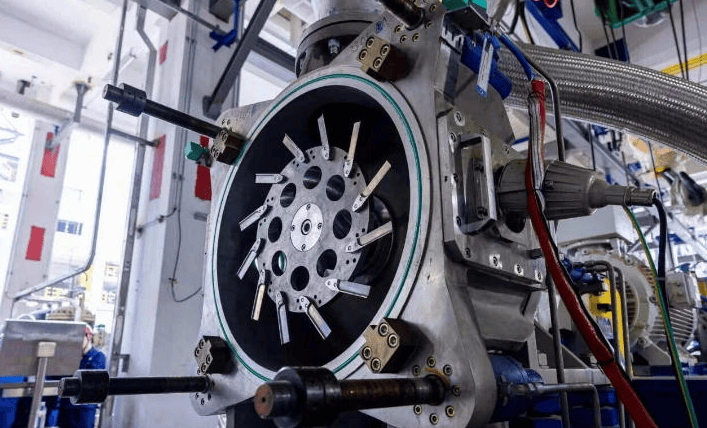
![CMP pad manufacturing process. Image is unrelated to the article. [Photo=NewsPim DB]](https://img.wedoany.com/2026/0716/20260716092301277.jpg)
Hyundai Motor Securities analyzed that after FNS Tech passed quality certification for HBM CMP pads, it has expanded supply starting this year and is conducting quality evaluations with another domestic memory manufacturer. If the evaluation is passed, supply could potentially begin by the end of this year. For CMP pads for glass substrates, technical development is reportedly complete, and supply can commence once customer quality evaluations are passed.
In its corporate value enhancement plan announced in March this year, FNS Tech set goals for "mass production stabilization and sales expansion" of CMP pads for glass substrates. Execution plans include completing mass production evaluations for large-area CMP pads and increasing sales. Existing CMP pads for wafers are approximately 300mm in size, while products for glass substrates need to handle large areas up to 2 meters. The larger the substrate area, the more difficult it is to ensure uniform polishing and yield, and glass is prone to micro-cracks and particles during polishing. Furthermore, simply enlarging existing products is insufficient; the physical property combinations of the pad and Sub-Pad, as well as equipment and process conditions, must be adjusted simultaneously. FNS Tech has developed the capability to address these challenges through related R&D. In past R&D achievements, under the project "Development of Polishing Pad Recovery Technology for CMP Process," work was done on CMP pad processing, re-molding, adhesive and Sub-Pad development, and was classified as "commercialization complete"; under the project "Development of Non-MOCA Polishing Pad for Oxide CMP," research was conducted on diversifying polyurethane raw materials, Sub-Pad, and adhesive materials. In the mass production technology project for recycled CMP pads, improvements in polishing rate, hardness, porosity, and thickness deviation were pursued.
![Samsung Electro-Mechanics glass substrate. Image is unrelated to the article. [Photo=Samsung Electro-Mechanics]](https://img.wedoany.com/2026/0716/20260716092301590.jpg)
During the process of accumulating materials and manufacturing technology for glass substrate CMP pads, the company filed four domestic and international patents, produced samples in September last year, and supplied them to customers in December of the same year. In January this year, it also announced plans to establish a mass production line for large-area CMP pads for glass substrates. In this joint development, it will work with Daewon Chemical to advance the optimized combination of pads and Sub-Pads for large-area glass substrates. FNS Tech is striving to increase the proportion of its component materials business. The sales share of component materials expanded from 27.79% in 2024 to 47.27% in 2025, further rising to 65.97% in the first quarter of this year. Component materials sales in the first quarter of this year were KRW 8.54091 billion, up from KRW 5.33719 billion in the same period last year. R&D expenses during the same period also increased from KRW 225.13 million to KRW 537.91 million. Research topics at the company's affiliated research institute include CMP pads for HBM and pads for glass substrate grinding, while also developing glass substrate process equipment and Through Glass Via (TGV) processing technology.
Related Products


Nitrogen Export, Nitrogen Manufacturer, High-purity Nitrogen Supplier
Foshan Yuexin Industrial Gas Co., Ltd.

CAP1400 main feedwater flow nozzle flowmeter.
Jiangsu Hongda Instrument Technology Co., LTD.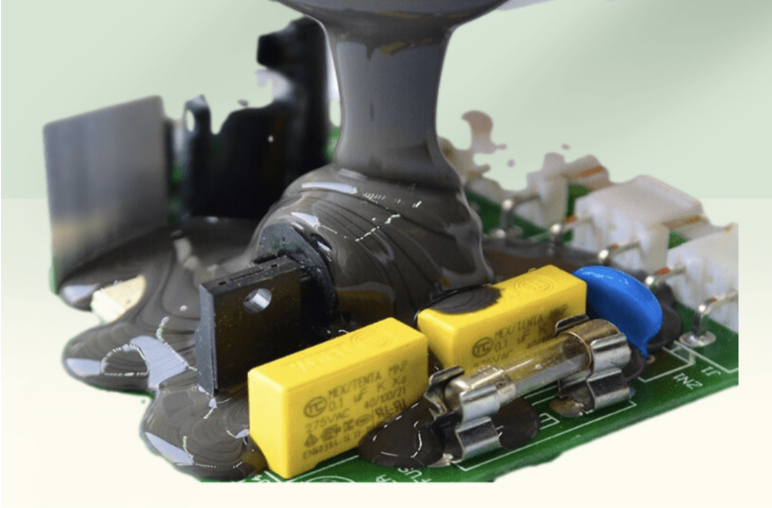
High Thermal Conductivity Encapsulating Resin
Nantong BESALL Sealing Technology Company.,Limited
Steel Plates for Chemical Pressure Equipment
Gansu JISCO Group Hongxing Iron and Steel Co., Ltd.
New Environmentally Friendly Green Potassium Salt Collector
Chonfar Engineering and Technology Co., Ltd.