en.Wedoany.com Reported - China's prefabricated building exports are experiencing rapid growth. According to data from the General Administration of Customs, in the first quarter of 2026, the export growth rate of China's prefabricated buildings (including modular buildings) reached 45%. At the Shenzhen port alone, exports of "mobile homes" in the first four months amounted to 16.8 billion yuan, a year-on-year increase of 19.6%, with products shipped to over 150 countries and regions.
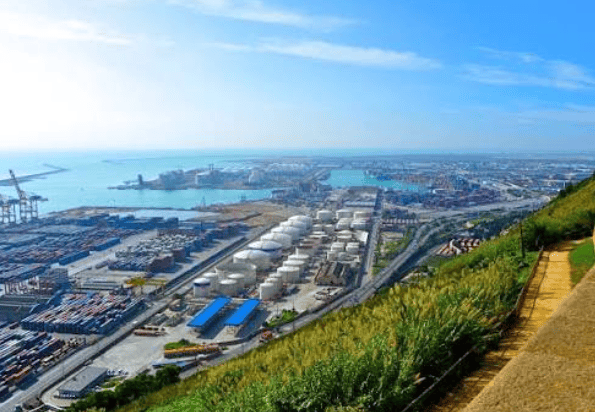
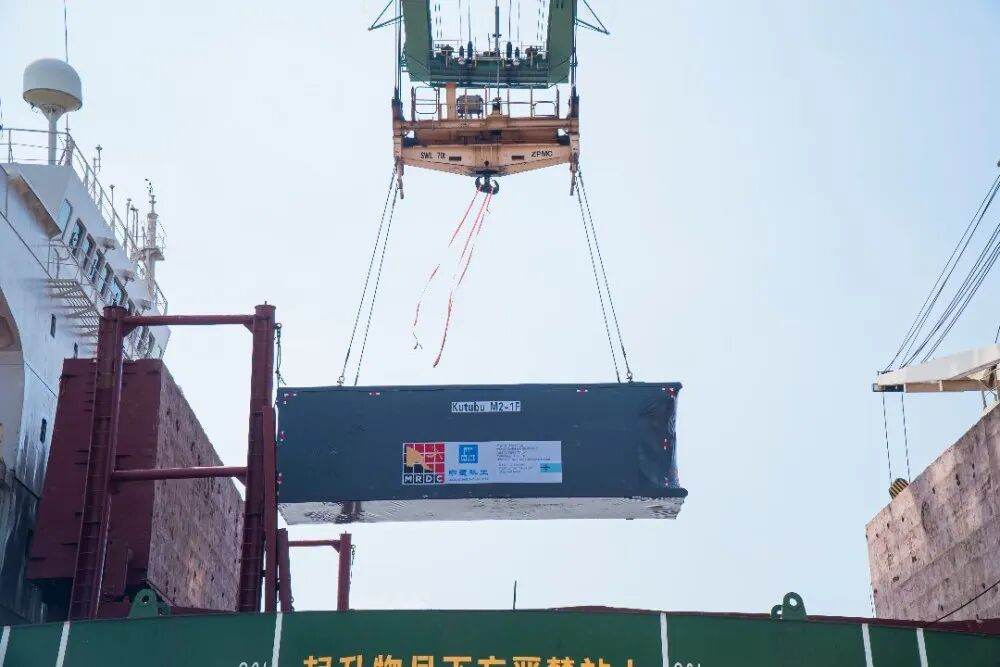
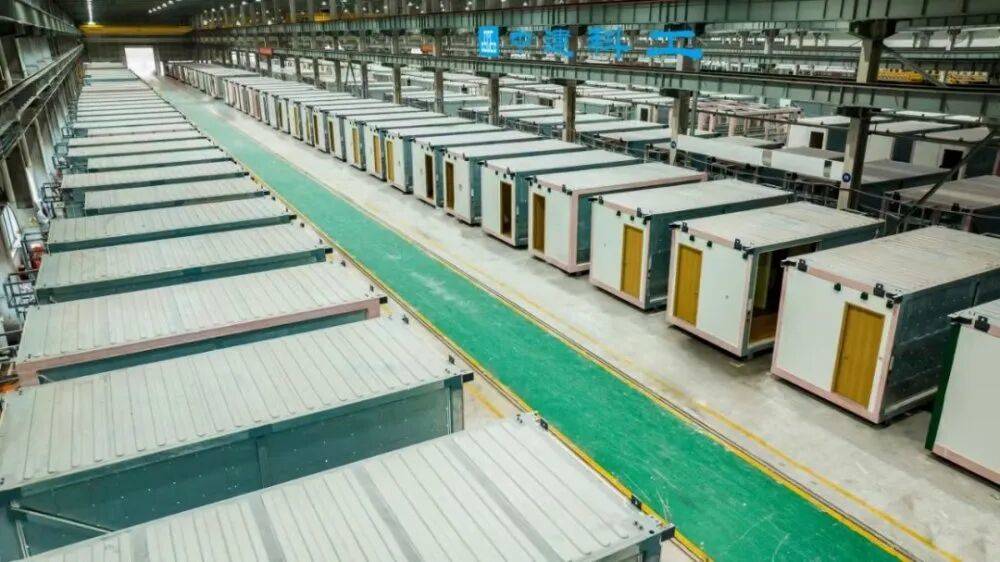
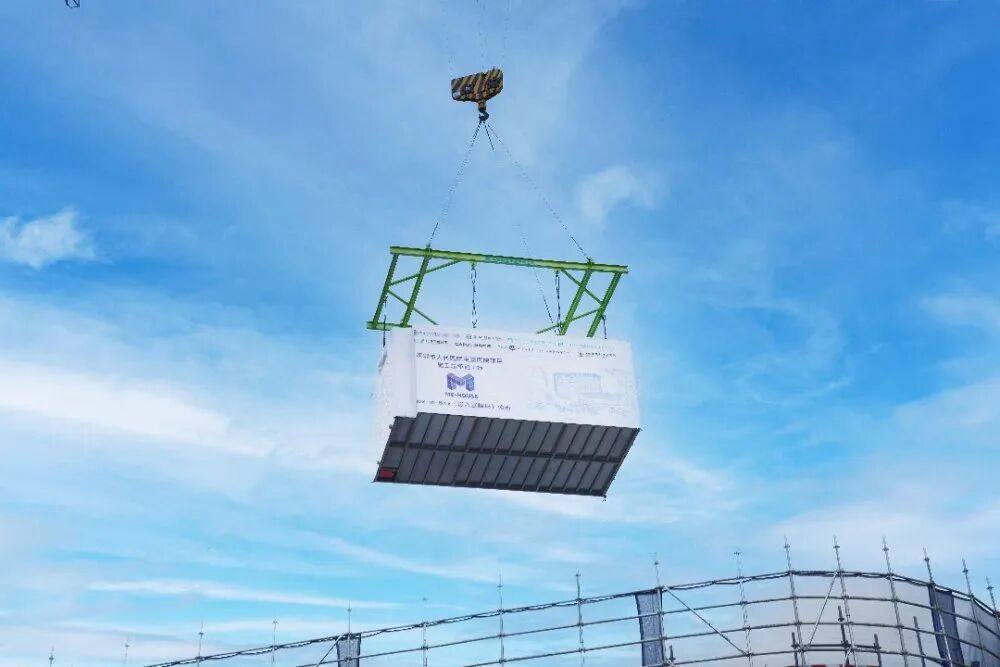
At Dongguan's Humen Port, a batch of prefabricated building modules is being slowly hoisted onto a giant ship. These modules are not containers but living units containing complete walls, floors, ceilings, pipelines, and even bathrooms. They will be shipped to overseas construction sites and assembled like building blocks into schools, hospitals, hotels, and residences. From hotels and schools in Southeast Asia to data centers in the Middle East and livelihood projects in Pacific island nations, the destinations of these modular products outline a new landscape of China's construction industry transitioning from "labor export" to "industrial product export."
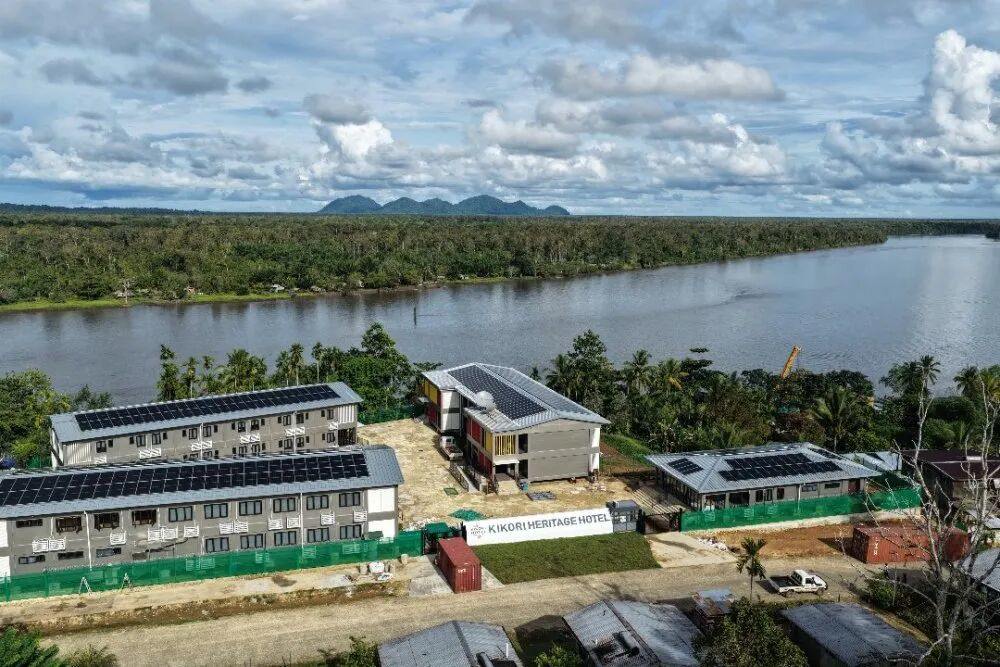
The advantages of modular construction lie in shortening construction periods and reducing costs. Zhu Shuiqing, Deputy Project Manager of the China Construction Science and Industry Corporation's Papua New Guinea (PNG) MRDC Modular Hotel Project, explained that taking the PNG MRDC Hotel as an example, a traditional construction complete delivery cycle requires 14 to 18 months, whereas the modular solution, including production, sea freight, and on-site assembly, takes only about 7 months in total. Regarding labor costs, the hourly wage for skilled construction workers in Europe and the US is equivalent to 200 to 400 yuan, with labor costs accounting for about 40% of the total project cost. For a hotel of the same scale, traditional cast-in-place construction requires 80 to 120 workers of various trades on site, while modular construction retains only about 45 people on site, with a significantly compressed construction period. Lightweight steel structure modules can also reduce the consumption of foundation and main structure materials, decreasing material usage by 60% to 70%. Traditional construction sites have material wastage of 8% to 12%, while factory-standardized CNC cutting reduces wastage to only 3% to 5%.
Zhao Qian, Deputy Chief Engineer of Guangzhou Construction Industry Research Institute Group Co., Ltd., pointed out that overseas clients most value the high timeliness, high integration, and high cost-performance ratio of China's modular solutions. 90% of the processes are prefabricated in domestic factories, with only assembly and finishing on site, significantly shortening the overall construction period compared to traditional cast-in-place methods. Leng Hanyu, Manager of the Technology and Design Management Department at China Construction Science and Industry Corporation's Green Technology Company, stated that modular products now cover hotels, apartments, schools, hospitals, and other types. The core advantages are cost reduction and shortened construction periods, which can improve the owner's capital utilization rate. Since modular buildings often adopt integrated fine decoration delivery, with structure, plumbing, electricity, fire protection, and decoration prefabricated in one go, they are ready for immediate use. Zhao Qian also mentioned that low carbon is a prerequisite for entering high-end overseas markets, and the low-carbon advantage throughout the full lifecycle of modular buildings is an important differentiating competitive edge. Based on data from projects in Guangzhou and Hong Kong, compared to traditional cast-in-place construction, modular buildings can reduce construction waste and noise by over 50%. Leng Hanyu added that the factory is equipped with supporting photovoltaic systems, and about 45% of the electricity used in module production comes from green photovoltaic power.
The production process for modular buildings is completely different from on-site construction. Wang Qiong, Chief Engineer of China Construction Hailong Technology, once used an analogy with automobile manufacturing: individual parts are produced separately first, then assembled on the final assembly line. Zhao Qian stated that the quality of traditional cast-in-place construction is greatly affected by weather, labor, and on-site management. Modular buildings are produced on intelligent, dust-free assembly lines in factories, using digital modeling and CNC precision machining. Component precision reaches the millimeter level, and concealed works undergo full-process quality inspection, resulting in quality consistency and stability superior to traditional cast-in-place methods. From a precision control perspective, Leng Hanyu pointed out that factory manufacturing transforms uncontrollable on-site variables into controllable constants. Under the combined effect of mechanical tooling and welding robots, module precision is higher than on-site work. Zhao Qian introduced another characteristic of modular buildings: the quality traceability system. Each module is assigned a unique digital ID, recording the entire process from materials and tolerances to inspection and testing. For the first time, buildings have an "ex-factory certificate" similar to industrial products.
Modular building exports face challenges such as standard differences. Zhao Qian said that logistics and on-site assembly are controllable aspects of project implementation; the core bottleneck is the differentiated standards of various countries—Australia emphasizes fire and corrosion resistance, regulations vary by state in the US, and Saudi Arabia focuses on adaptation to extreme climates. Leng Hanyu shared an experience from an Australian project where the owner had stringent requirements for seamless flush joints between the floor and threshold stone. The team only passed the acceptance after multiple attempts. Zhao Qian pointed out that the surface-level issue for standard export is differences in parameters like fire resistance, waterproofing, and insulation, but the core pain point is the lack of mutual recognition between Chinese and foreign certification systems and the incompatibility of compliance logic. Europe, the US, and Australia implement a system of "individual material certification + full-process compliance + on-site acceptance," where domestic test reports are not recognized, requiring re-certification.
The rising popularity of prefabricated buildings stems from multiple factors. Chu Mingjin, a professor at the School of Civil and Transportation Engineering of Beijing University of Civil Engineering and Architecture, stated that over a decade of large-scale development of prefabricated buildings in China has accumulated massive mature production capacity. On the overseas side, high construction costs and insufficient housing supply in developed countries, accelerated urbanization in emerging market economies, and the need for rapid construction in post-disaster and post-war reconstruction in some regions are driving demand. Chu Mingjin predicts that over the next five years, driven by factors such as structural labor shortages, rigid housing gaps, and carbon neutrality policies, overseas demand for modular buildings will remain strong. Zhao Qian believes that the export of prefabricated buildings is not a short-term trend but a long-term certainty, based on three certainties: the rigid demand for global housing and data centers, low-carbon policies, and industrial iteration and upgrading. China's prefabricated buildings have upgraded from exporting low-end products to the overall export of technology, production capacity, and complete solutions. Market research institutions predict that the global modular building market size is expected to exceed 142.8 billion US dollars by 2030. The Belt and Road Initiative regions, Middle East reconstruction, Southeast Asian urbanization, and high local construction costs in Europe and America will provide support for the modular building market.
The change in construction methods has transformed the roles of practitioners. In modular building factories, the scale of professional personnel such as factory-based construction technicians, intelligent production line operators, BIM designers, and module quality inspectors is continuously expanding. Chu Mingjin stated that while the civil engineering industry is generally declining, modular construction pushes the construction industry from "on-site building" to "factory manufacturing," fundamentally changing the work pattern. University civil engineering programs are transitioning towards "intelligent construction" and "building industrialization." The industry's digital and manufacturing transformation has spawned new technical positions such as BIM design, module quality inspection, and intelligent manufacturing operation, opening new employment pathways for young people. Leng Hanyu pointed out that the most scarce resources in the modular building industry are composite technical talents, including designers familiar with overseas codes, production line process engineers, and overseas on-site technical delivery engineers. The biggest challenge for traditional construction workers transitioning is the reconstruction of work logic, skill systems, and thinking patterns, requiring adaptation to standardized, digitalized, and process-oriented operations. Zhao Qian stated that future industry dividends will belong to composite talents with industrialization, digitalization, and internationalization expertise.
Fang Wenzong, Chief Engineer of a module supply project at China Construction Science and Industry Corporation's Green Technology Company, is precisely such a transitioning young technical talent. After graduation, he first worked in traditional construction general contracting before being exposed to modular construction when his company won the bid for the Hong Kong Simple Public Housing project. He stated that working in modular construction requires more meticulousness, especially in material requisition and technical disclosure, with closer ties to workshop frontline construction. Transitioning from traditional construction general contracting to modular factory technical management, he represents a new career path.