DHL: Peak Freight Season Starts Early, Ocean Freight Rates Surge 84% Year-on-Year
en.Wedoany.com Reported - The peak season has arrived early, with the air and ocean freight markets facing tight capacity, congestion at major hubs, and rising vessel utilization. According to the latest DHL report, due to demand surging earlier than the traditional start of the industry's peak season, the compounding factors driving freight demand this year have triggered an intense and extended peak season.
Niki Frank, CEO of DHL Global Forwarding Asia Pacific, stated that traditionally, freight demand builds gradually in the second half of the year as retailers replenish inventory ahead of major shopping events and manufacturers prepare for year-end demand. However, these pressures have emerged earlier this year. Current demand drivers include increased exports of new energy products such as solar equipment and electric vehicles, as well as U.S. importers rushing shipments ahead of tariff uncertainties. DHL noted that while tariffs are no longer the primary factor influencing the freight market, they still impact shipping activities. The U.S. 10% Section 122 tariff is set to expire on July 24, creating uncertainty in procurement and sourcing decisions. DHL stated that importers know what the current tariffs look like but are uncertain about what comes next, prompting some shippers to move goods early to hedge against uncertainty. This adds further upward pressure on already elevated ocean freight rates and introduces additional planning variables for the air freight market.
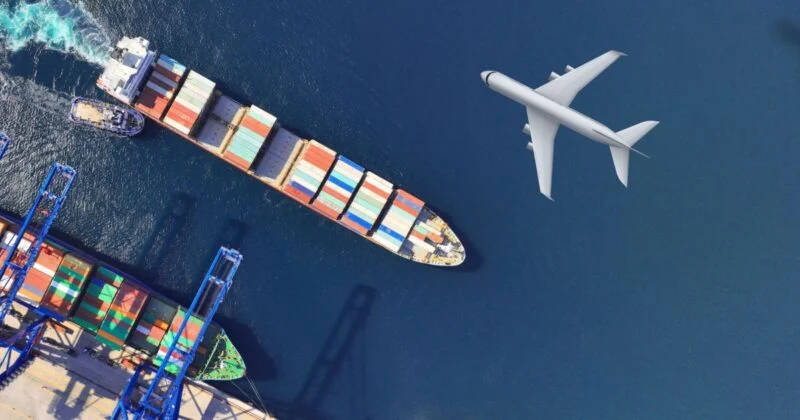
Bjoern Schoon, Senior Vice President of Ocean Freight at DHL Global Forwarding Asia Pacific, said that these factors combined are creating a market where demand is growing faster than capacity can comfortably absorb. As freight space tightens, prices are rising: ocean freight rates are up 84% year-on-year, with demand continuing to outpace available capacity. DHL's June 2026 Air Freight State of the Industry report indicates that global air cargo spot prices rose to $3.75 per kilogram in week 25, 47% higher than last year's levels, reflecting volatility, capacity uncertainty, high jet fuel prices, and risk surcharges.
The freight market is also witnessing unprecedented growth in the new energy supply chain, primarily from China. Demand is partly driven by higher energy costs resulting from oil price increases amid the Middle East crisis. For the freight market, new energy goods do not follow the same schedule as traditional retail demand. DHL stated that batteries, energy storage systems, solar equipment, and industrial energy infrastructure are shipped according to project timelines, investment cycles, and deployment plans, creating an additional layer of freight that remains active year-round.
Demand growth is particularly strong on trade routes originating from Asia, with intra-Asia freight volumes up 10% year-to-date, Asia-Europe routes up 12%, and Asia-Australia routes up 17%. This trend aligns with the findings of DHL's 2026 Global Connectedness Report: globalization is adapting rather than retreating, supply chains are becoming more diversified, but goods continue to flow across borders in large volumes. DHL's Ocean Freight Market Update shows that in late June, global congested ports held over 3.7 million TEUs, with congestion levels returning to post-pandemic highs. Although the global container fleet is expected to grow by 4% in 2026, effective capacity remains constrained by congestion and ongoing network disruptions.
DHL's Air Freight State of the Industry report shows that while airline networks continue to recover and capacity is growing, space remains tight on many trade routes. Airlines are concentrating capacity on the highest-demand corridors, while aircraft delivery delays and a global order backlog of over 18,000 aircraft continue to limit capacity growth. Capacity pressure also stems from strong growth in semiconductor and advanced manufacturing supply chains, as well as AI-related demand, with manufacturers, industrial exporters, and e-commerce shippers competing for available space. Fabio Weiss, Senior Vice President of Air Freight at DHL Global Forwarding Asia Pacific, stated that when available capacity is concentrated on higher-demand corridors, price increases reflect how the strained network is being utilized.
The ocean and air freight markets are being shaped by what DHL describes as a convergence of multiple forces—holiday inventory, tariff uncertainty, growing demand for new energy and technology products, coupled with capacity constraints and congestion. Niki Frank stated that these factors explain why the peak season has arrived early and why competition for freight capacity is likely to remain intense even after summer.
Related Products



GSR6-27.5kV SF6 Free Gas-insulated Metal-enclosed Switchgear
Zhejiang Juhonkia Intelligent Electric Co., Ltd.

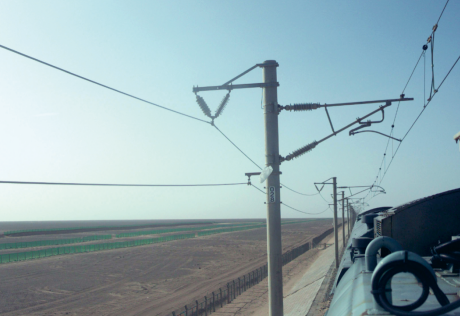
Pantograph-Catenary Comprehensive Detection Device (1C)
CHENGDU TANGYUAN ELECTRIC CO., LTD.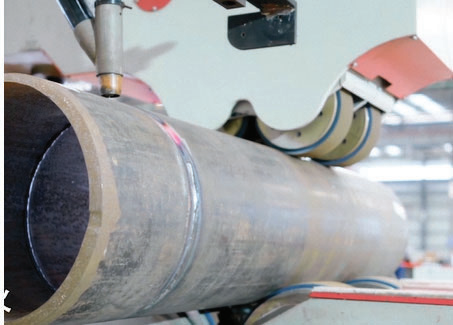


ERW Welded Pipe (Black Pipe and Hot-dip Galvanized Steel Pipe)
Handan Zhengda Steel Pipe Co., Ltd.

WGQY Series Aircraft Tow Tractor-WGQY15, WGQY27
Weihai Guangtai Airport Equipment Co., Ltd.