en.Wedoany.com Reported - The city of Munich has launched the public testing phase of a new pilot project, digitally transforming delivery zones in the city center by providing logistics companies and other users with real-time information on loading area availability via an app.
The project, led by Munich's Department of Mobility, has selected 21 delivery and loading zones in the historic old town and around Fraunhoferstraße, equipping them with smart sensors. These sensors transmit real-time occupancy data directly to the free mobility app mo2B, enabling users to quickly locate and navigate to available delivery zones.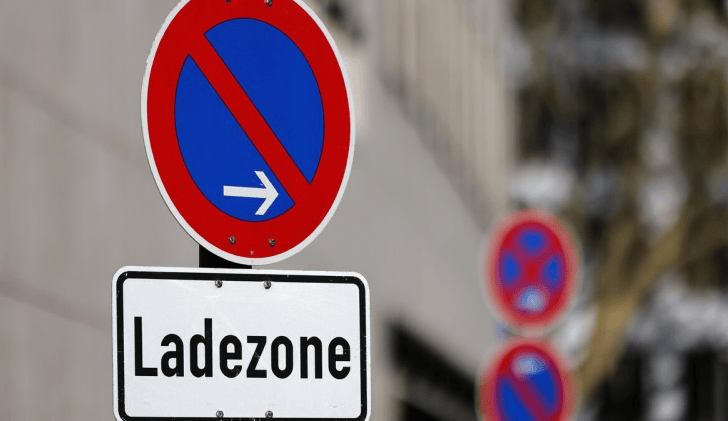
As part of the EU project metaCCAZE, in which the Steinbeis Europa Zentrum participates as a partner, the pilot aims to reduce search time for vacant areas, thereby improving urban logistics efficiency. The app also features navigation capabilities, guiding users directly to the nearest suitable zone and optimizing "last mile" logistics operations.
The pilot areas cover Munich's multifunctional 3L zones—designated for loading, delivery, and service activities—as well as classic 2L loading and delivery zones. The app displays all available 2L and 3L zones within the city. The city has also applied prominent "delivery zone" road markings in selected areas of the city center to enhance visibility and raise awareness among all road users.
The project aims to reduce the occupation of delivery zones by drivers searching for parking, prevent misuse, and decrease unnecessary search traffic through real-time information on vacant spaces. Georg Dunkel, Head of Munich's Department of Mobility, stated that the pilot project seeks to improve the utilization and efficiency of delivery zones, particularly in areas with high parking pressure in the city center. Real-time information helps tradespeople, care services, and delivery companies find suitable parking faster and more effectively prevent illegal parking.
The pilot project is being implemented by multiple partners within the EU framework: Smart City System provides and operates the occupancy sensors; Stadtraum serves as the provider and operator of the mo2B app; the Technical University of Munich is responsible for scientific monitoring and evaluation; and DB Schenker plans to test logistics applications and real-world operational scenarios. The project is funded by the Horizon-Europe project metaCCAZE, supporting cities in developing sustainable mobility and urban logistics solutions that can be scaled across Europe.
Munich selected pilot locations in collaboration with chambers of commerce and economic associations, choosing areas with high commercial traffic demand. The project will demonstrate which user groups use the service most intensively and where further solutions may be needed in the future.